
Last updated November 2, 2026
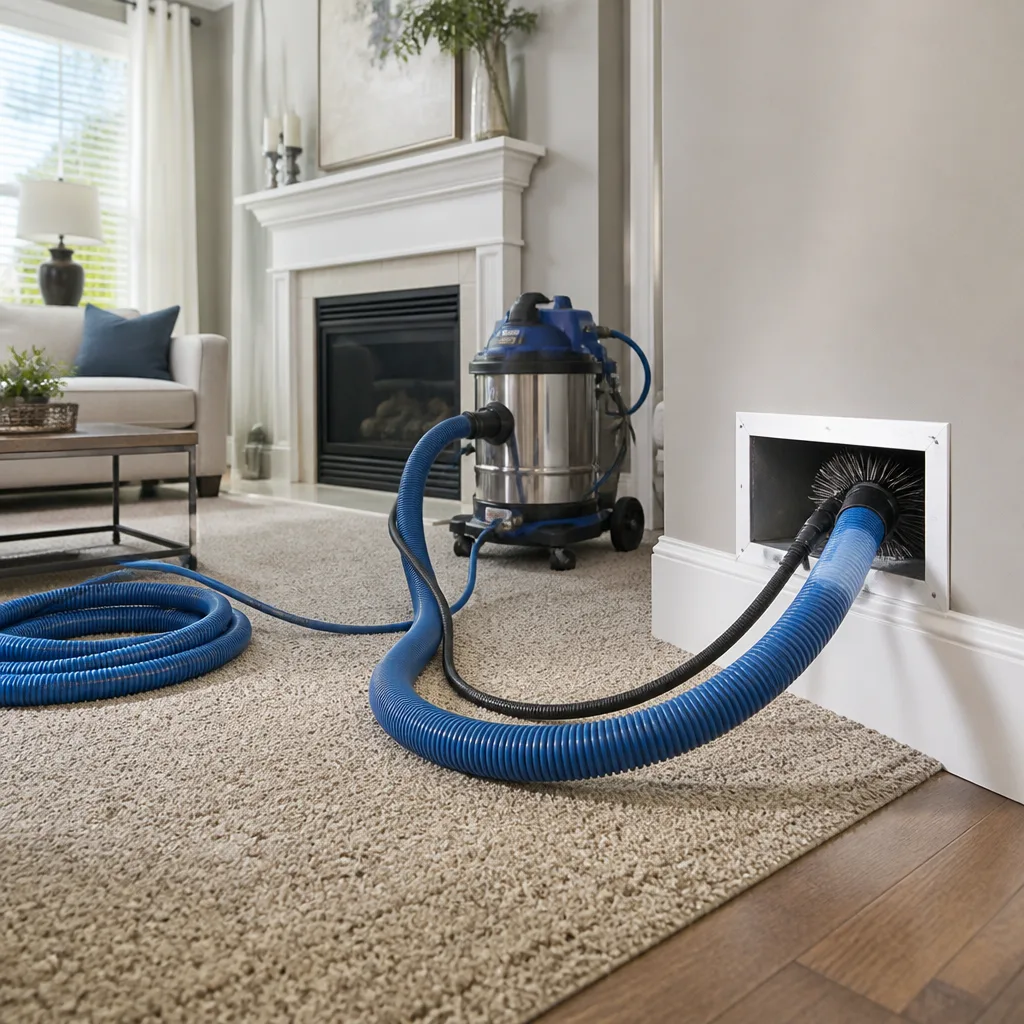 Whole-home duct cleaning
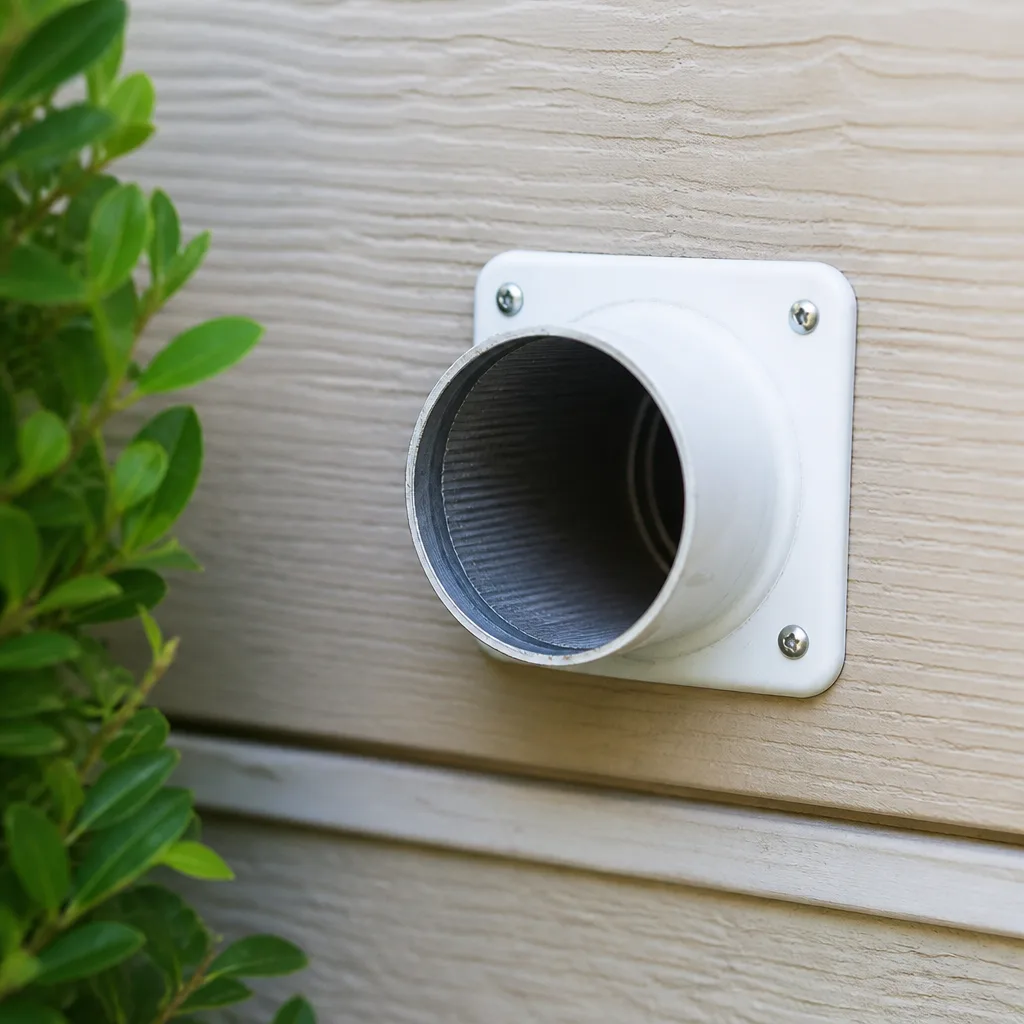 Dryer vent cleaning
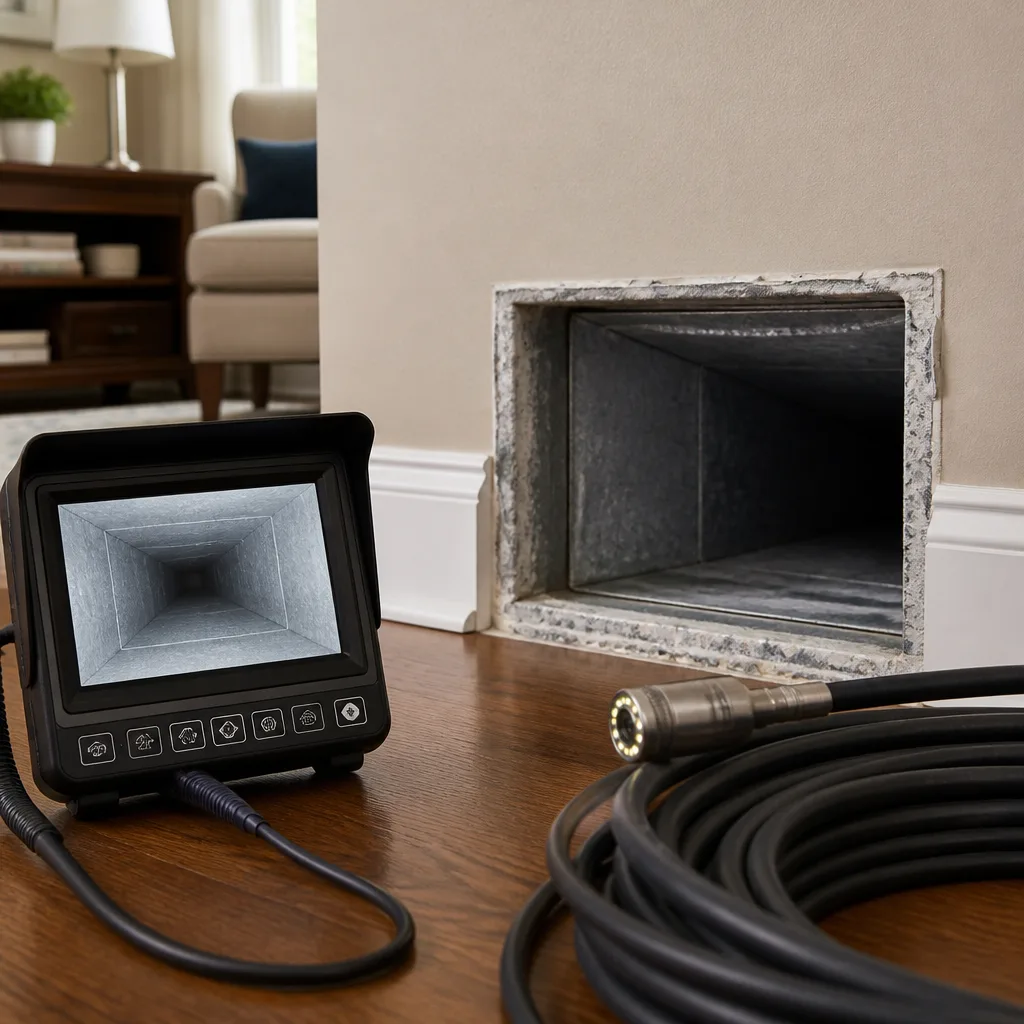 Camera inspection
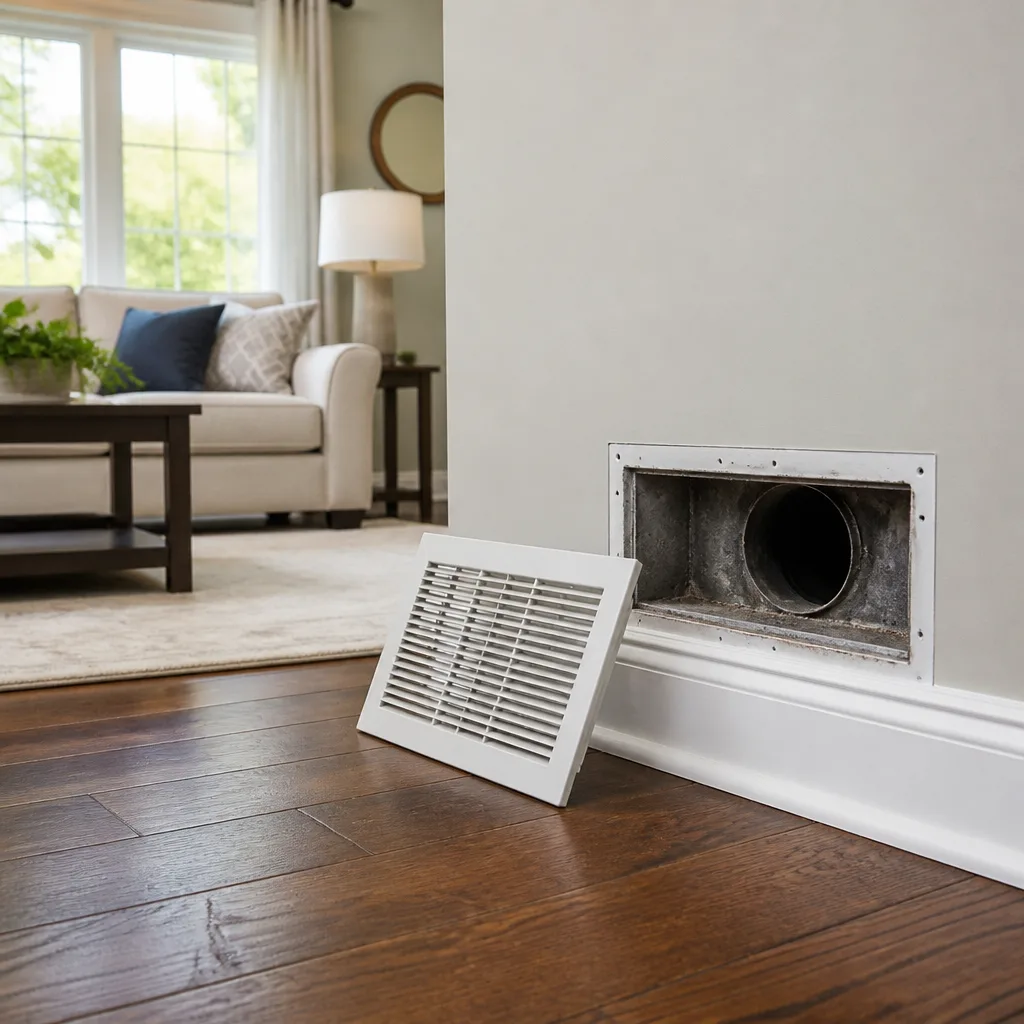 Sanitizing & deodorizing
Whole-system duct and dryer vent check with before-and-after photos - you see exactly what came out of your vents
That "$99 whole-house special" is a bait ad - the real number appears once they are in your hallway, or the "clean" is a shop-vac at the register. We photograph the inside of your ducts before and after instead.
Air Duct Cleaning Emergency Preparedness Guide for Lake Elsinore Homes
When wildfire smoke drifts over the Ortega Mountains and settles into the Lake Elsinore valley, it doesn’t stay outside. Your HVAC system pulls outdoor air through return ducts, and within hours, fine ash and smoke particulates are circulating through every room of your home, pushed by the same blower that keeps you cool in August. The standard advice to “keep windows closed” misses a critical point: the ductwork itself becomes a distribution system for whatever the fire is putting into the air. This guide walks through two duct emergencies Lake Elsinore homeowners face that most preparedness checklists ignore entirely: wildfire smoke infiltration and post-flood mold introduction into duct systems. You’ll learn what to do in the first hours after each event, when to shut your system down, what filter upgrades actually matter, and how to handle insurance documentation before any remediation begins.
Quick Answer
If wildfire smoke or floodwater has affected your Lake Elsinore home, shut down your HVAC system immediately and install a MERV-13 or higher filter before restarting. Smoke-contaminated ducts need a professional inspection and contact cleaning, not just a filter swap, and flood-moistened ducts require intervention within 48-72 hours to prevent mold colonization. Document everything with photos before you touch anything else. For emergency duct assessment in Lake Elsinore, call (855) 341-9943.
Styles & brands we work with
- Whole-home duct cleaning
- Dryer vent cleaning
- Camera inspection
- Sanitizing & deodorizing
Table of Contents
- Wildfire Smoke Protocol: What to Do in the First 48 Hours
- Flood and Water Intrusion: The 48-72 Hour Mold Window
- Post-Emergency Documentation for Insurance Claims
- Duct Cleaning vs. Duct Remediation: Knowing the Difference
- Pre-Emergency Preparation: Reducing Risk Before the Next Event
- Why Lake Elsinore’s Climate Makes This Urgent
- Why Equipment Matters During Emergency Response
- Common Mistakes to Avoid
- When to Call a Professional
- Frequently Asked Questions
Wildfire Smoke Protocol: What to Do in the First 48 Hours
Wildfire smoke contains particulates measured in microns – some fine enough to pass through standard fiberglass filters without slowing down. When a fire burns within 20 miles of Lake Elsinore, the smoke plume carries ash, volatile organic compounds, and carbon particulates that settle onto every interior surface, including the inside of your ductwork. The moment you smell smoke inside your home, treat it as an active contamination event.
Here’s the sequence that matters, in order:
- Shut down the HVAC system at the thermostat. Switch the fan from “Auto” or “On” to “Off” entirely. This stops the system from pulling smokey outdoor air through the return ducts and pushing it through the supply registers. A running blower during a smoke event actively contaminates the duct interior walls.
- Check your current filter. If you’re running a standard fiberglass or low-MERV filter, it’s doing almost nothing against smoke particulates. The minimum upgrade during smoke season is a MERV-13 filter, which captures particles down to roughly 0.3 microns with meaningful efficiency. Most Lake Elsinore homes built in the last 15 years can accommodate a 1-inch MERV-13 without airflow issues, but if you have an older system, check the manufacturer’s static pressure rating before upgrading.
- Install a MERV-13 filter before restarting. Do not restart the system with the old filter in place. The blower will push whatever the old filter didn’t catch through the supply side. A MERV-13 filter acts as a gate, keeping new particulate intake minimal while you assess what’s already inside.
- Keep the fan on “On” for 30 minutes after installing the new filter. This runs indoor air through the upgraded filtration continuously, reducing airborne particulates in the living space. Do this with windows closed.
- Schedule a duct inspection if smoke smell persists beyond 48 hours without new smoke intake. Ash that settles on duct walls doesn’t leave on its own. It sits there until the next time the blower kicks on and re-entrains it into the airstream. If the smoke odor lingers when the outdoor air is clear, the ducts themselves may be holding the particulate load.
In Lake Elsinore, the Santa Ana winds push smoke into the valley and trap it against the surrounding hills. Homes in the canyon-side neighborhoods near the Cleveland National Forest boundary sit in the direct smoke path during fire season. We’ve seen returns from homes in the McVicker Canyon and Alberhill areas where duct interiors held a visible layer of black ash residue after a single bad fire week. The filter lasted two weeks; the ducts needed physical contact cleaning.
Flood and Water Intrusion: The 48-72 Hour Mold Window
Mold doesn’t need standing water. It needs moisture, organic material, and time. Duct interiors collect organic material constantly: skin cells, pet dander, dust mites, pollen. When water enters that environment – from a roof leak, a flooded crawlspace, a burst pipe, or storm-driven rain intrusion through the foundation – the clock starts. Mold colonization in ductwork typically begins within 48 to 72 hours under warm conditions, which Lake Elsinore provides reliably from April through October.
The timeline matters because it changes the job. Water that wets duct insulation or pooled in the lowest section of flex duct creates exactly the dark, warm, humid environment mold needs. Once colonization begins, standard air duct cleaning isn’t the full answer. You’re now in remediation territory, which involves source removal and potentially replacement of water-damaged duct sections.
What to do if you suspect water has entered your duct system:
- Shut the system down immediately. Same as with smoke, but more urgent. A running blower spreads mold spores from the wet section into every room. The air handler becomes a distribution engine for whatever is growing.
- Identify the water source and stop it. If it’s a plumbing leak, shut the water supply. If it’s storm intrusion, tarp or redirect where possible. Ductwork won’t dry while the water source is active.
- Photograph everything before any cleanup. Register locations, the condition of the HVAC closet or crawlspace access, any visible water staining on duct exteriors, and the duct sections that sit near the water entry point. Insurance adjusters respond best to documentation gathered before you’ve moved or removed anything.
- Get a duct inspection within 48 hours. A professional can determine whether water reached the duct interior, whether insulation has wicked moisture, and whether mold colonization has begun. If it hasn’t, drying and cleaning may be sufficient. If it has, you’ll need remediation, not just cleaning.
- Do not run a dehumidifier inside the ductwork. Home dehumidifiers aren’t designed for duct interiors. Air sealing and professional drying equipment are required to reduce moisture to safer levels without blowing spores throughout the system.
Lake Elsinore’s flood history matters here. The 2019 storm events that flooded streets near the lakebed left standing water in crawlspaces and foundation vents across the basin. Homes in the lower-elevation neighborhoods near the outlet have a higher baseline moisture level in low-lying duct runs. If your home sits in a flood-prone pocket, your pre-emergency prep should include checking duct support straps and ensuring no flex duct sections rest directly on the crawlspace floor.
Post-Emergency Documentation for Insurance Claims
Insurance adjusters evaluate duct damage claims based on two things: proof of event and proof of extent. The better your documentation before anyone touches the system, the stronger your claim. What you photograph and write down in the first 48 hours can make the difference between a covered claim and a denied one.
What to document, in order of priority:
- The trigger event. If it’s wildfire smoke, photograph the smoke plume from your property and screenshot any air quality index readings from the event date. If it’s floodwater, photograph the water level, the path it took, and any water marks on walls or foundation surfaces.
- Every register and return opening. Remove the register cover and photograph the duct opening. Look for visible particulate accumulation, water staining, rust on metal duct surfaces, or mold-like growth. These photos establish the physical evidence independent of any professional’s later assessment.
- The mechanical room and crawlspace. Photograph the air handler, the filter, the plenum connections, and any duct runs visible from the equipment area. Capture any water intrusion evidence in these spaces.
- Your filter. Remove it and photograph both sides. Date the photo. A heavily loaded filter after a smoke event proves the system pulled significant particulate volume.
- Room-level photos. Each room with a supply register gets one photo showing the register in context. This establishes the scale of the system and the potential coverage area.
Keep a written log with dates: when the event occurred, when you shut the system down, when you changed the filter, what you observed, and when any professional arrived. Time-stamped notes are stronger than memory six weeks later when the adjuster calls back.
We recommend homeowners in Lake Elsinore keep a basic “emergency documentation kit” ready during fire season: a phone camera that’s charged, a spare MERV-13 filter in a sealed bag, and a flashlight for duct openings. Total cost is under $50. The claim value it can protect is typically in the thousands.
Duct Cleaning vs. Duct Remediation: Knowing the Difference
This is where homeowners get taken advantage of. Not all duct services are the same thing, and after a smoke or water event, the distinction determines whether your system actually gets restored or just gets a cosmetic pass.
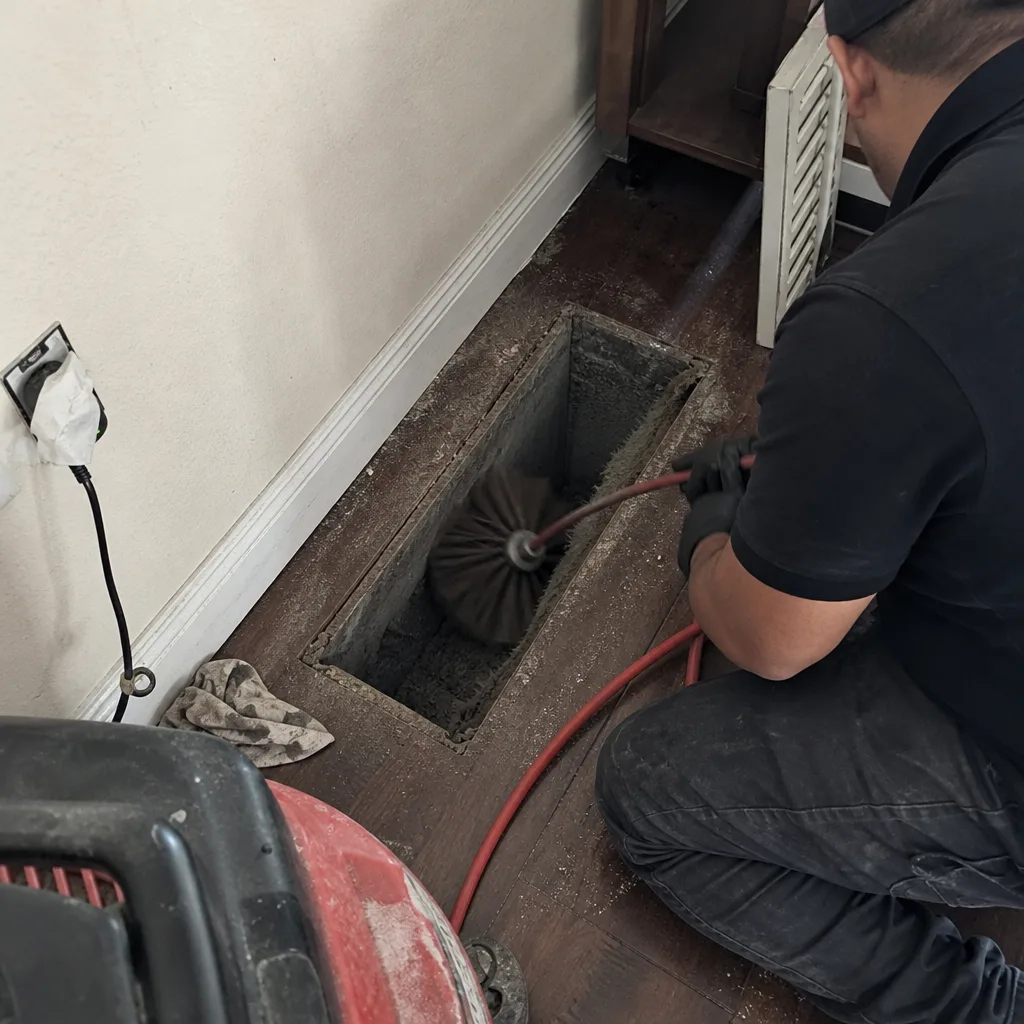
Air duct cleaning is the standard service: physical agitation of duct interior surfaces to dislodge normal accumulated dust, dander, and debris, followed by extraction. Rotobrush rotary contact-cleaning systems do this mechanically, which is the difference between breaking debris loose from duct walls and simply blowing air through the system and hoping the vacuum catches it. This service handles the ordinary particulate loads of daily living: pet hair, dust, renovation residue.
Air duct remediation is a different protocol. It’s what’s required when the contamination source is smoke, soot, or moisture-created mold. Remediation involves:
- Source identification and removal. If a duct section has water-damaged insulation, that section gets replaced, not just cleaned. You cannot clean mold out of fiberglass insulation that has been soaked. The material itself is compromised.
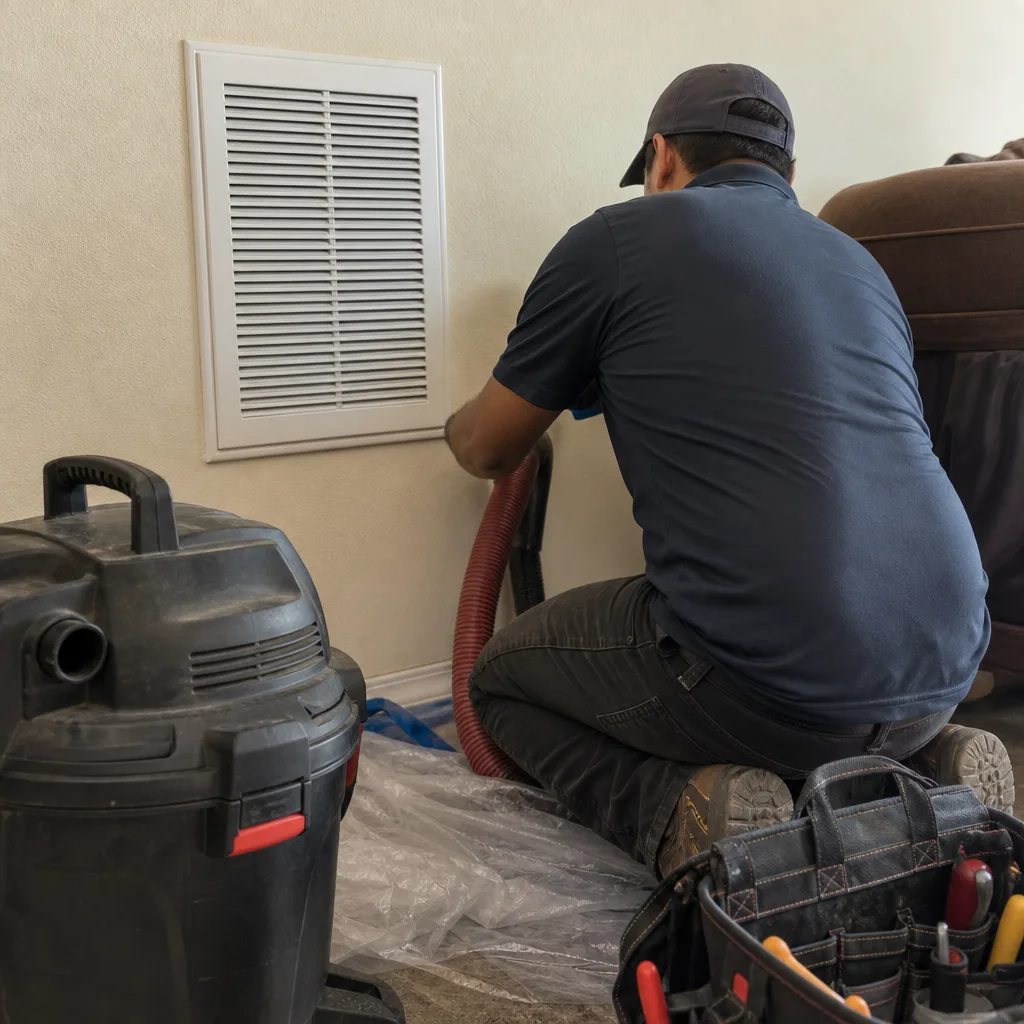
- Contact cleaning with HEPA extraction. Visible contamination is physically removed, and the extraction side uses HEPA-filtered equipment to capture particulates rather than exhausting them into living spaces or pushing them further down the duct run.
- Antimicrobial treatment where indicated. After physical removal, surface treatment helps prevent regrowth on remaining materials. This is a defined step in remediation, not a substitute for physical cleaning.
- Post-treatment verification. After the work, the system gets inspected to confirm the source is gone, not just covered over.
If a company quotes you a “duct cleaning” price after a flood event without discussing source removal or inspecting for mold colonization, they’re not offering remediation. They’re offering cleaning, and cleaning alone won’t solve a moisture-caused mold condition. You need to know what to ask for: “Is this cleaning, or is this source removal and remediation?” A straight answer matters.
Air Duct Cleaning in Lake Elsinore handles standard cleaning jobs. If water has entered your ducts, the right call is an inspection that determines whether cleaning is sufficient or whether air duct repair in Lake Elsinore – which may include section replacement – is required. The answer should be based on what the inspection finds, not on what the sales script says.
Pre-Emergency Preparation: Reducing Risk Before the Next Event
You can’t prevent a wildfire from burning or a storm from flooding streets near the lakebed. But you can reduce what those events do to your duct system. The preparation steps below are concrete, mostly inexpensive, and specifically chosen for Lake Elsinore’s conditions.
Filter upgrades that don’t wait for smoke season:
- MERV-13 as your baseline if you have a modern system. Most systems installed in the last 10-15 years in new Lake Elsinore construction can handle the additional static pressure. Check your system’s documentation or ask a technician. This one upgrade alone reduces particulate intake during every smoke event.
- Keep two spare filters stored in a clean, dry location. Not the garage, where gasoline vapors and dust are present. A closet shelf near the equipment works. When smoke arrives, you don’t want to be driving to a hardware store that may be sold out or closed.
- If you have a Honeywell whole-home filtration system, verify the media condition before fire season starts. A clogged or outdated media pack defeats the purpose. Replace media on schedule, not on smell.
Duct sealing that reduces unplanned air intake:
Leaky return ducts pull unconditioned air – and during a smoke event, that means smokey air – from crawlspaces and walls into the system even when you think it’s recirculating indoor air. Duct cleaning for a Lake Elsinore home often exposes these leaks during inspection. Sealing them reduces contaminant intake during the next event and lowers energy loss year-round. Return side sealing matters most; that’s the side under negative pressure that actively draws surrounding air in.
System checks that catch problems before they compound:
- Inspect duct supports and flex runs annually. Sagging flex duct pools condensation from the air handler’s cooling cycle. In Lake Elsinore’s summer heat, the temperature differential across the coil generates significant condensation. A sagging section that collects water is a mold risk even without a flood event.
- Check crawlspace vapor barriers before the rainy season. If the barrier is torn or missing under duct runs, ground moisture wicks into the crawlspace and increases humidity around the ducts. This reduces the system’s drying capacity and raises the baseline risk.
- Verify the condensate drain line is clear. A clogged condensate line backs water up into the drain pan and can overflow into the cabinet and surrounding duct insulation. This is a common, preventable source of moisture introduction that has nothing to do with weather events.
These steps cost little. What they buy you is margin: when the next smoke plume or storm arrives, your system starts from a cleaner, tighter, more inspectable baseline.
Why Lake Elsinore’s Climate Makes This Urgent
Lake Elsinore sits in a geographic bowl. The Elsinore Valley is bordered by the Santa Ana Mountains to the west and the foothills of the Temescal range to the east. When smoke or pollution enters the basin, it lingers. The inversion layers that form in the valley hold particulate matter close to the ground, and that air – thick with smoke, ash, or road dust – is exactly what your HVAC system pulls through return ducts if windows or vent openings allow outdoor air in.
Fire season now overlaps with the hottest weeks of the year. That means your air conditioner runs longer and harder during the same weeks when wildfire smoke is most likely to be present. The system in an average Lake Elsinore home cycles more frequently in August than systems in coastal cities cycle all year. More runtime means more particulate pulled through the filter, more deposition on the coil, and more accumulation on duct interior surfaces.
Flood risk follows a different pattern. The lakebed area and the neighborhoods that sit low relative to the outlet channel face stormwater issues during winter rain events. When water enters a crawlspace, it doesn’t always reach the living space floor – but it reaches the ductwork that runs through that crawlspace. Duct systems are often the first mechanical system to encounter floodwater in a home with a raised foundation, and the last one homeowners think to inspect after the water recedes.
This combination – basin geography that traps smoke, high summer runtime, and winter flood-prone low areas – creates a specific and repeatable set of risks for duct cleaning in Lake Elsinore that generic home preparedness guides don’t address. The threats aren’t theoretical here. They’re seasonal.
Why Equipment Matters During Emergency Response
When you’re responding to a smoke or water emergency in your duct system, the equipment used matters as much as the process followed. Air-only methods – blowing compressed air through ducts – dislodge some debris but leave the adhered layer on duct walls. Vacuum-only methods pull loose material out but can’t break free what’s caked or bonded to the surface. In a smoke contamination event, the layer of ash and soot has adhered to the duct interior through electrostatic attraction and moisture. Getting it off requires physical contact.
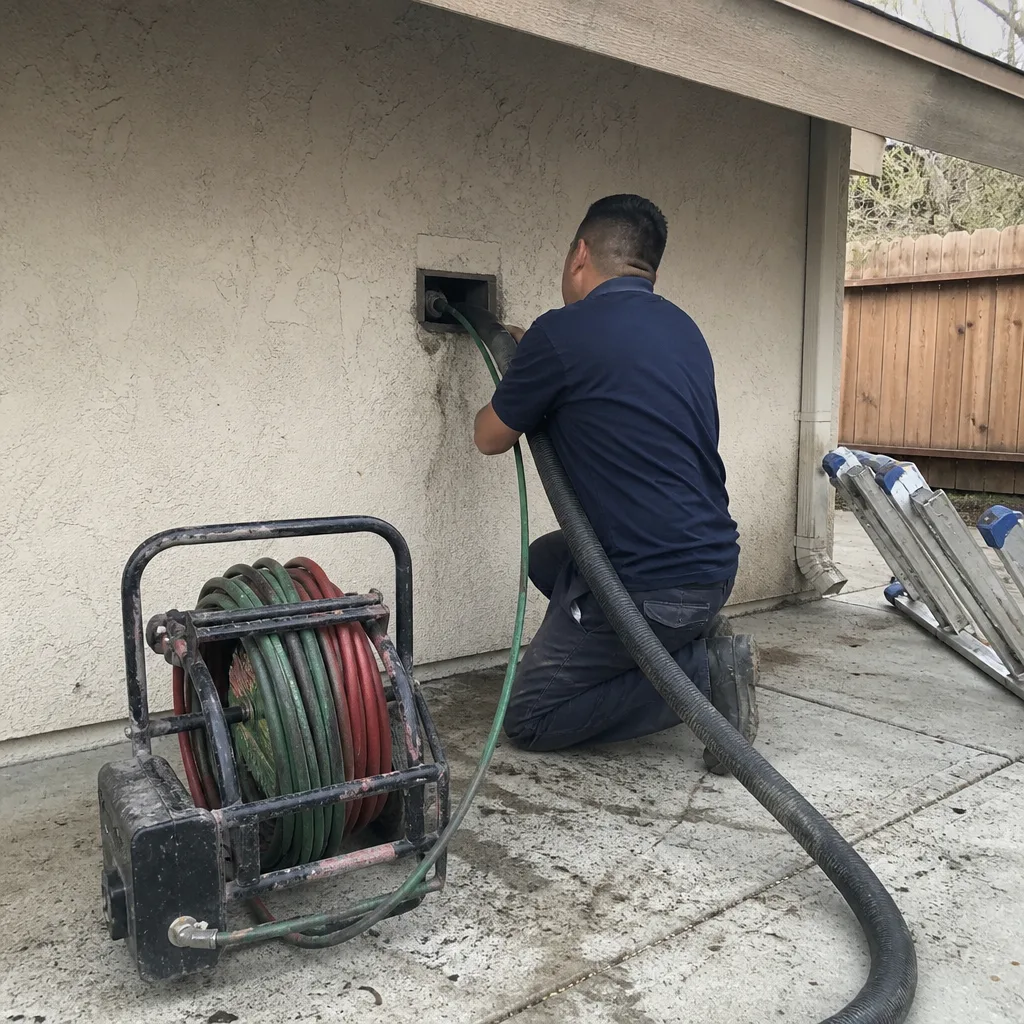
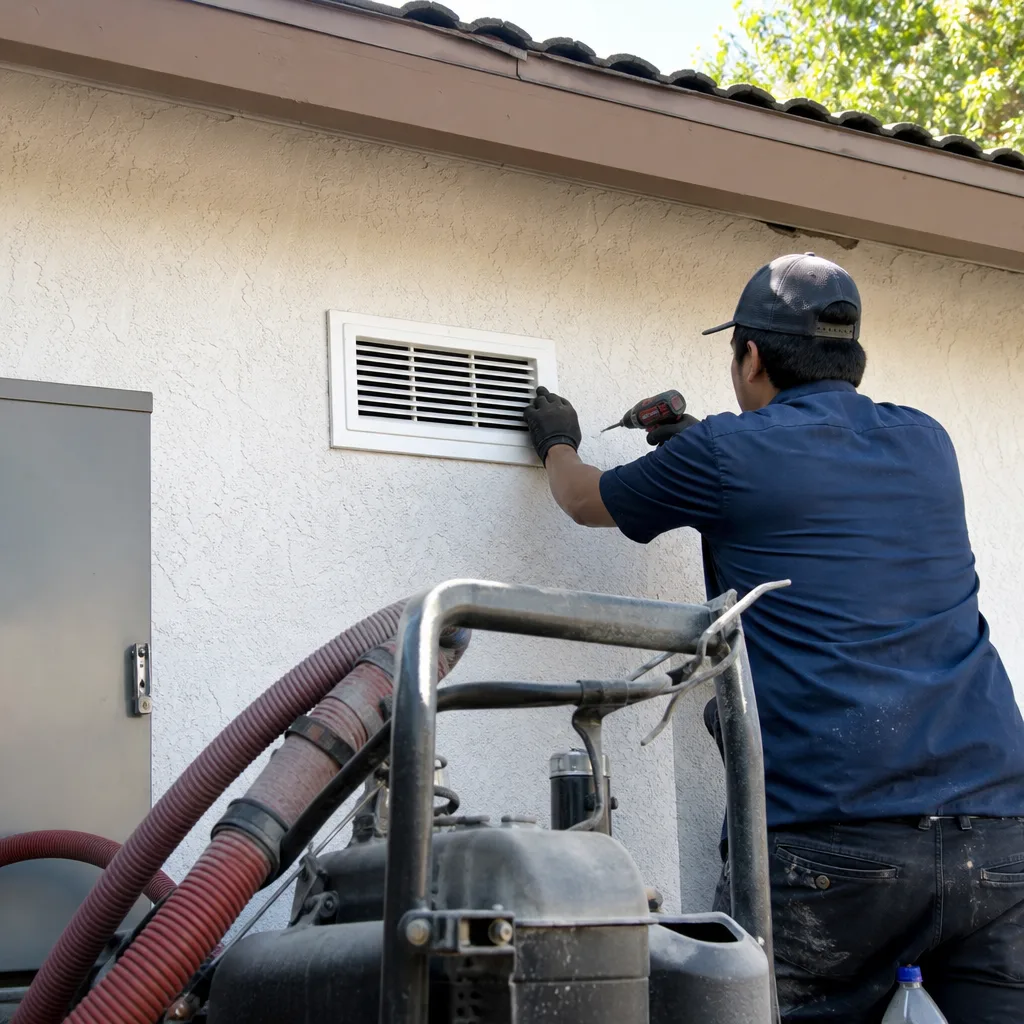
Rotobrush rotary contact-cleaning systems use rotating brushes that physically scrape and agitate the duct wall surface, breaking the bond that holds particulates in place. This is the difference between “air moved through the system” and “contaminants removed from the system.” After a smoke event, the first one is not enough. The second one is what the situation calls for.
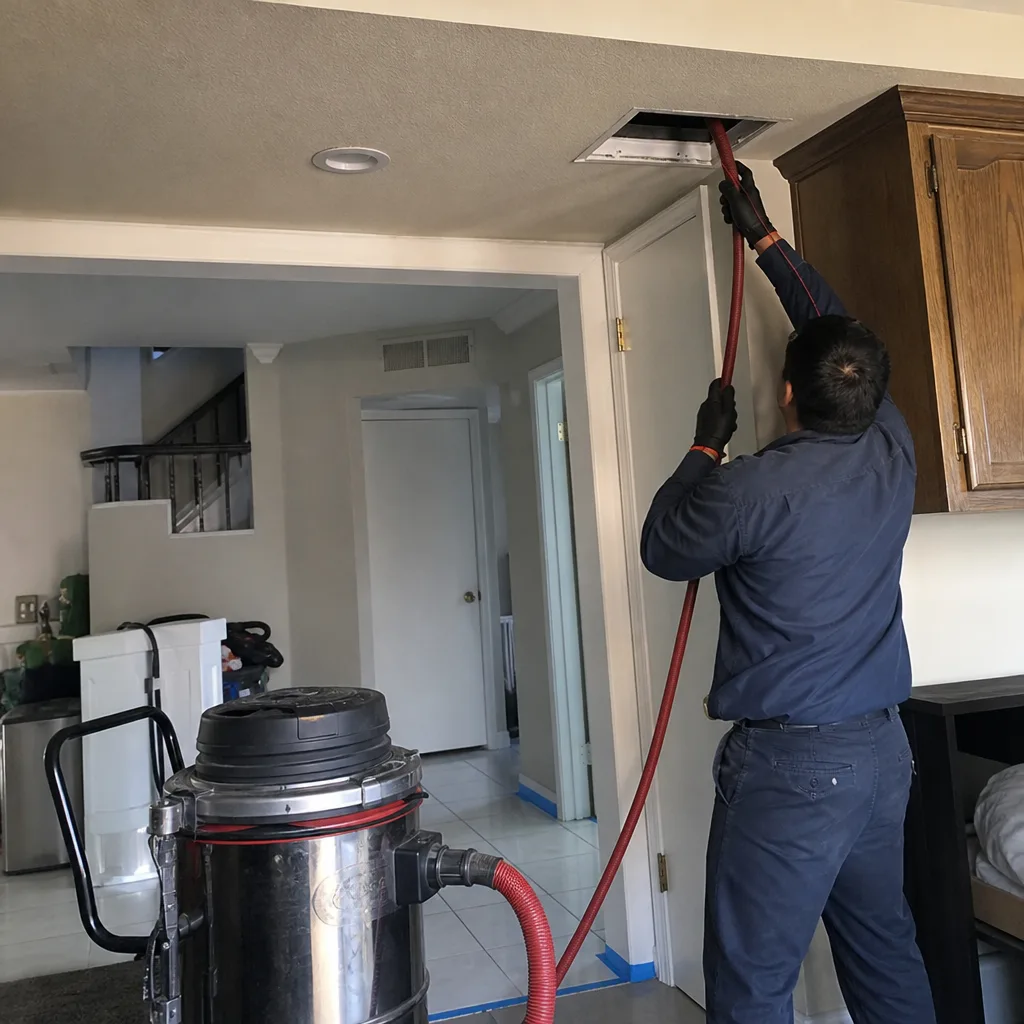
Extraction is the other half. Dislodged particulates have to go somewhere. If the extraction side isn’t HEPA-filtered, the vacuum exhaust carries the dislodged contaminants into the air of the home you’re trying to protect. Nikro and Abatement Technologies equipment – the same HEPA-grade extraction tools used in professional remediation settings – captures dislodged material at the source rather than recirculating it through the living space.
After a flood event, the equipment question shifts. The question isn’t just “can you clean the duct?” but “can you see what’s wrong with the duct?” Air Duct Repair in Lake Elsinore matters because water-damaged sections often need replacement, not cleaning. A company that can inspect, identify, clean where appropriate, and repair where necessary gives you a single response instead of a handoff. “We repair what we find, no second appointment, no separate contractor” – that’s the standard for an emergency response.
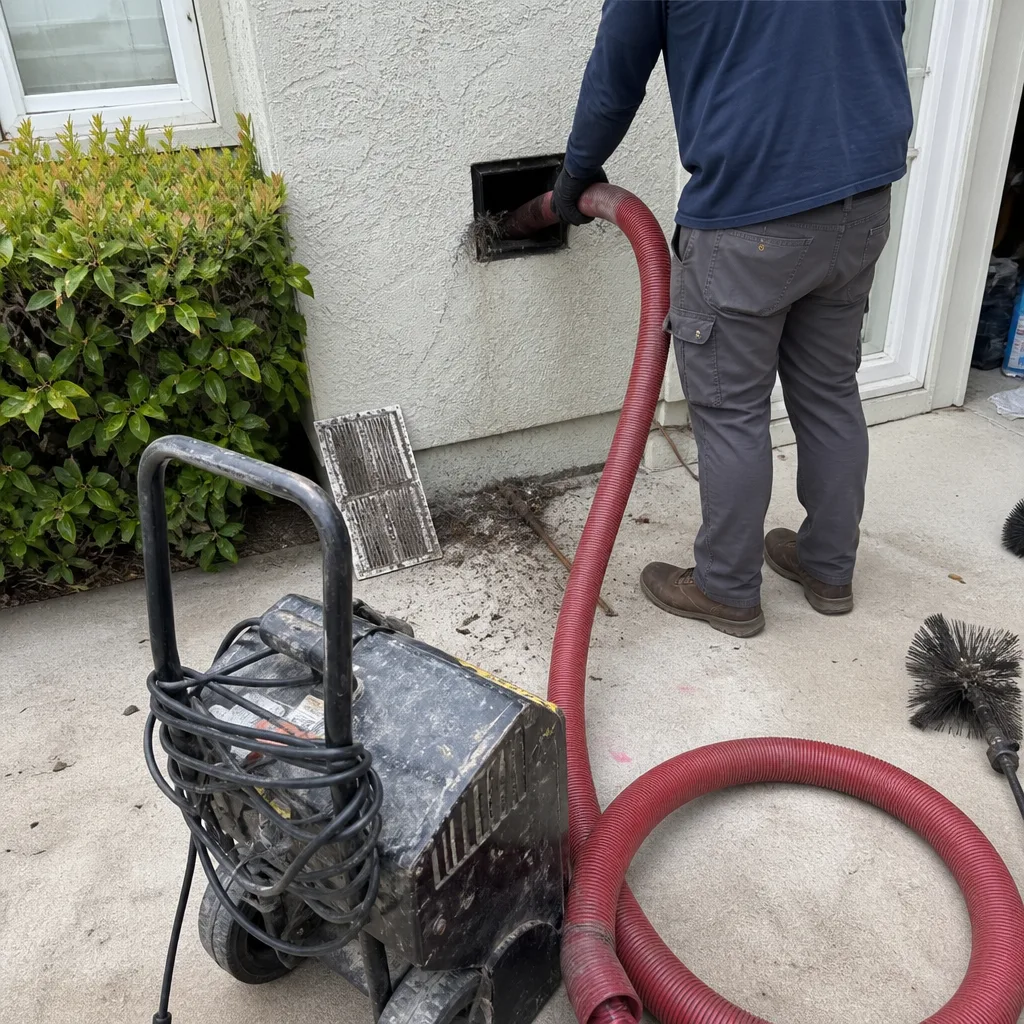
For dryer vent cleaning after a flood or fire event, the same logic applies. Dryer vent cleaning in Lake Elsinore is a narrow, defined service focused on removing lint accumulation. Lint is combustible. After a smoke event, dryer vent interiors that collected lint may also hold ash, and the combination creates a higher ignition risk. The vent needs to be clean, not just partly cleared.
Common Mistakes to Avoid
- Running the HVAC system during a smoke event to “filter the air.” If the filter is low-MERV or dirty, the system becomes a smoke distribution machine. Shut it down, upgrade the filter, and only then restart with the fan on continuous circulation.
- Waiting to see if the smell goes away after a fire. Smoke odor that persists after outdoor air clears usually points to retained particulates in the duct system or on the coil. It won’t air out. The contamination has to be physically removed.
- Drying out flooded ducts with a home dehumidifier pointed into a register. This moves air through the system, which spreads spores from any early mold growth. Shut it down, get the water source stopped, and have the system inspected first.
- Filing an insurance claim before taking photos. Once you start cleaning, replacing registers, or removing filters, the physical evidence is altered. Photograph everything in its post-event condition first.
- Accepting a “duct cleaning” quote after water intrusion without a source-removal conversation. If water entered the system, you need to know whether insulation is wet, whether mold has colonized, and whether sections need replacement. Cleaning alone won’t address any of that.
- Using the lowest-cost filter available year-round and upgrading only when smoke appears. A MERV-13 filter installed before fire season costs less than an emergency response after the system gets loaded with ash. Keep spares on hand.
- Assuming a water leak that stayed in the crawlspace didn’t affect the ducts. Flex duct sits low. Water in the crawlspace reaches duct surfaces directly. If you had crawlspace water, you need a duct inspection.
When to Call a Professional
Call a professional immediately if smoke smell persists more than 48 hours after outdoor air clears, if water has visibly entered your crawlspace or air handler area, if you see mold-like growth on register openings or duct surfaces, or if your system is blowing visible particles from supply registers. Also call if the system’s airflow has noticeably dropped after an event, which can indicate a filter loading up with particulates or a duct section slumped or separated. Don’t try to dry, clean, or seal duct interiors yourself. The confined space is not safe to work in without proper training and equipment. Duct Cleaning Lake Elsinore offers free estimates throughout Lake Elsinore and the surrounding valley. Call (855) 341-9943 to schedule an inspection before a small event becomes a large repair.
Frequently Asked Questions
Emergency duct inspection and cleaning in Lake Elsinore typically ranges from $300 to $700 depending on system size, contamination extent, and whether repair or replacement is required. Post-fire and post-flood responses cost more than routine cleaning because the work includes source identification, possibly section replacement, and post-treatment verification. Call (855) 341-9943 for an exact quote – estimates are free, and one flat price per system is agreed before any work begins.
No. The tools homeowners have access to – a shop vac, a rag on a pole, a leaf blower – cannot reach more than a few feet into the duct run and cannot capture the fine particulates that smoke leaves behind. Worse, a shop vac without HEPA filtration exhausts the dislodged material into your living space. Smoke contamination requires contact cleaning with HEPA extraction. This is not a DIY job.
Mold colonization in wet duct interiors typically begins within 48 to 72 hours when temperatures are warm – which in Lake Elsinore describes most of the year. That window is why water intrusion demands immediate action, not a scheduled appointment two weeks out. The longer the moisture sits, the more likely the duct insulation and possibly the duct sections themselves require replacement rather than cleaning.
A MERV-13 filter is the minimum meaningful protection against wildfire smoke particulates, which range from larger visible ash down to sub-micron particles. Standard fiberglass filters and most basic pleated filters won’t catch the fine fraction. If your system can’t handle MERV-13 due to airflow restrictions, consider a whole-home filtration product like those from Aprilaire, which provides high-efficiency filtration without the same static pressure penalty as a deep-pleated 1-inch filter.
Often yes, if the contamination is documented as event-caused and the claim is filed with supporting photos and logs. Wildfire smoke damage to systems is a growing coverage area for California insurers, and flood intrusions are typically covered under standard policies when the water source is not a government-declared flood zone exclusion. The strength of your documentation determines the outcome. Photograph everything before any work begins. Call (855) 341-9943 if you need help identifying what to document for your specific system.
Cleaning removes contamination from duct interior surfaces. Sealing closes leaks along the duct runs and at connections. After a smoke event, both may be needed: cleaning removes the ash layer, and sealing prevents future unplanned air intake from crawlspaces and walls that pulled the smoke in during the event. The two services are different, and a thorough inspection after an emergency should address whether either or both are required.
The Bottom Line
Lake Elsinore homeowners face duct emergencies that most guides never mention: wildfire smoke pushed into the valley by Santa Ana winds, and stormwater finding its way into crawlspace duct runs near the lakebed. In both cases, the immediate response is the same: shut the system down, document the condition, upgrade the filter, and get a professional assessment before restarting. The 48-72 hour mold window after water intrusion is real and unforgiving. The ash layer left by smoke doesn’t dissipate on its own. Preparation before the event – a MERV-13 filter on the shelf, sealed return ducts, a clear condensate line – costs little and changes the outcome entirely. If you’re responding to an event right now, call (855) 341-9943. A free estimate tells you what you’re dealing with, and knowing is better than guessing when your home’s air is on the line.
Written by the team at Duct Cleaning Lake Elsinore, serving Lake Elsinore since 2014.
See the difference
 Before
 After
 Before
 After
 Before
 After