
Last updated November 3, 2026
 Whole-home duct cleaning
 Dryer vent cleaning
 Camera inspection
 Sanitizing & deodorizing
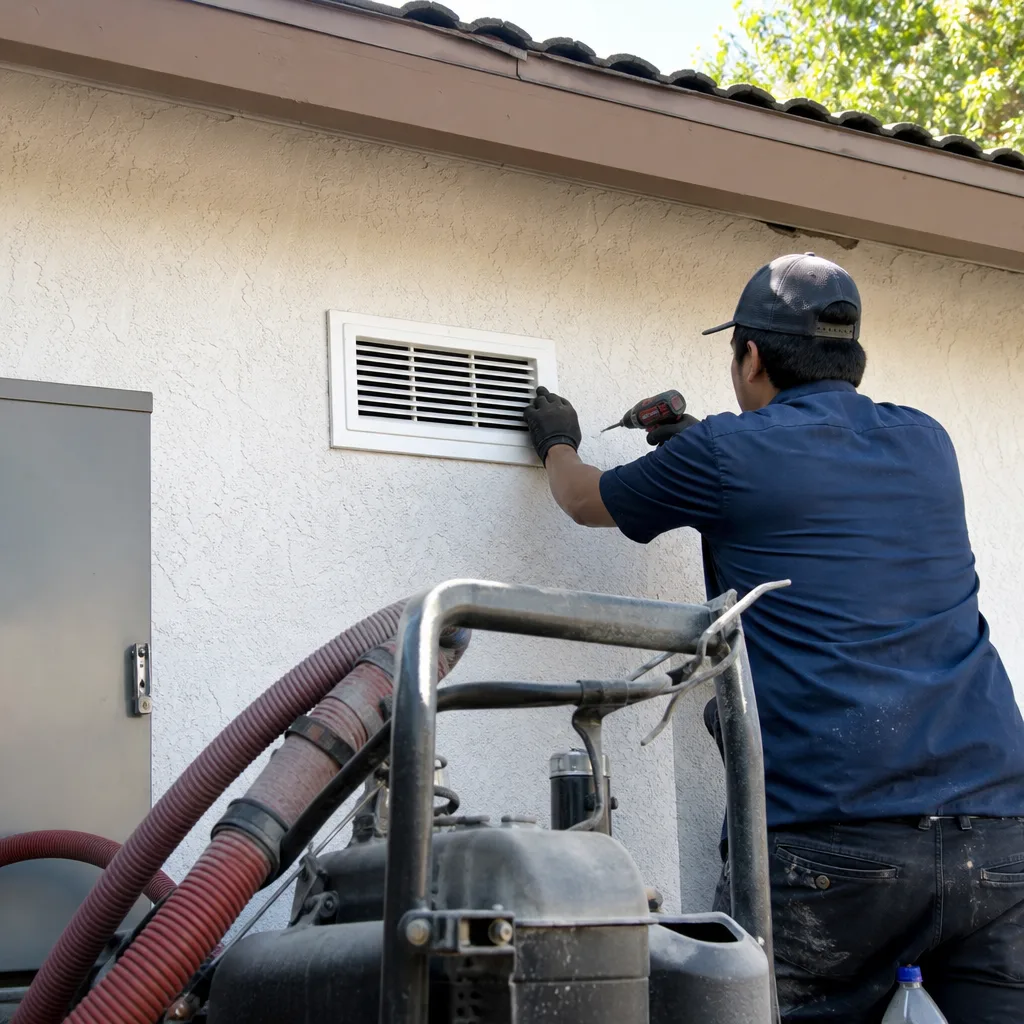
Whole-system duct and dryer vent check with before-and-after photos - you see exactly what came out of your vents
That "$99 whole-house special" is a bait ad - the real number appears once they are in your hallway, or the "clean" is a shop-vac at the register. We photograph the inside of your ducts before and after instead.
The Complete Air Duct Cleaning Guide for Lake Elsinore Homeowners
Most duct cleaning guides are written for a mythical average American home. Lake Elsinore homeowners deal with Santa Ana wind events, seasonal fire smoke, and one of the dustiest inland valleys in Southern California – conditions that accelerate duct contamination on a timeline that “clean every 3-5 years” advice was never built for. This guide maps the full duct-care lifecycle to what’s actually happening inside homes in this ZIP code, from the specific particulate profile created by Lake Elsinore’s geography to the difference between contact cleaning and blow-and-go methods, how to read your own duct system, and when our Air Duct Cleaning services alone aren’t enough.
Quick Answer
The Complete Guide to Air Duct Cleaning in Lake Elsinore explains how the process involves mechanically agitating debris from duct walls using rotary contact-cleaning equipment like Rotobrush, then simultaneously extracting it with HEPA-grade filtration systems from Nikro and Abatement Technologies. For most Lake Elsinore homes, a complete system cleaning takes 3-5 hours and should be scheduled every 2-4 years due to accelerated contamination from seasonal dust, wildfire smoke infiltration, and construction particulate. The critical factor is method: contact cleaning physically removes what air-only methods leave behind, and HEPA-grade extraction means contaminants are captured, not just disturbed.
Styles & brands we work with
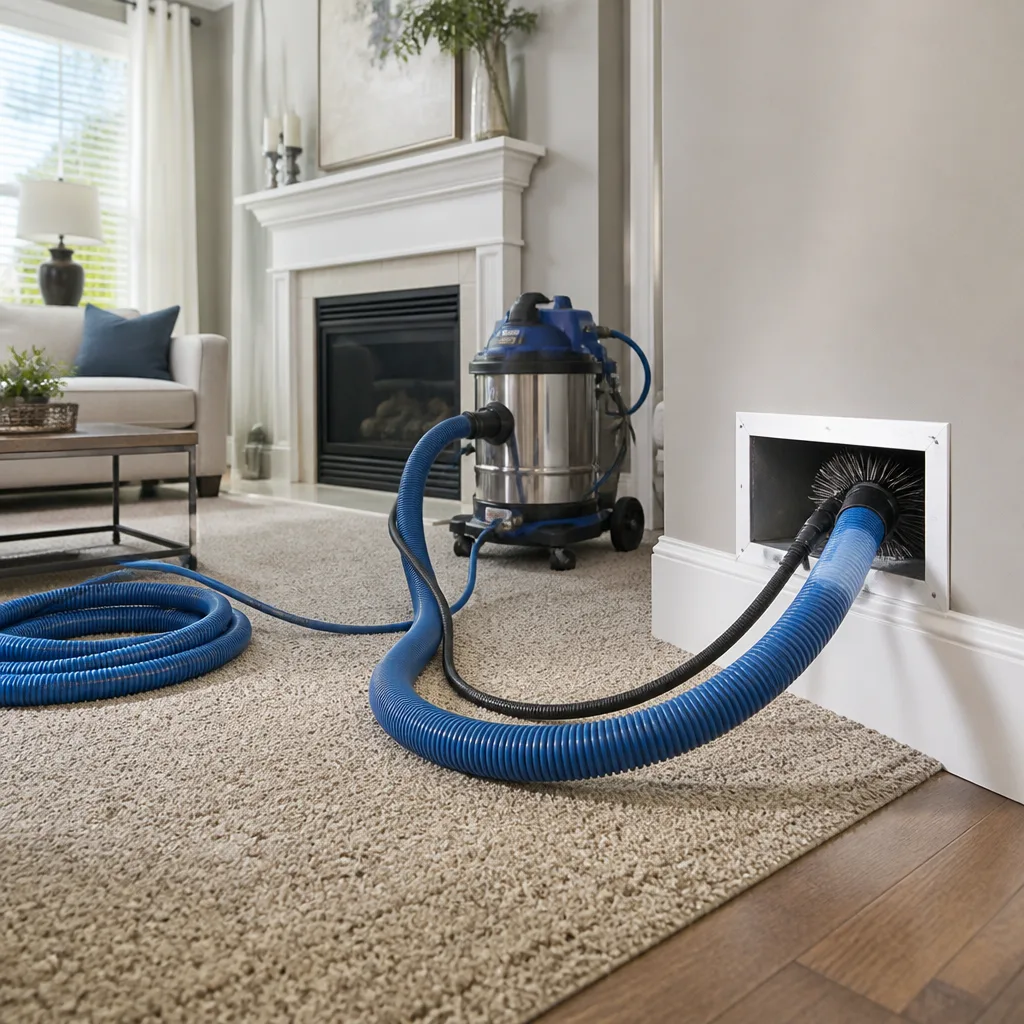
- Whole-home duct cleaning
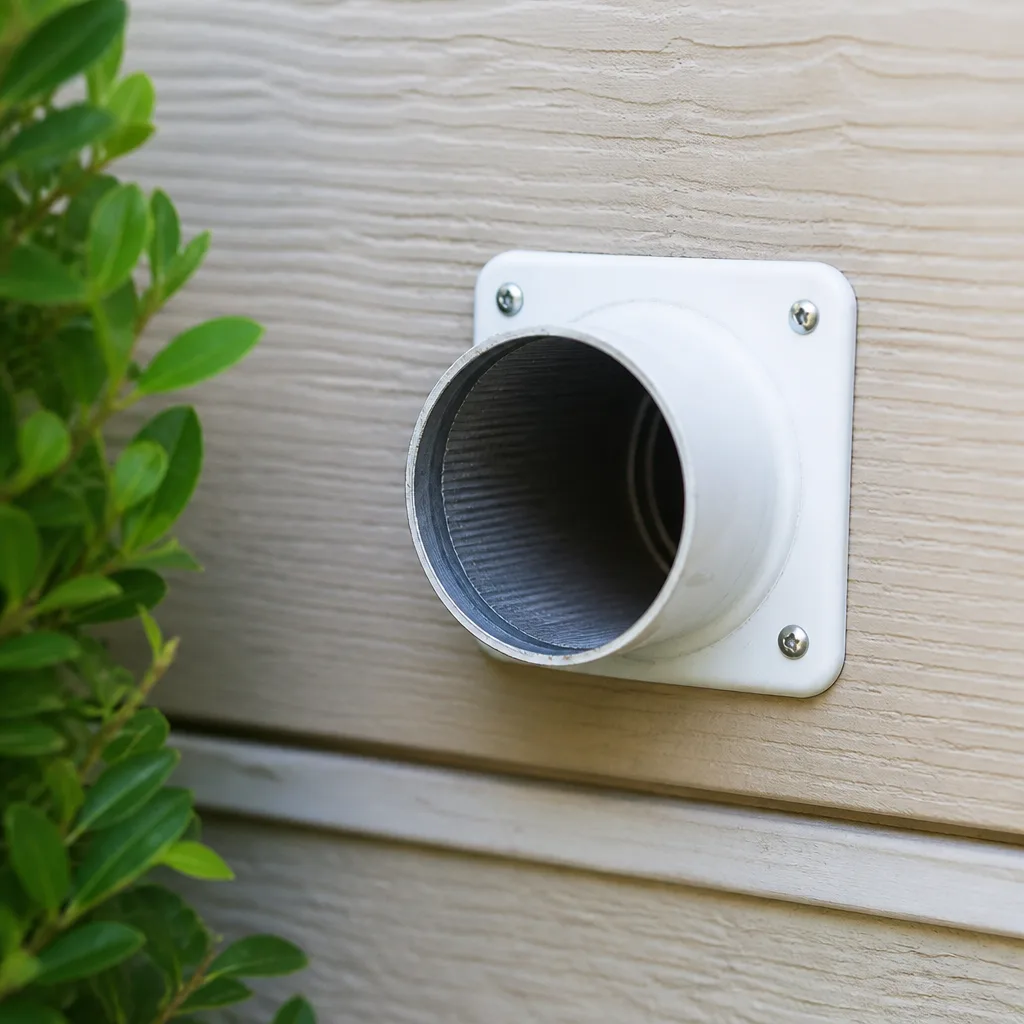
- Dryer vent cleaning
- Camera inspection
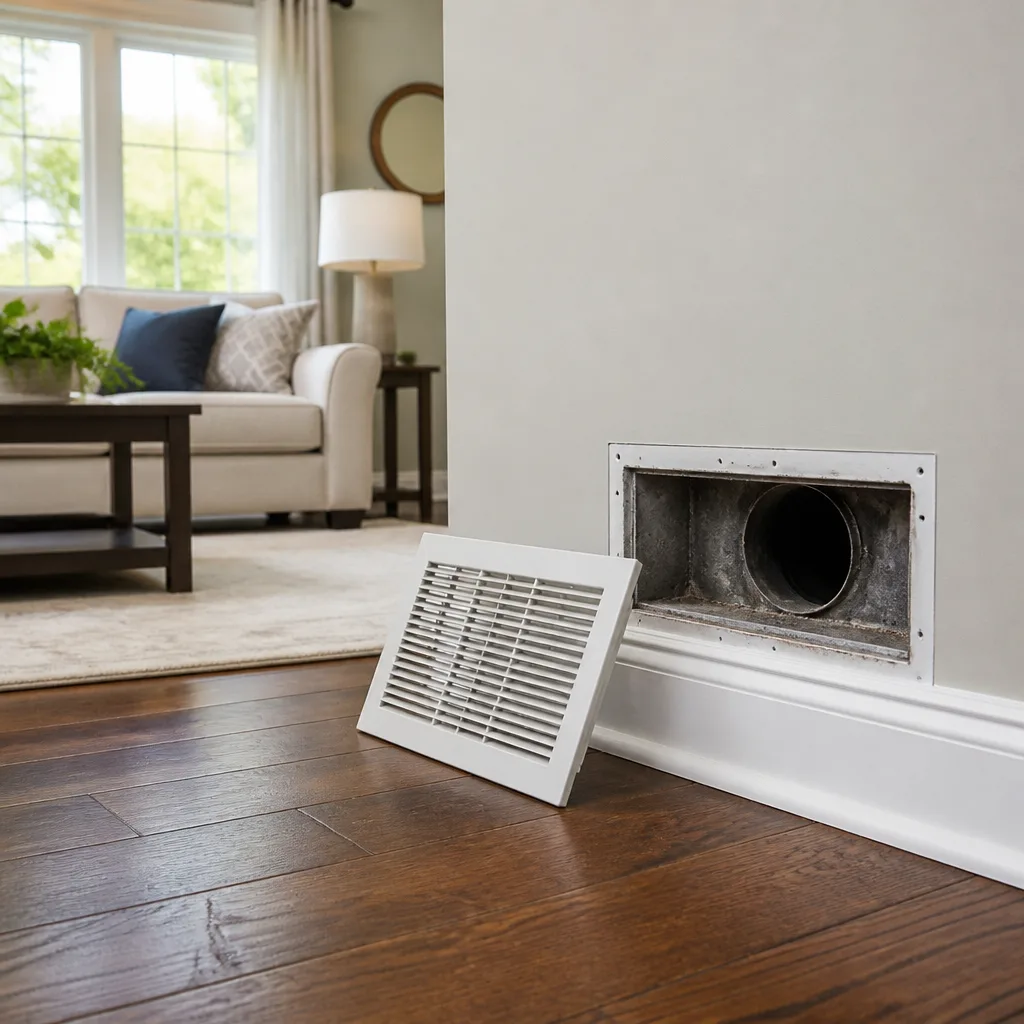
- Sanitizing & deodorizing
Table of Contents
- Why Lake Elsinore Ducts Get Dirtier Faster
- What Actually Builds Up Inside Your Ducts
- Contact Cleaning vs. Blow-and-Go: The Method Matters
- How to Read Your Own Duct System
- The New Construction Problem in Lake Elsinore
- When Cleaning Isn’t Enough: Repair Exposures
- How Often Should You Actually Clean?
- Dryer Vents: The Separate Fire Risk
Why Lake Elsinore Ducts Get Dirtier Faster
The Inland Empire corridor has a dust problem that coastal cities simply don’t share, and Lake Elsinore sits directly in its path. Our valley traps airborne particulate against the Ortega Mountains and the Santa Ana range, meaning what blows through doesn’t always blow out. When Santa Ana winds kick up in the fall, they carry fine desert dust from the east; when they reverse, they push particulate from the 15 freeway corridor and the heavy industrial zones of Riverside County right into our residential streets.
Here’s what that means for your ductwork:
- Wildfire smoke doesn’t just pass through. During the Highland Fire and other Inland Empire burn events, smoke carries PM2.5 and PM10 particulate that’s small enough to bypass your return-air filter and settle onto duct surfaces. Smoke particulate is oily and adhesive. It bonds to duct liner material in a way ordinary household dust never does, creating a sticky matrix that traps everything else that follows.
- Hard-water mineral particulate is Lake Elsinore-specific. Our municipal water supply runs hard – if you’ve cleaned scale off a showerhead, you’ve seen it. That mineral content produces fine calcified particulate when water evaporates, which then circulates through HVAC runs. In flex ducts, mineral dust acts as a mild abrasive against the inner liner, accelerating wear over years of cycling.
- Seasonal dust loading is measurable. Riverside County consistently ranks among California’s higher counties for airborne particulate matter, and the Lake Elsinore basin’s bowl-shaped geography concentrates it. We’ve pulled filters from homes near the lake that were loaded with a blend of dry lakebed sediment and tire dust from the 15 – a contamination profile you won’t find in a national duct cleaning guide.
The practical takeaway: if you follow the generic NADCA recommendation of “every 3-5 years,” you’re likely underservicing. Lake Elsinore homes that sit near the lake’s eastern shore, along the 15 corridor, or in the new tract developments off Railroad Canyon Road routinely need attention every 2-3 years, especially if anyone in the household has respiratory sensitivity.
What Actually Builds Up Inside Your Ducts
Before you can evaluate whether your ducts need cleaning, you should know what’s actually in there. Duct contamination falls into distinct categories, and each responds differently to cleaning methods.
- Loose particulate (dust, pollen, pet dander, construction debris). This is the bulk of what accumulates. In Lake Elsinore, expect a higher-than-average proportion of mineral dust and pollen from spring wildflower blooms that sweep through the Temescal Valley. Loose particulate is the easiest to remove – but only with proper agitation, not just airflow.
- Adhered film (smoke residue, cooking oils, hairspray, candle wax). Wildfire smoke events deposit an oily film that bakes onto duct surfaces over time. This film binds loose dust to duct walls and resists vacuum-only extraction. It requires physical contact agitation to break.
- Biological growth (mold, mildew, bacteria). Lake Elsinore’s humidity swings – dry inland days followed by marine-layer mornings – create condensation inside duct runs, especially in crawlspaces and attics where temperature differential is greatest. If you see dark staining around supply registers, that’s often moisture-driven biological activity, not just dust. Cleaning addresses it, but only if the underlying moisture source is also corrected.
- Construction debris (drywall dust, sawdust, insulation fragments). In Lake Elsinore’s new-build neighborhoods – think the tracts behind the lake off Grand Avenue or newer developments near Canyon Hills – we routinely find drywall dust and stray construction debris in duct systems. This is a builder oversight, but it’s now the homeowner’s air quality problem. Drywall dust is abrasive and harmful to HVAC blower motors over time.
- Vermin evidence (rodent droppings, nesting material, insect casings). Rats and mice are not uncommon in Lake Elsinore attics, particularly in older homes near the lake or canyon-adjacent properties. Their presence in ductwork is a serious air quality and health issue. Cleaning handles the contamination; sealing entry points is a separate repair conversation.
Understanding what’s in your ducts changes the cleaning conversation. A system loaded with adhered film and construction debris needs contact cleaning – not a vacuum-only pass. That distinction matters more than most homeowners realize, and it’s the next section.
Contact Cleaning vs. Blow-and-Go: The Method Matters
Here’s the industry’s open secret: not all duct cleaning methods achieve the same result. The method you pay for determines whether you’re solving a problem or just rearranging it.
Let’s be direct about the two approaches.
Blow-and-Go (Air-Only or Vacuum-Only)
This is the discount method. The technician hooks a vacuum to one end of the system or inserts an air hose through a register, and runs air through the ducts with minimal surface contact. The pitch is fast, cheap, and done in an hour. But here’s what’s actually happening: high-velocity air moves loose dust, while adhered film and compacted debris stay exactly where they are – stuck to duct walls. Worse, some of what does dislodge gets blown into your living space or redistributed into other duct runs. The job looks done on the invoice, but your air quality hasn’t materially changed.
In Lake Elsinore specifically, blow-and-go is even less effective because so much of our contamination is adhered smoke film and mineral-crusted dust from hard-water particulate. It’s not loose. It needs to be physically broken from the surface.
Contact Cleaning (Agitation + Simultaneous Extraction)
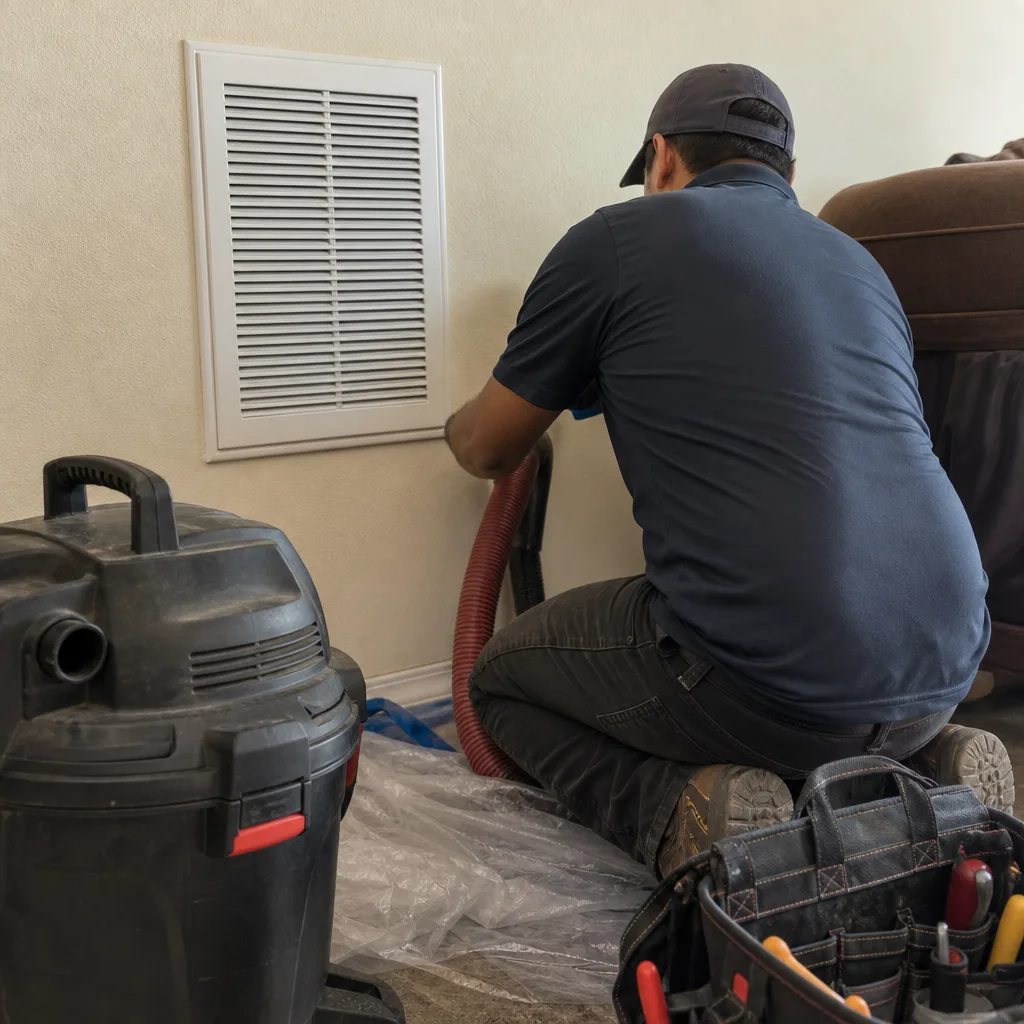
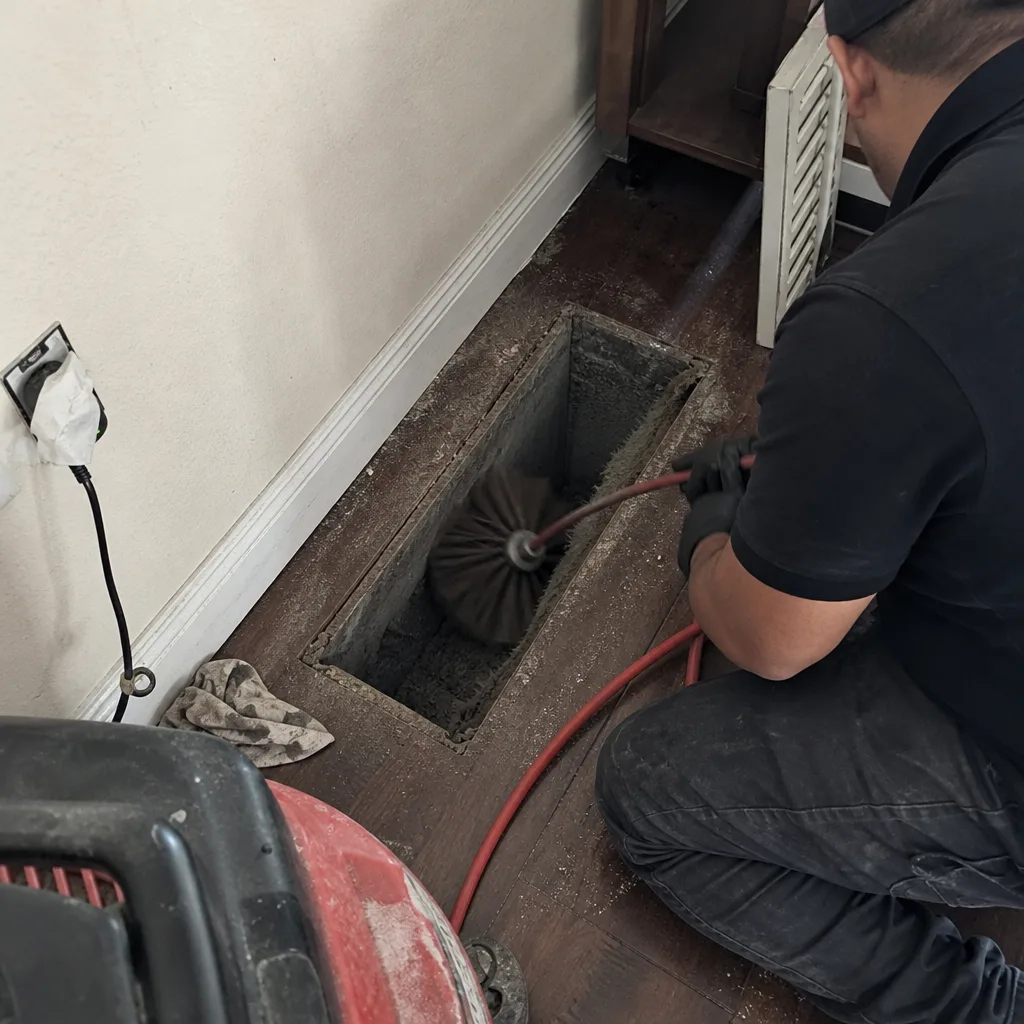
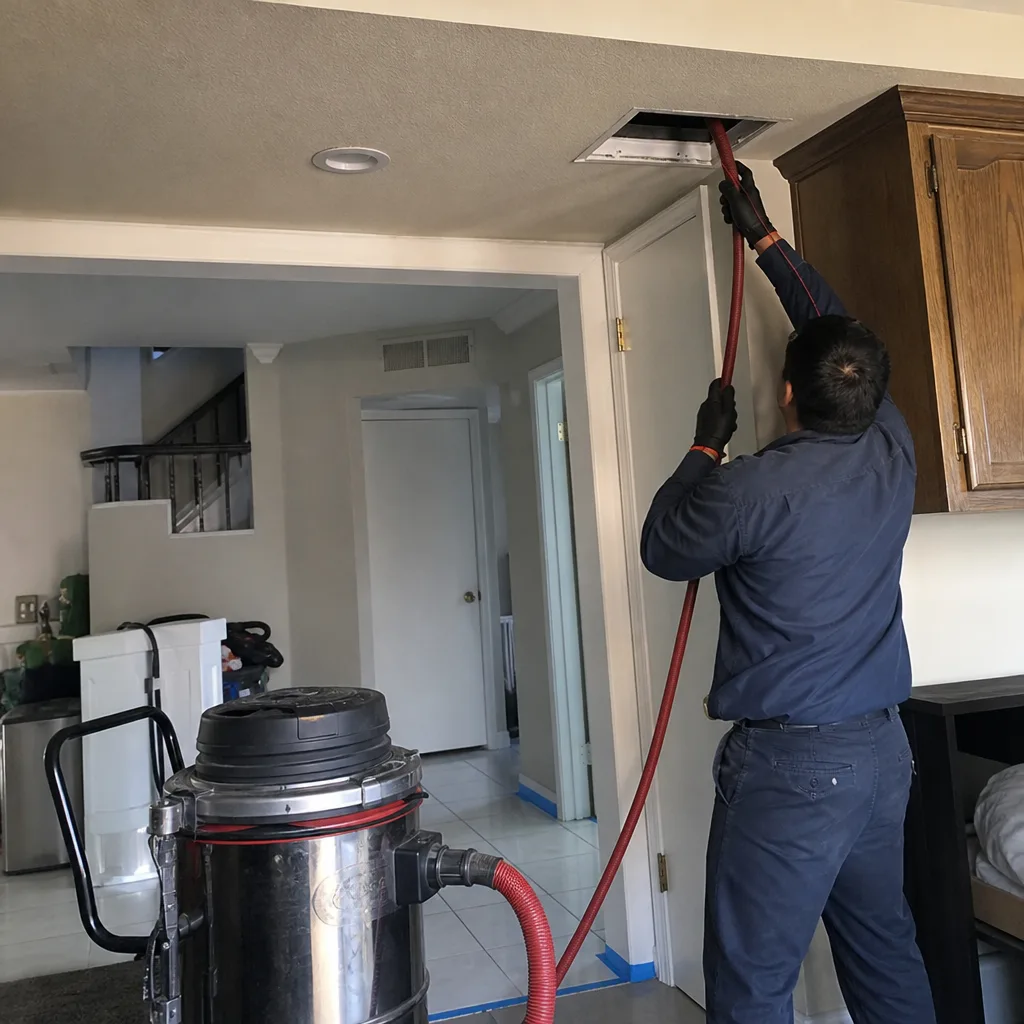
Contact cleaning means Air Duct Cleaning in Lake Elsinore that physically touches duct walls. Rotobrush rotary contact-cleaning systems send a rotating brush through each duct run, mechanically dislodging debris that air pressure alone cannot move. Simultaneously, a negative-air extraction system pulls the dislodged material out of the home – not through it.
The extraction side matters as much as the agitation side. We use Nikro and Abatement Technologies equipment – the same HEPA-grade extraction tools used in professional remediation. When we dislodge contamination, we capture it at 99.97% efficiency at 0.3 microns. That’s the difference between removing particulate from the system and recirculating it through your living room.
The simplest way to evaluate any cleaning quote: ask what equipment brand they use. If they can’t name it, or if the answer is “a vacuum truck,” you’re likely looking at blow-and-go. Equipment that remediators trust, applied to the ducts in your home – that’s the standard you’re paying for.
How to Read Your Own Duct System
Before a cleaning, it helps to understand what your ducts are made of. Different materials retain contamination differently, and Lake Elsinore homes span several construction eras with different standard materials at each.
Open your attic or crawlspace access and look. Here’s what you’ll find and what it means.
- Flex duct (flexible insulated tubing). The most common in homes built since the early 2000s – and that’s most of Lake Elsinore’s newer developments. Flex duct has a corrugated inner liner that traps dust in its ridges. The outer insulation jacket also collects dust on its exterior in the attic. Flex duct is more prone to sagging, disconnection, and puncture than any other material, which means cleaning often exposes damage. More on that later.
- Sheet metal duct (rigid galvanized steel). Found in older, well-built homes – often custom homes from the 1970s-1980s around the lake’s western shore and in Lake Elsinore’s historical districts. Sheet metal has smooth interior surfaces that clean effectively with contact methods. It’s also durable. Its weakness is at joints, where decades-old mastic and tape fail and begin leaking conditioned air into attics and crawlspaces.
- Fiberglass duct board (rigid panels of fiberglass). Common in homes from the 1980s and 1990s, including many in the neighborhoods off Mission Trail and around McVicker Canyon. Duct board has a porous interior surface that holds particulate more tenaciously than metal. It also degrades over time – edges can crumble, and the inner surface can shed fiberglass fibers into the airstream. Cleaning duct board requires gentler agitation than metal, which is why proper equipment calibration matters.
You can also inspect your return air registers without any special access. Pull one off and run a finger along the inside wall of the visible duct. If you feel a baked-on crust or see discoloration that doesn’t wipe away easily, that’s adhered film. If you see visible dust accumulation thicker than about 1/16 inch on the duct surface, the system likely needs attention regardless of when it was last cleaned.
The New Construction Problem in Lake Elsinore
Lake Elsinore has been one of Southern California’s fastest-growing housing markets for years, with major tract developments off Railroad Canyon Road, Grand Avenue, and in the foothills around Canyon Hills and Rosetta Canyon. New construction brings a specific set of duct problems that buying guides rarely mention.
The issue starts with the construction process itself. During framing, drywalling, and finishing, ducts are installed early, then left open while the rest of the build happens around them. Drywall dust, sawdust, insulation fibers, paint overspray, and general construction debris settle into the duct system before the homeowner ever receives keys. Builders do not clean ducts before closing – that’s simply not part of the standard build sequence.
Beyond the debris, there’s a more structural issue: seal quality at duct joints. Tract builders work fast, and duct sealing is where speed shows. We routinely find poorly sealed joints in homes under ten years old – gaps at plenum connections, loose flex runs at register boots, and mastic that cracked within the first two seasons of thermal cycling. Lake Elsinore’s temperature swings from summer afternoon highs above 100°F to winter mornings near freezing stress seal materials aggressively.
What does this mean for you in a newer Lake Elsinore home?
- Your ducts may have started contaminated from day one.
- Poorly sealed joints leak conditioned air into attics and crawlspaces, which means higher energy bills and – critically – negative-pressure problems that pull unfiltered attic air into the living space through gaps around registers and fixtures.
- New build friction: when a homeowner in a 5-year-old tract home calls us about dust accumulation and we find construction debris, they’re often surprised. Most assume new means clean. It doesn’t.
If you’re buying a home in Lake Elsinore – especially a resale in one of the newer developments – get the ducts inspected and cleaned before move-in. It’s the only window when the house is empty and the cleaning is maximally convenient. Duct Cleaning Lake Elsinore home service covers the full system, including the return plenum where construction debris concentrates.
When Cleaning Isn’t Enough: Repair Exposures
Here’s a truth most duct cleaning companies won’t tell you: thorough cleaning often exposes problems that were invisible before. When we remove years of dust and debris, we reveal what the dust was hiding – and sometimes what it was holding together.
This is why Air Duct Repair in Lake Elsinore is a core service, not an add-on. We repair what we find – no second appointment, no separate contractor.
Here’s what contact cleaning routinely exposes in Lake Elsinore homes:
- Mastic gaps at sheet metal joints. Old mastic dries, cracks, and falls away. Once the surrounding dust is removed, you can see daylight through the gap. That’s your conditioned air leaving the system, and unfiltered attic air being pulled in. Repair is straightforward: re-apply mastic, re-seal, done.
- Disconnected flex runs. In attics with high seasonal temperature swings, flex duct can pop off its register boot or plenum fitting entirely. Some disconnects are total – the duct is completely off. Others are partial, allowing significant leakage while still looking attached from a casual glance. Cleaning dislodges them and makes the separation obvious.
- Deteriorated liner material. In older duct board systems, the inner liner can crumble or have been damaged by past blow-and-go cleanings that used aggressive air pressure. Degraded liner sheds fiberglass into the air and provides a surface where biological growth develops easily. If we find this, the correct fix is section replacement or relining, not more cleaning.
- Punctured flex duct. Rodents, storage bumps in attics, and general wear create punctures in flex duct. A puncture in the outer jacket compromises the duct’s insulation; a puncture in the inner liner leaks air. Both are repairable on the spot.
The key takeaway: if your ducts have never been cleaned, assume the first thorough cleaning will reveal some level of repair need. That’s not an upsell. That’s what happens when you actually look at a system that’s been running for 10-20 years in Lake Elsinore conditions.
How Often Should You Actually Clean?
Here’s where we part ways with the generic “every 3-5 years” advice. The right interval for your Lake Elsinore home depends on specific factors, and you may need more frequent service than national guidance suggests.
Use this as a baseline and adjust for your situation:
- Homes in new developments (under 10 years old): Clean once shortly after purchase or build completion, then reassess every 2-3 years. The initial cleaning addresses construction debris that never should have been there. After that, interval depends on what you find. Homes near open construction lots accumulate dust faster.
- Homes near the lake or in the basin: Lake Elsinore’s location below the surrounding hills means particulate settles here. If you’re east of the 15 or within a mile of the lake’s eastern shore, expect to clean every 2-3 years, especially if your home predates 2005 and has older duct materials.
- Homes with pets, smokers (including vaping indoors), or candle users: These households produce more adhered film and dander. Clean every 2 years. We see systems in pet-heavy households that are visibly loaded within 18 months.
- Homes with allergy or asthma sufferers: More frequent cleaning isn’t a cure, but it is a meaningful component of reducing indoor particulate load. Clean every 2 years and upgrade your filtration. This is where working with Honeywell or Aprilaire IAQ systems makes a real difference – we can assess your whole-home air quality picture, not just the ducts.
- Homes affected by wildfire smoke events: If your home was smoked out during a Lake Elsinore-area fire event, schedule a cleaning once conditions clear. Don’t wait for a “regular interval.” Smoke contamination is qualitatively different from ordinary dust.
One of the most common questions we hear: “Isn’t duct cleaning something you do once every decade, if ever?” The honest answer is that in Lake Elsinore’s specific climate, that timeline just doesn’t hold up. An annual visual inspection – which we’re happy to do – will tell you more than any national guideline ever will.
Dryer Vents: The Separate Fire Risk
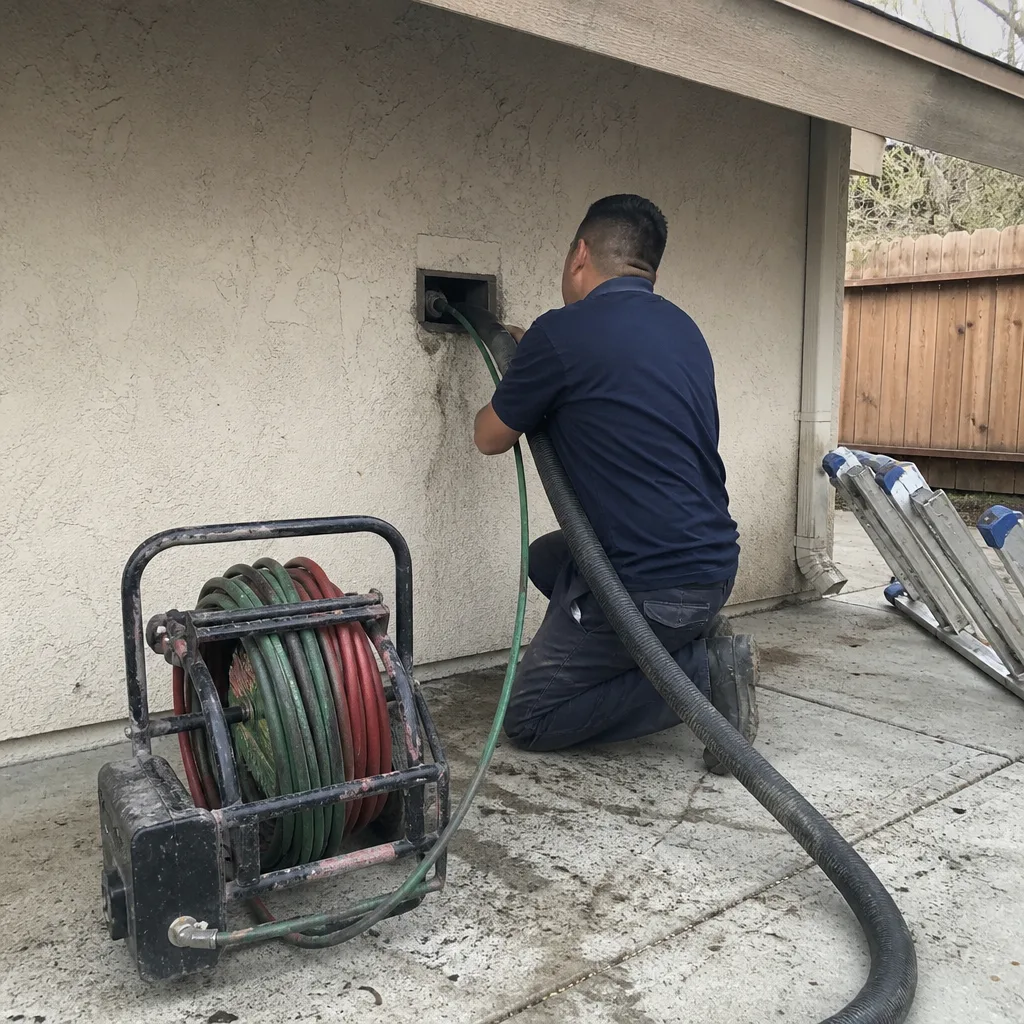
Your dryer vent is part of your home’s air ductwork, but it deserves separate discussion because the stakes are different. Dryer Vent Cleaning in Lake Elsinore isn’t an afterthought add-on – it’s fire prevention, and it’s the most under-serviced duct in most homes.
Lint accumulation in dryer vents is a documented leading cause of residential fires. The U.S. Fire Administration has reported thousands of dryer-related fires annually. Your dryer vent runs hot, it runs with lint-laden exhaust, and over time that lint compacts, restricts airflow, and becomes an ignition point. Lake Elsinore’s dry climate makes lint even more flammable, and our valley’s dust load means dryer vents pull in more ambient particulate than they would in a coastal climate.
Signs your dryer vent needs attention:
- Dryer takes longer than 40-50 minutes to dry a normal load.
- The dryer exterior gets unusually hot during operation.
- You smell a musty or burnt odor when the dryer runs.
- The vent flap outside doesn’t open when the dryer is on.
- Clothes come out hotter than normal, or the laundry room feels humid.
Dryer vent cleaning is a dedicated service – it’s a completely different process than air duct cleaning, requiring different equipment and different inspection points. If you’ve never had your dryer vent cleaned and your home is more than two years old, it’s likely time.
Common Mistakes to Avoid
- Falling for the “$49 whole-house special.” This is the industry’s classic bait-and-switch. The fine print limits the job to a set number of vents or registers, and everything beyond is an “upside surprise.” If a price seems dramatically lower than the equipment and time required to do the job properly, it’s because they’re not doing the job properly. Whole-system cleaning in Lake Elsinore takes hours, not 45 minutes.
- Believing that visible dust on registers means nothing. Some guides claim dust around registers is “normal.” It isn’t. It means particulate is escaping the duct system into your living space, which often means leakage at register boots or a return system that’s pulling unfiltered air.
- Skipping the inspection after cleaning. Any reputable cleaner shows you before-and-after photos. If a company can’t show you the state of your ducts post-cleaning, you have no way of knowing whether they did anything at all. Cameras are standard professional equipment.
- Treating all rooms equally. The return side of your system gets dirtiest because it handles unfiltered air. Many discount cleaners focus on supply registers and skip the return plenum entirely. That’s the equivalent of half a job.
- Waiting for a “sign” that ducts are dirty. By the time you see dust on furniture shortly after cleaning, or smell mustiness when the HVAC kicks on, the contamination is already significant. Duct contamination is mostly invisible in daily life; don’t use visible symptoms as your only trigger.
- Assuming newer homes don’t need service. This is perhaps the most Lake Elsinore-specific mistake. As covered earlier, new construction here is a major source of duct contamination. New home, dirty ducts is far more common than people think.
See the difference
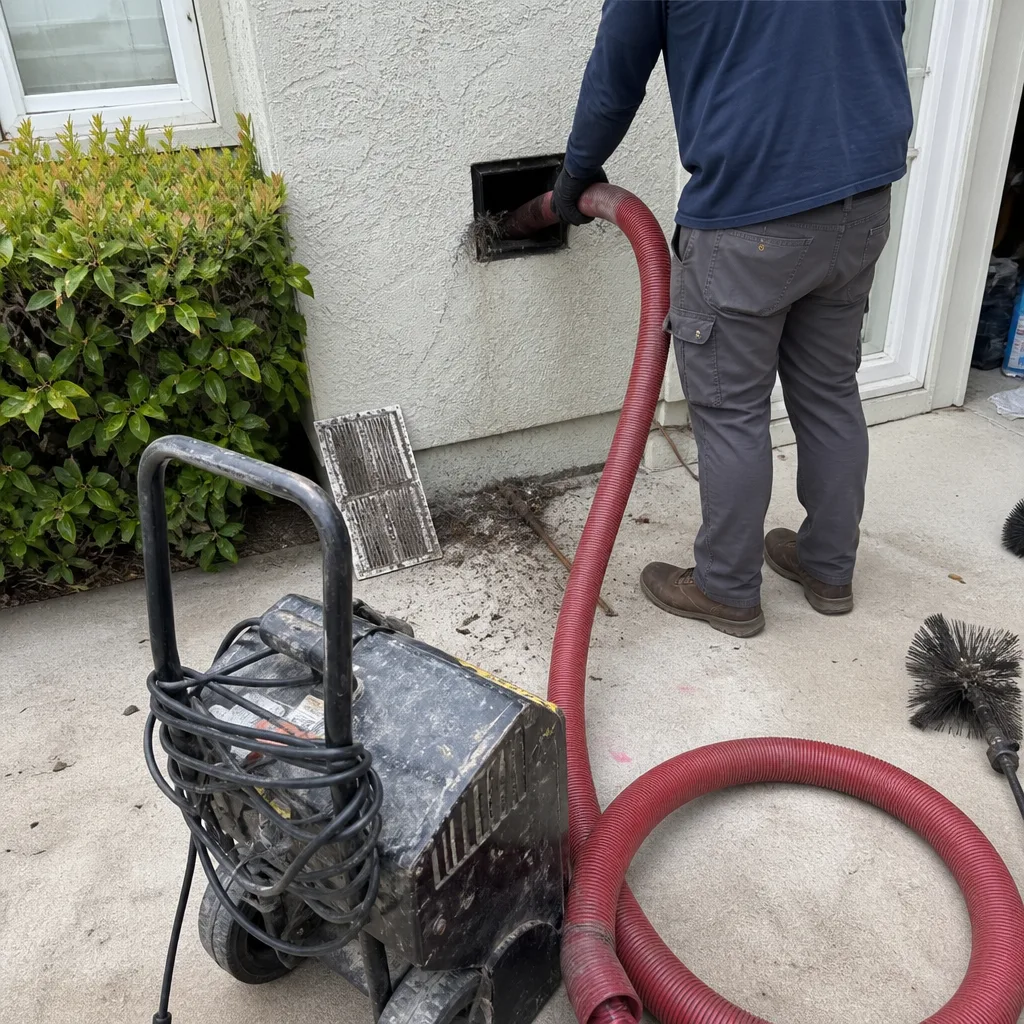 Before
 After
 Before
 After
 Before
 After
When to Call a Professional
Duct cleaning isn’t a DIY job, as DIY vs Professional Air Duct Cleaning: The Lake Elsinore Homeowner’s Decision Guide explores in detail. Proper contact cleaning requires specialized equipment – rotary brushes sized to your specific duct dimensions, negative-air extraction units with proper filtration, and inspection cameras to see what you’re doing. Attempting to clean ducts with a shop vac and a leaf blower does more harm than good: it dislodges contamination without capturing it, and it can damage liner material.
Call a professional if any of the following applies to your Lake Elsinore home: you’ve never had the ducts cleaned in a home over five years old; you’ve had wildfire smoke exposure; you see visible dust accumulation on duct surfaces; anyone in the household has unexplained allergy or respiratory symptoms that worsen at home; your energy bills have crept up without explanation; or you’re buying or selling a home and need the system assessed. Duct Cleaning Lake Elsinore offers free estimates in Lake Elsinore – call (855) 341-9943.
Frequently Asked Questions
In Lake Elsinore, a complete whole-system air duct cleaning typically ranges from $325 to $650 for an average single-family home, depending on system size, number of returns, and contamination level. The key pricing structure to look for is one flat price per system agreed before work starts – not a per-vent price that can balloon unpredictably or a teaser coupon that escalates once the technician arrives. Call (855) 341-9943 for an exact quote – estimates are free.
Cheaper quotes reflect cheaper methods. A discount quote under $200 for a whole-home cleaning typically signals a blow-and-go approach: limited air-only agitation with minimal surface contact, a timer-limited visit, and no post-cleaning photo documentation. These jobs leave adhered film and compacted debris in place. In Lake Elsinore, where adhered smoke film and mineral dust are the dominant contamination types, blow-and-go achieves very little. You’re paying less and getting less.
Ask for before-and-after photos of your own ductwork, taken with an inspection camera during the service. A legitimate company documents the system’s condition throughout: before agitation, after agitation, and post-extraction. You should see visibly clean duct walls in the after photos. If a company cannot provide this documentation, assume the work wasn’t done properly. Call (855) 341-9943 and we’ll walk you through exactly what an inspection report includes.
For Lake Elsinore specifically, every 2-4 years is the honest range, with homes near the lake, in new developments, or with pets and allergy sufferers trending toward the shorter end. Wildfire smoke exposure resets the clock immediately. National “every 3-5 years” guidance doesn’t account for our valley’s dust load, temperature swings, and annual fire-season particulate events.
Duct cleaning removes accumulated particulate – dust, pollen, dander, and fire smoke residue – that recirculates through the home with every HVAC cycle. It meaningfully reduces indoor particulate load, which helps allergy sufferers. But it’s one component of a larger IAQ picture. Pairing clean ducts with upgraded filtration, like whole-home systems from Honeywell or Aprilaire, delivers the best result.
They are different services targeting different systems. Air duct cleaning addresses the HVAC distribution system – supply and return runs, the plenum, and register boots. Dryer vent cleaning addresses the exhaust run from your dryer to the exterior vent cap. The equipment is different, the process is different, and the safety stakes differ too: one is about air quality and efficiency, the other is about fire prevention. Both are services we handle as standalone jobs, and yes, it makes sense to schedule them together.
The Bottom Line
Lake Elsinore’s ducts face contamination from wildfire smoke, valley dust, construction debris, and hard-water mineral particulate – a combination that shortens cleaning intervals and makes method selection more critical. Contact cleaning with simultaneous HEPA-grade extraction is the only approach that actually removes adhered contamination rather than redistributing it. And because thorough cleaning exposes what dust hides, the ability to repair what’s found – in the same visit – is the difference between a service call and an ongoing problem. For more guides & resources on keeping your system clean, explore our blog. If your home’s ducts haven’t been evaluated in the last two years, the smart next step is a free estimate at (855) 341-9943.
Written by the team at Duct Cleaning Lake Elsinore, serving Lake Elsinore since 2014.