
Last updated November 2, 2026
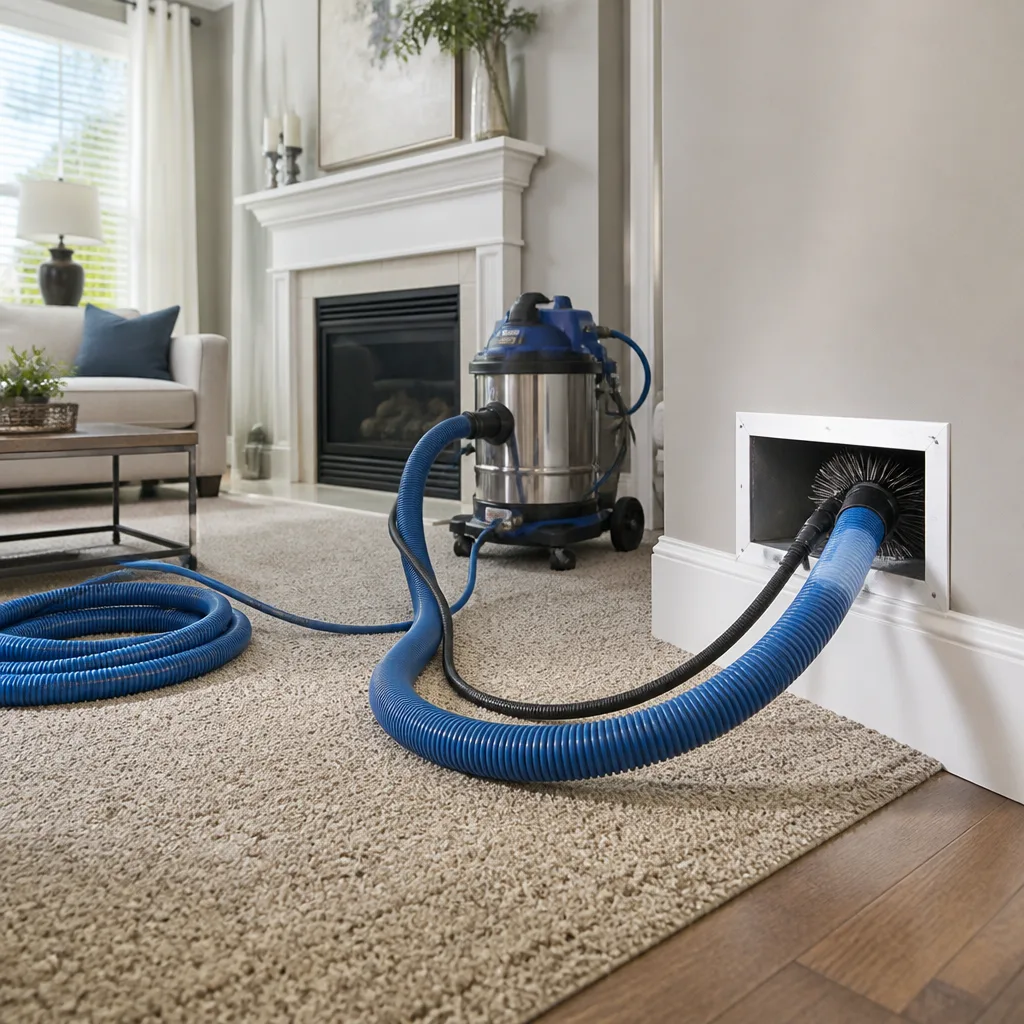 Whole-home duct cleaning
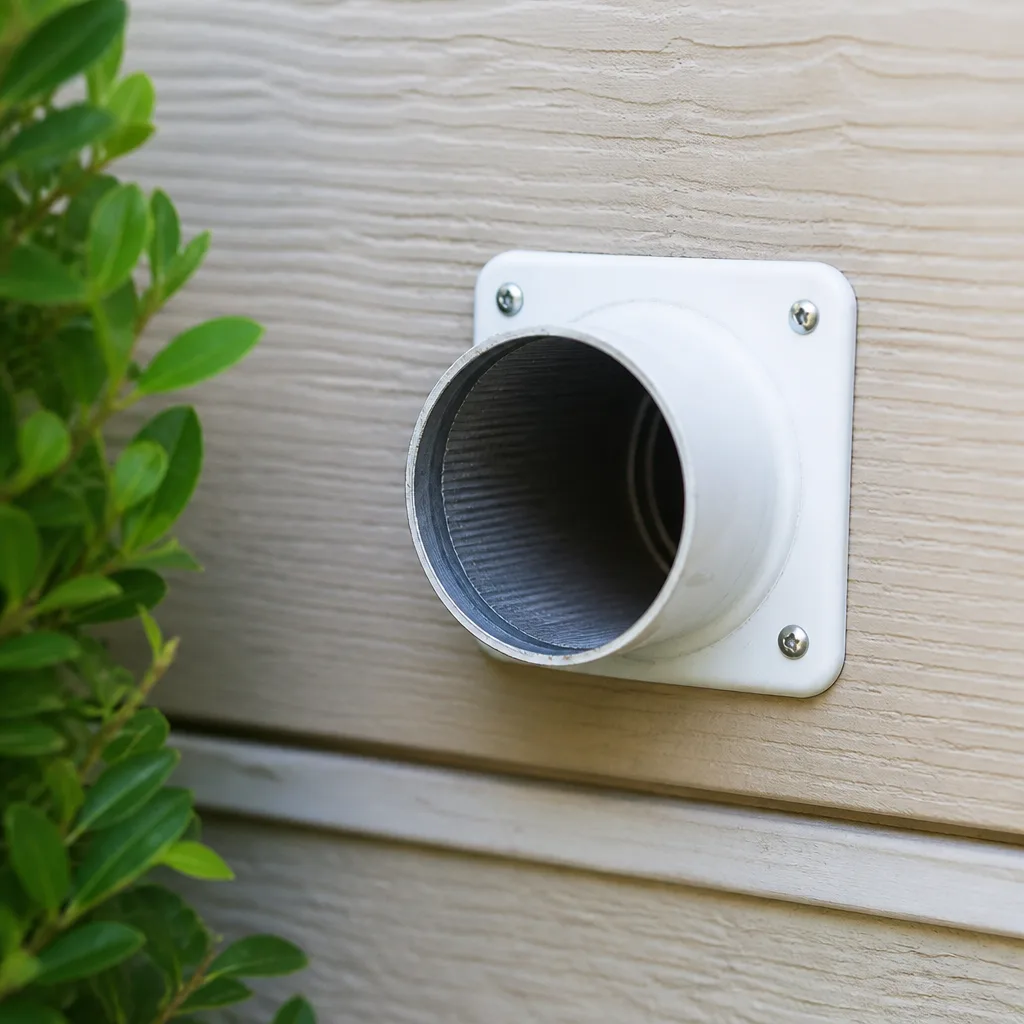 Dryer vent cleaning
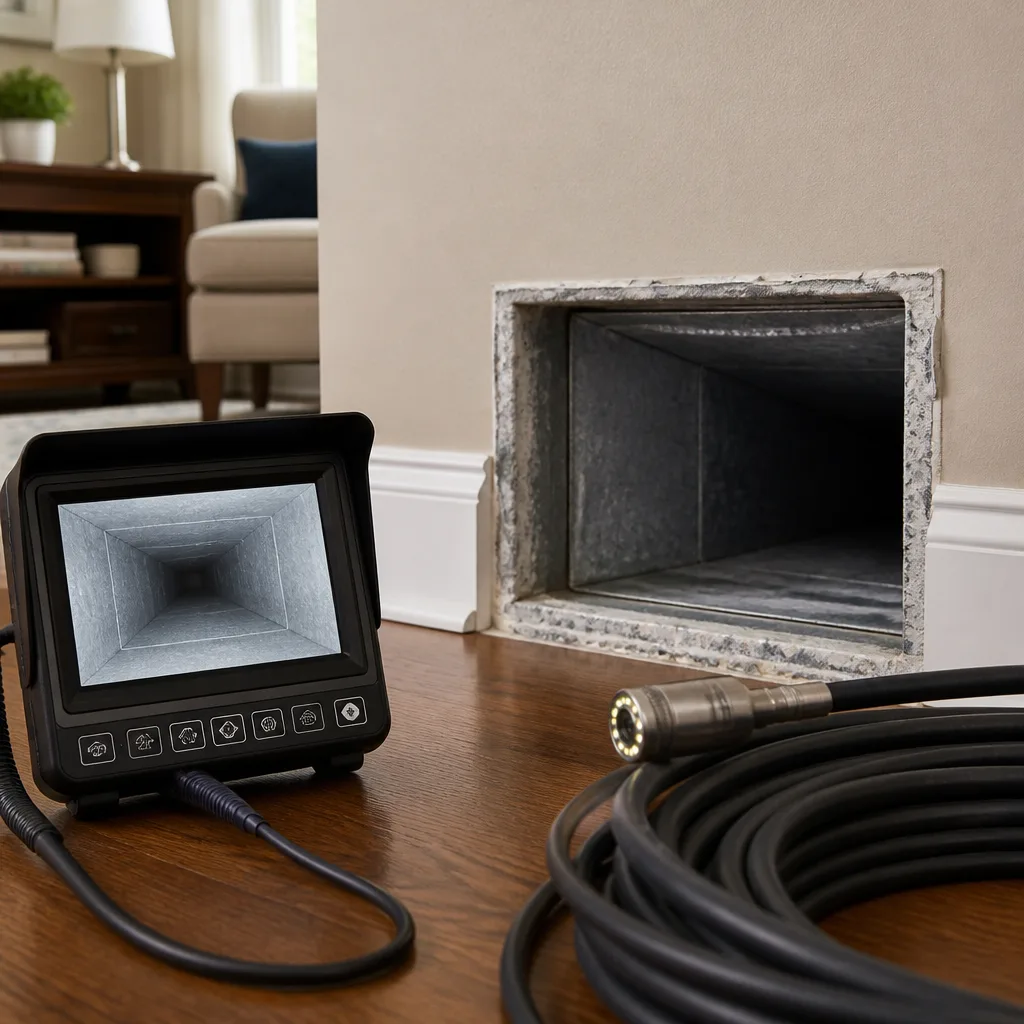 Camera inspection
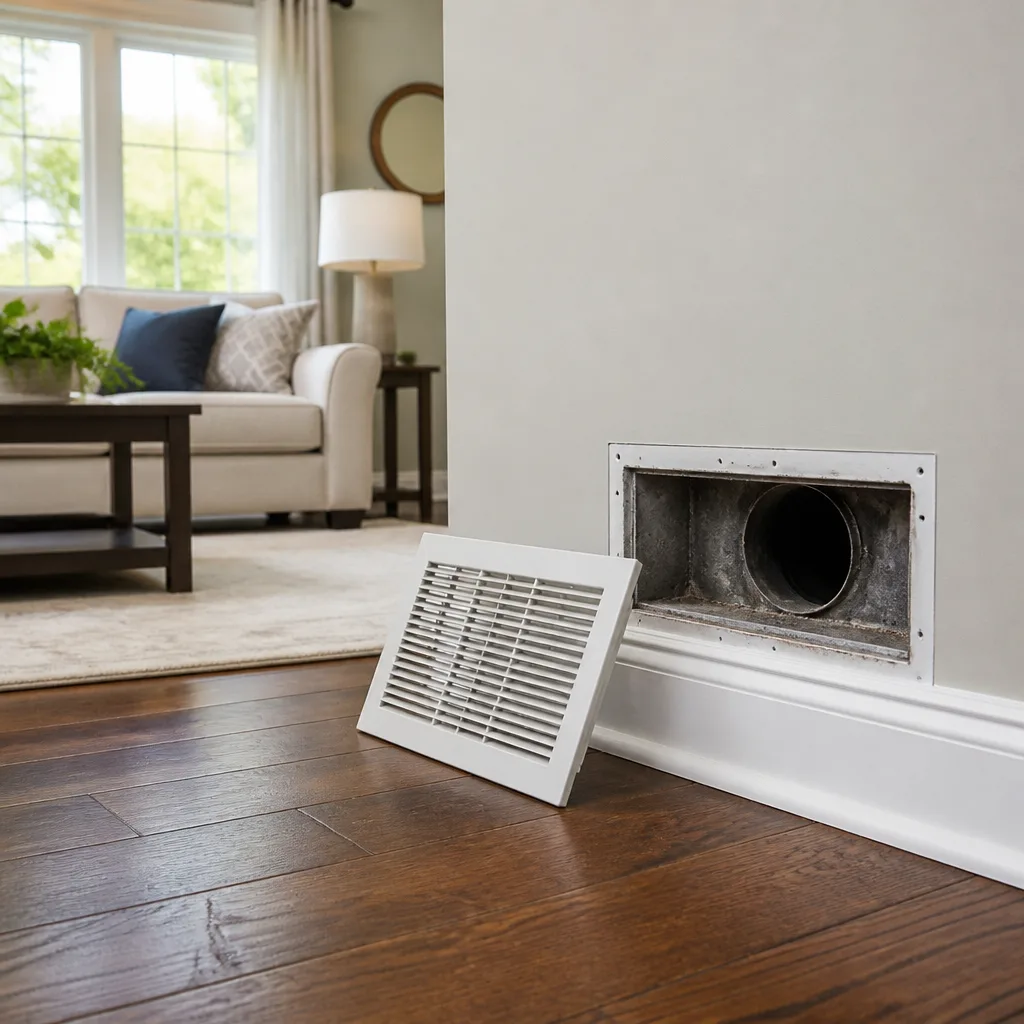 Sanitizing & deodorizing
Whole-system duct and dryer vent check with before-and-after photos - you see exactly what came out of your vents
That "$99 whole-house special" is a bait ad - the real number appears once they are in your hallway, or the "clean" is a shop-vac at the register. We photograph the inside of your ducts before and after instead.
Air Duct Cleaning Permits, Codes & Inspections in CA: What You Need to Know
Here’s something that catches most Lake Elsinore homeowners off guard: the actual act of cleaning air ducts rarely requires a permit anywhere in California. But the repair work that cleaning often exposes – the separated plenum, the crushed return, the duct seam that’s been leaking conditioned air into a hot Riverside County attic for years – frequently does. And that’s where the trouble starts. We’ve watched a single unpermitted duct modification turn a routine escrow into a canceled sale. This guide – along with our Air Duct Cleaning Warning Signs: A Lake Elsinore Homeowner’s Reference Guide – explains where the line sits between permit-exempt maintenance and trigger-work under California Mechanical Code and Title 24, and what to ask any contractor before the work begins.
Styles & brands we work with
- Whole-home duct cleaning
- Dryer vent cleaning
- Camera inspection
- Sanitizing & deodorizing
Quick Answer
Routine air duct cleaning in California does not require a permit. However, when cleaning reveals damaged, disconnected, or undersized ductwork that must be repaired, replaced, or reconfigured, that work typically falls under California Mechanical Code permit requirements. Any significant duct repair or replacement in a single-family home also triggers California Title 24 duct leakage testing and verification by a HERS rater.
Table of Contents
- What California Law Says About Duct Cleaning Permits
- When Duct Work Crosses Into Permit Territory
- Title 24 Duct Leakage: The Code Most Homeowners Never Hear About
- Riverside County Permits for Duct Repair: How It Actually Works in Lake Elsinore
- The Real Risk of Unpermitted Duct Modifications
- Questions to Ask a Contractor About Permits Before Work Starts
- Cleaning vs. Repair: Why the Distinction Matters More Than You Think
- Common Mistakes to Avoid
- When to Call a Professional
- Frequently Asked Questions
- The Bottom Line
What California Law Says About Duct Cleaning Permits
California Mechanical Code (CMC), which is adopted statewide and amended locally, governs mechanical systems in residential buildings. The code requires mechanical permits for the “installation, alteration, repair, replacement, or addition” to mechanical systems. Duct cleaning is none of those things. It is maintenance – the removal of accumulated dust, debris, and contaminants from the interior surface of existing ducts. No structural change. No reconfiguration. No material alteration. Therefore, no permit.
This holds true whether you hire a professional air duct cleaning service in Lake Elsinore or handle it yourself (though we strongly discourage DIY approaches for anything beyond registers and visible boots). The permit exemption applies to:
- Rotary or contact cleaning of existing duct runs
- Negative-pressure extraction and HEPA filtration of duct interiors
- Dryer vent cleaning, which is an exhaust maintenance task, not a mechanical modification
- Register and grille removal, cleaning, and reinstallation
- Visual inspection with cameras or borescopes
In our experience across Lake Elsinore and surrounding Riverside County, roughly 85% of what we do on a typical job is genuinely permit-exempt. The complication arises with the other 15%. And the complication is almost always worth understanding before the work starts, not after.
When Duct Work Crosses Into Permit Territory
The line between cleaning and construction gets crossed when a technician does more than remove debris from the interior of an existing duct. Under California Mechanical Code Section 106.2, mechanical work requiring a permit includes any alteration to the duct system itself. In plain language, the following typically require a mechanical permit in Riverside County:
Permit-Triggering Duct Work
- Replacing a section of duct – If a section is collapsed, crushed, or damaged beyond surface cleaning, cutting it out and installing new duct is a repair requiring permit
- Modifying a plenum – Enlarging, relocating, or rebuilding the supply or return plenum is a mechanical alteration
- Installing new registers or adding supply runs – Adding a new duct run to serve an existing or new room is new mechanical work
- Sealing ductwork with mastic or Aeroseal-type products – This one surprises people. Full-system duct sealing is considered a repair or alteration, and under many California jurisdictions, it falls under the same mechanical permit as duct replacement
- Replacing or rerouting the main trunk line – If the main supply trunk is damaged or poorly configured and gets replaced, that’s a substantial mechanical alteration
- Converting a system – Changing from a single-zone to a dual-zone system by adding dampers and controls is mechanical work requiring permit
Here’s the practical scenario we see frequently in Lake Elsinore homes. A homeowner schedules Air Duct Cleaning services. During the job, the technician finds that a return duct in the attic has separated at the seam – a common failure in Riverside County’s summer heat, where attic temperatures routinely exceed 140°F and mastic tape degrades. Reconnecting that duct and resealing it is repair work. The homeowner wants it fixed on the spot, which is reasonable. But that repair technically falls under the mechanical permit umbrella. The right contractor knows this, explains it, and handles the permit process. The wrong contractor shrugs and says, “We don’t need a permit for this.”
That shrug is the problem this entire guide exists to address.
Title 24 Duct Leakage: The Code Most Homeowners Never Hear About
California’s Title 24, Part 6 – the state’s Building Energy Efficiency Standards – contains specific duct leakage requirements that apply whenever ductwork is significantly repaired, altered, or replaced. Here’s what the code says and why it matters to you.
What Title 24 Requires for Duct Work
When ducts are installed, replaced, or substantially repaired in a California home, the completed duct system must pass a leakage test. For new or replaced ducts in climate zones like ours, the maximum allowable leakage is:
- 6% of total system airflow for ducts in conditioned space
- 12% of total system airflow for ducts in unconditioned space (attics, crawlspaces)
Most Lake Elsinore homes have ducts in unconditioned attics, which means the 12% threshold applies. To verify compliance, the code requires testing by a certified HERS (Home Energy Rating System) rater. The HERS rater measures actual leakage using a duct blaster and documents that the system meets the required threshold. That documentation goes into the permit record.
What This Means for a Duct Cleaning Customer
Here’s the catch most homeowners don’t anticipate. If duct cleaning exposes damage requiring more than incidental repair, and that repair involves a meaningful portion of the duct system, the local building department may require the entire affected system to be brought into Title 24 compliance. That means:
- A mechanical permit must be pulled
- The repair work must be performed to code
- A HERS rater must test the completed duct system
- The test results must pass before the permit is signed off
This is not malicious bureaucracy. It exists because leaky ducts are one of the largest sources of residential energy waste in California. A duct system that leaks 30% of its airflow into a hot attic forces your air conditioner to work harder, wastes hundreds of dollars annually, and puts a measurable drag on the state’s grid during summer peak. Title 24 is California’s answer to that problem.
The practical implication for Lake Elsinore homeowners: when the cleaning job reveals substantial duct problems, the conversation shouldn’t just be about “can you fix this?” It should also be about “does this repair trigger HERS testing?” A contractor who can answer that question accurately is worth more than one who avoids it.
Riverside County Permits for Duct Repair: How It Actually Works in Lake Elsinore
Lake Elsinore falls under Riverside County’s building jurisdiction. The county processes mechanical permits through its Building & Safety Department. Here’s what the process looks like when duct repair work requires a permit:
Step 1: Determine Permit Requirement
The contractor (or homeowner, if self-performing) submits a description of the proposed work to Riverside County Building & Safety. For simple duct repair or replacement, this is typically an over-the-counter mechanical permit. No lengthy plan review. No architectural drawings. A qualified contractor knows exactly what to submit.
Step 2: Pay Fees and Obtain the Permit
Riverside County mechanical permit fees are based on the valuation of the work. For a typical duct repair job – replacing a section of trunk line or reconnecting separated runs – the fee is modest. We typically see permit fees between $150 and $400 depending on the scope. The contractor passes this cost to the homeowner, and it should appear as a line item on the proposal.
Step 3: Perform the Work
The permitted work is completed. If the scope triggers HERS testing, the contractor schedules the rater after the work is done but before the final inspection. The rater tests the duct system, documents leakage, and submits the results to the county.
Step 4: County Inspection
A county inspector visits the property to verify the work matches the permit scope and meets code. If HERS testing was required, the inspector confirms the test results are on file before signing off. The permit closes.
This process sounds bureaucratic, but in practice it’s typically one county visit and one HERS test. The entire cycle usually takes one to two weeks, including scheduling. The benefit is a documented, code-compliant repair that will never become a liability at resale.
What does this look like from our side of the table? When our air duct repair service in Lake Elsinore finds damage during a cleaning job, we explain the permit requirement before any repair quote is issued. We pull the permit, we coordinate the rater if needed, and we handle the inspection. The homeowner knows the total cost up front – there’s no surprise permit line item after the work starts.
The Real Risk of Unpermitted Duct Modifications
Unpermitted duct repair work creates three specific risks that most homeowners never consider until it’s too late.
1. Home Sale Disclosure Problems
California’s real estate disclosure requirements are aggressive. Sellers must disclose any known unpermitted work to buyers. If a homeowner had duct replacement or major duct sealing done without a permit, and the buyer later discovers the issue, the seller can face legal exposure. In Lake Elsinore’s active market, we’ve seen unpermitted duct modifications become a sticking point in escrow negotiations – sometimes killing the deal entirely, sometimes forcing the seller to pull the permit retroactively at tripled expense.
2. Insurance Claim Risk
If unpermitted duct work is connected to a later loss – a fire started by faulty dryer vent repair, or water damage from an improperly sealed duct – the insurance company may deny the claim on the grounds that the unpermitted modification was the proximate cause. This isn’t a hypothetical. Insurance adjusters look for exactly this kind of gap when evaluating mechanical-related claims.
3. HERS Rater Conflicts at Resale
If a home undergoes a Title 24 compliance check as part of a sale (common with newer homes or after major renovations), and the ductwork shows evidence of unpermitted alteration, the HERS rater will flag it. The seller then faces a last-minute scramble to legalize the work or accept a price concession.
The financial math is straightforward. A permit and HERS test for a typical duct repair job adds $200 to $700 to the total cost. Retroactively legalizing unpermitted work, or accepting a buyer’s escrow holdback, costs far more – often thousands. The permit is the cheaper path.
Questions to Ask a Contractor About Permits Before Work Starts
Before any duct cleaning or repair job begins, get clear answers to these five questions:
- “If you find repair work during the cleaning, who pulls the permit?” – The contractor should say they do, or that they’ll handle the complete permit process on your behalf. If they say permits aren’t needed for any duct work, period, that’s a red flag.
- “Does this repair trigger Title 24 HERS testing?” – A qualified contractor should know the answer immediately. If they hesitate or seem unclear, they may not have dealt with this before.
- “Will the permit cost be itemized on my proposal?” – It should be. Permit fees are pass-through costs to the homeowner, and a good contractor discloses them up front.
- “What happens if the inspector finds an issue?” – The contractor should be responsible for corrective work and reinspection. This is their responsibility, not yours.
- “Are you comfortable with the fact that I’ll want to close the permit before final payment?” – This is a reasonable request. A contractor who balks at permit closure before payment may have something to hide.
One more thing worth saying plainly: “we never pull permits for this” is an answer worth scrutinizing. Some contractors genuinely believe that duct work flies under the radar. Technically, a small reconnection job might. But the moment the scope involves replacement, alteration, or new installation, the law is clear. And the risk lands on the homeowner, not the contractor.
Cleaning vs. Repair: Why the Distinction Matters More Than You Think
The permit conversation usually starts with a question about the difference between cleaning and repair. Here’s the operational distinction that shapes everything:
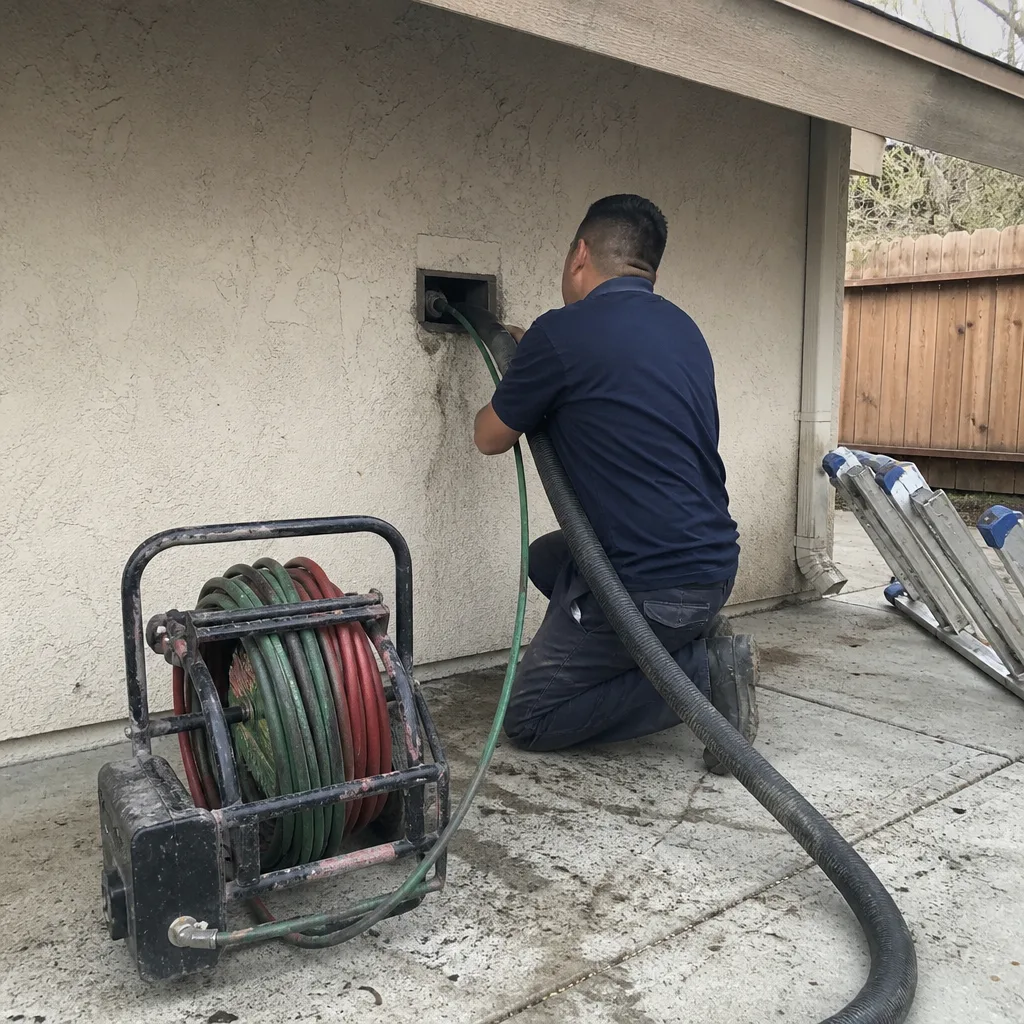
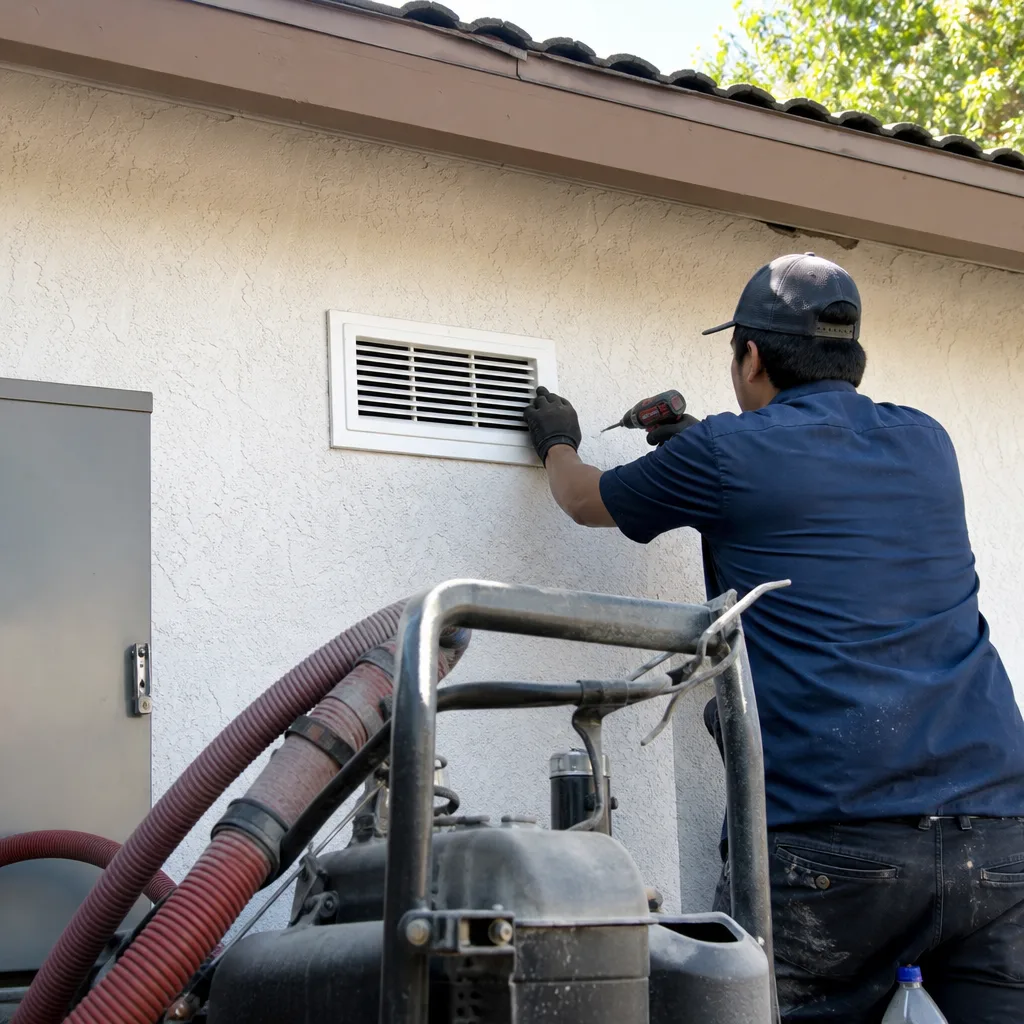
Duct cleaning removes material from the interior of existing ducts. The ducts stay where they are, in the configuration they were originally installed. Nothing structural changes. The equipment we use – Rotobrush rotary contact-cleaning systems paired with Nikro HEPA-grade extraction – physically dislodges and removes debris without modifying the duct system itself.
Duct repair changes the structure or configuration of the duct system. Reconnecting a separated joint. Replacing a crushed section. Sealing leaks with mastic. Rebuilding a plenum. Adding a run. These are mechanical alterations, and they sit squarely on the permit side of the line.
This is exactly why we’ve structured our duct cleaning services in Lake Elsinore to include repair capability as a core service. When we find damage during a cleaning job, we don’t just report it and drive away. We fix it – properly, with the right permit, coordinated inspection, and documentation. The homeowner doesn’t have to find a second contractor, and the clean system we just restored isn’t compromised by leaving a known defect in place.
We also use Abatement Technologies equipment for HEPA-grade extraction, the same class of equipment professional remediators use. That matters because the goal of cleaning isn’t just visual improvement – it’s removing contaminants from the air path. If dislodged debris isn’t captured at the source, it ends up recirculating through the home. The equipment choice is a health decision, not a marketing bullet point.
Common Mistakes to Avoid
- Assuming because cleaning didn’t need a permit, no permit is ever needed. Cleaning is maintenance. Repair, replacement, and alteration are mechanical work. The distinction matters, and it’s written into the California Mechanical Code in plain language.
- Letting a contractor do major duct sealing without a permit. Full-system sealing falls under the mechanical permit umbrella in Riverside County. If a contractor offers to seal all your ducts for a flat fee with no permit, that’s a problem.
- Thinking HERS testing only applies to new construction. It also applies to significant duct replacement and repair in existing homes. A contractor who doesn’t mention HERS when the scope calls for it may not know the code.
- Deferring a repair found during cleaning because “it’s been fine so far.” A separated return duct pulling hot attic air during a Lake Elsinore summer is quietly costing you money and loading your system with dust. The permit and repair are cheaper than another year of 140°F attic air in your supply stream.
- Paying in full before the permit is closed. If the work required a permit, hold final payment until the county signs off. This protects you if the contractor fails the inspection and disappears.
- Not asking about dryer vent permits when vent work is involved. Replacing a dryer vent or rerouting its exhaust path can be a mechanical alteration. Most dryer vent cleaning in Lake Elsinore is permit-exempt, but vent replacement is a different matter. Ask.
- Trusting a low-price duct cleaning offer that doesn’t mention repair capability. Discount cleaners often won’t touch repairs because repairs are where permits, inspections, and HERS testing enter the picture. When we use equipment like Guardsman-brand tools alongside our primary systems, it reflects a standard of work that doesn’t run from code compliance.
When to Call a Professional
Call a professional when the duct cleaning conversation starts to include repair language. If a technician tells you a duct is separated, a section is crushed, the plenum needs rebuilding, or the system needs full sealing, that’s no longer a maintenance conversation. That’s a mechanical work conversation, and it needs a contractor who understands permits, HERS testing, and the Riverside County inspection process. Duct Cleaning Lake Elsinore offers free estimates across the Lake Elsinore area. Call (855) 341-9943 to discuss what your cleaning job might reveal and how to handle any repair scope correctly.
Frequently Asked Questions
No. Routine air duct cleaning – the removal of dust and debris from existing ducts without structural alteration – is permit-exempt maintenance under the California Mechanical Code. The permit question only arises when cleaning exposes damage requiring repair, replacement, or reconfiguration of the duct system.
Replacing a section of duct, modifying or rebuilding a plenum, installing new supply runs or registers, full-system duct sealing, and rerouting or replacing the main trunk line all trigger mechanical permit requirements in Riverside County. A small reconnection of a separated joint may or may not require a permit depending on scope and inspector discretion, but the conservative and correct approach is to pull the permit whenever the work alters the duct system.
Title 24, Part 6 requires that significantly repaired or replaced duct systems meet leakage thresholds – typically 12% of total airflow for ducts in unconditioned attics, which describes most Lake Elsinore homes. A HERS rater performs the test, and the results are filed with Riverside County before the permit closes. This requirement is non-negotiable when the repair scope triggers it.
California disclosure law requires you to disclose known unpermitted work. If you don’t – or if a buyer discovers the issue independently – you face negotiation leverage loss, escrow complications, or post-sale legal exposure. In our experience, unpermitted duct modifications routinely become a point of contention in Lake Elsinore real estate transactions.
In California, a homeowner who lives in the property can pull their own mechanical permit for duct work they perform themselves. But the HERS testing requirement still applies to qualifying work, and the county inspector will hold the work to the same code standard regardless of who did it. Most homeowners find that hiring a contractor who handles permits as part of the job is more practical and less prone to code mistakes.
Typical permit fees for residential duct repair work in our area fall between $150 and $400 depending on scope, plus HERS rater fees of roughly $300 to $500 if testing is required. The contractor should itemize these costs on the proposal before work begins. If a contractor won’t tell you the permit fee up front, ask harder questions.
The Bottom Line
Duct cleaning doesn’t need a permit in California, and that’s the simple truth. But the repair work cleaning frequently uncovers is a different story. California Mechanical Code draws a clear line between maintenance and modification, and Riverside County enforces that line through its mechanical permit process. Title 24 adds the HERS testing layer that most homeowners have no idea exists until the permit application lands on the counter. Knowing where the line sits – and hiring a contractor who respects it – is the difference between a clean duct system and a clean duct system that creates no headaches at resale. For more guides & resources, visit our blog. Get the work done right, with the paperwork to prove it.
Written by the team at Duct Cleaning Lake Elsinore, serving Lake Elsinore since 2014.
See the difference
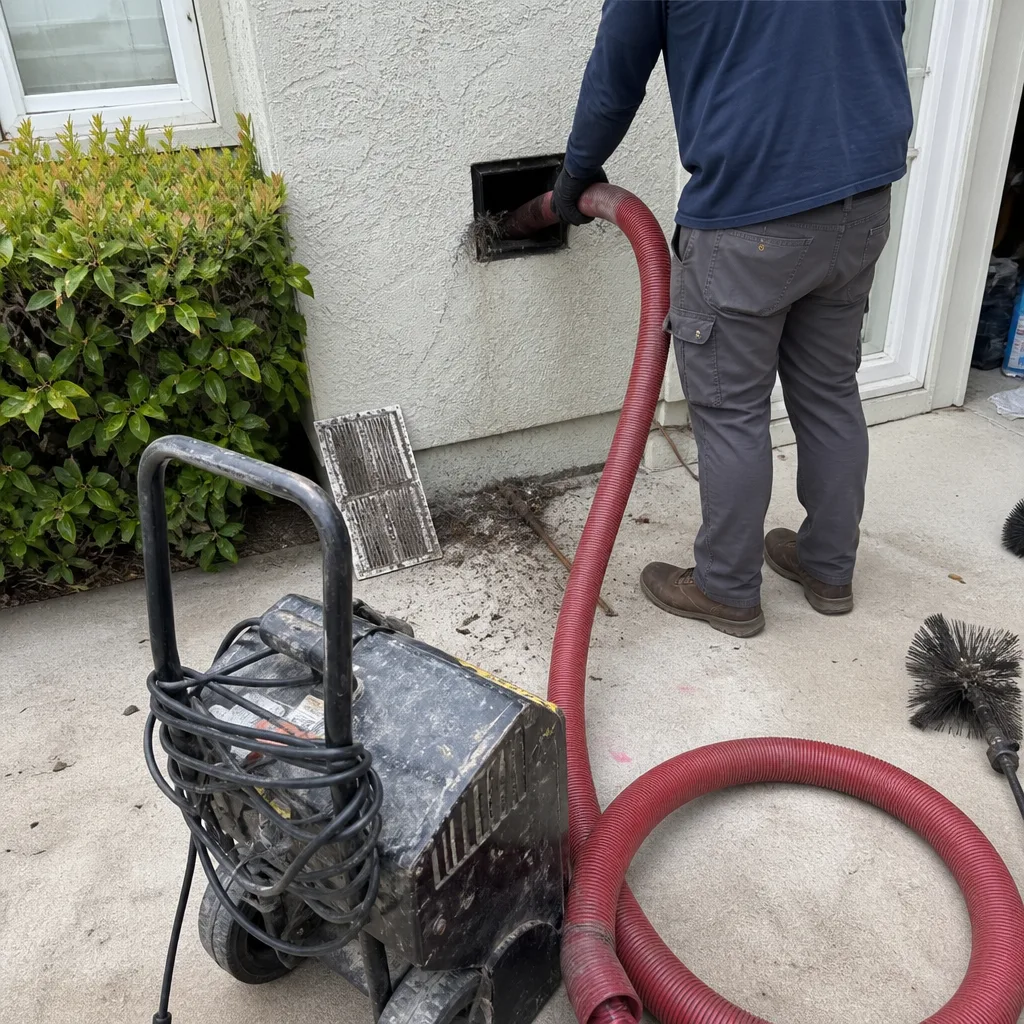 Before
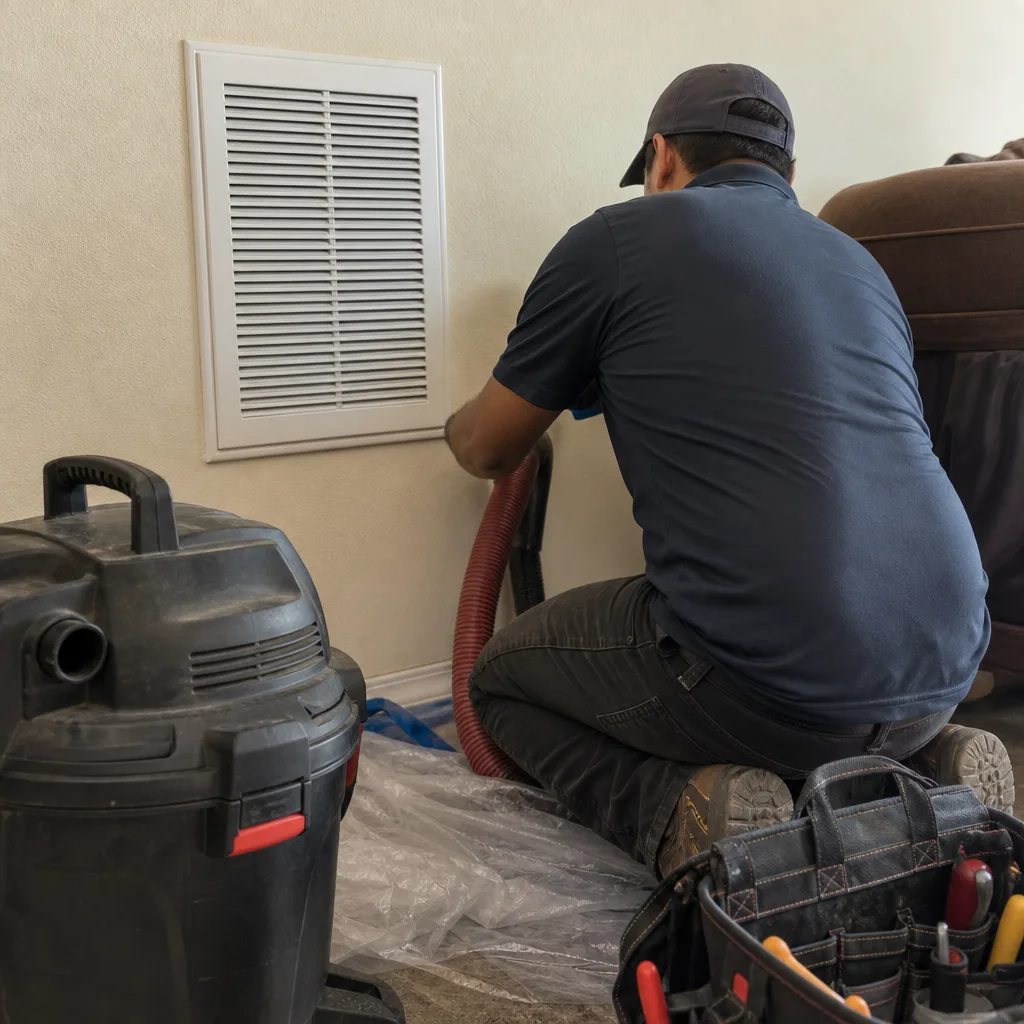 After
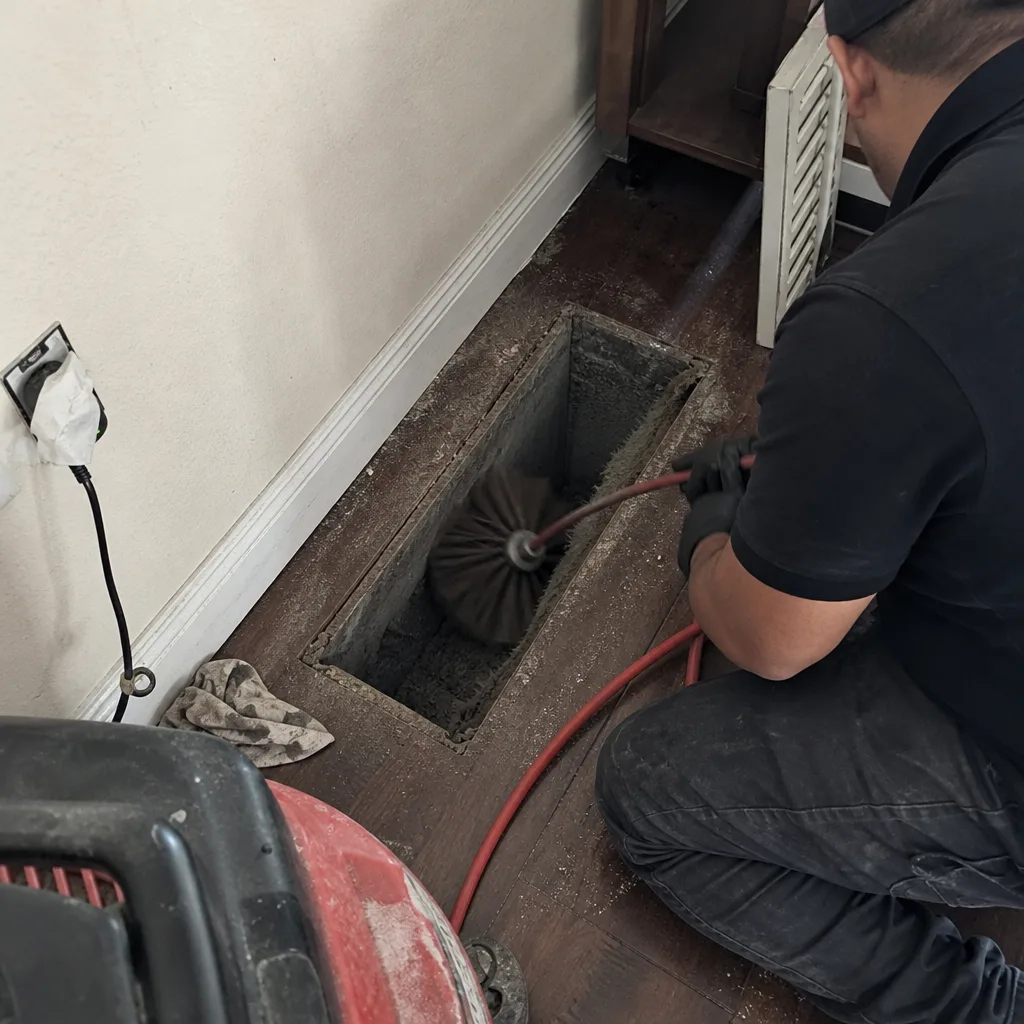 Before
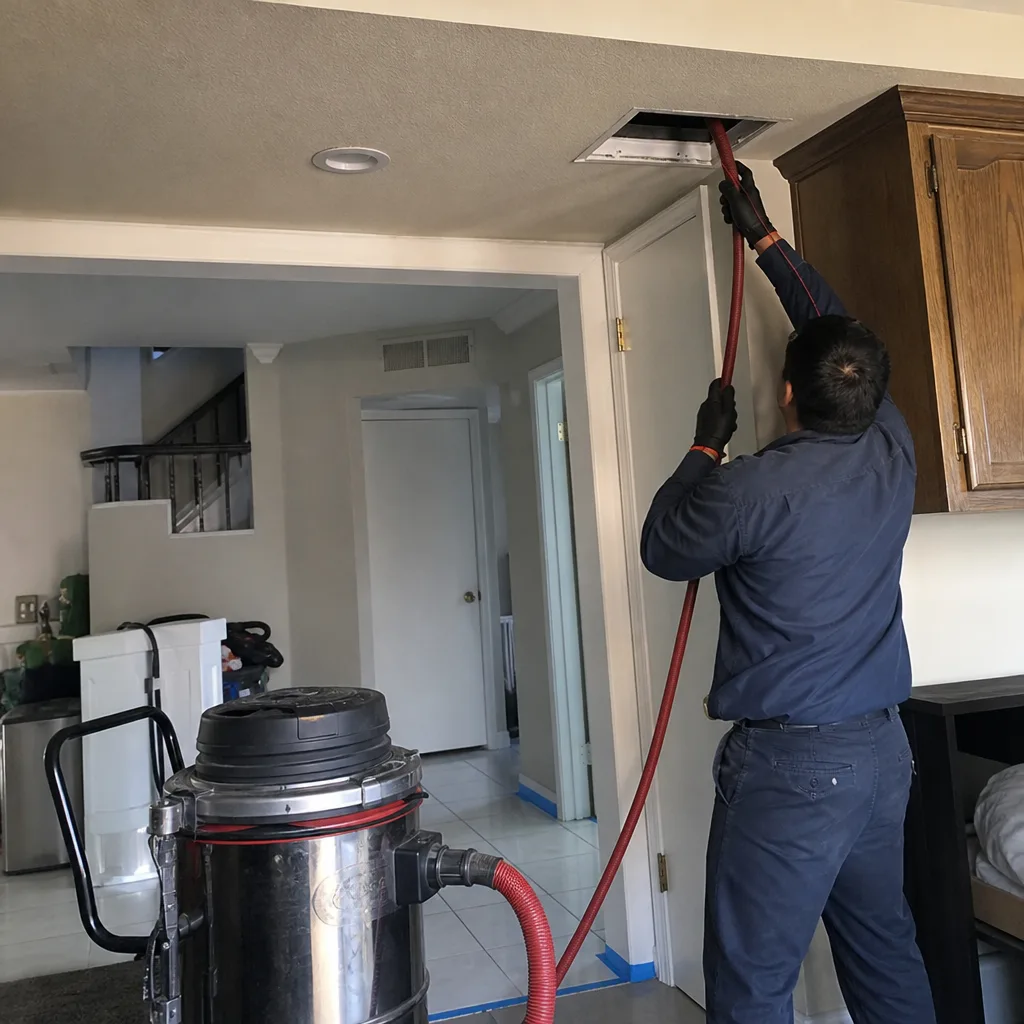 After
 Before
 After