
Last updated November 2, 2026
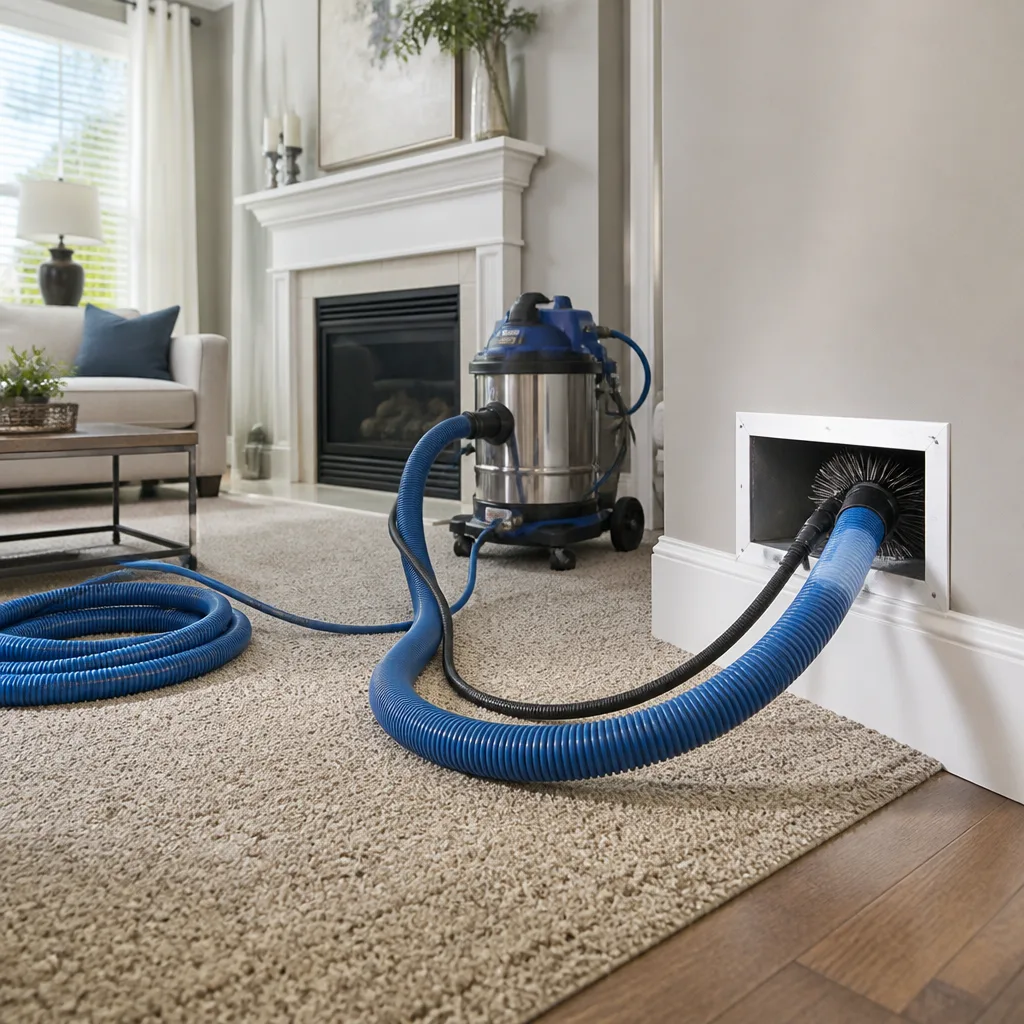 Whole-home duct cleaning
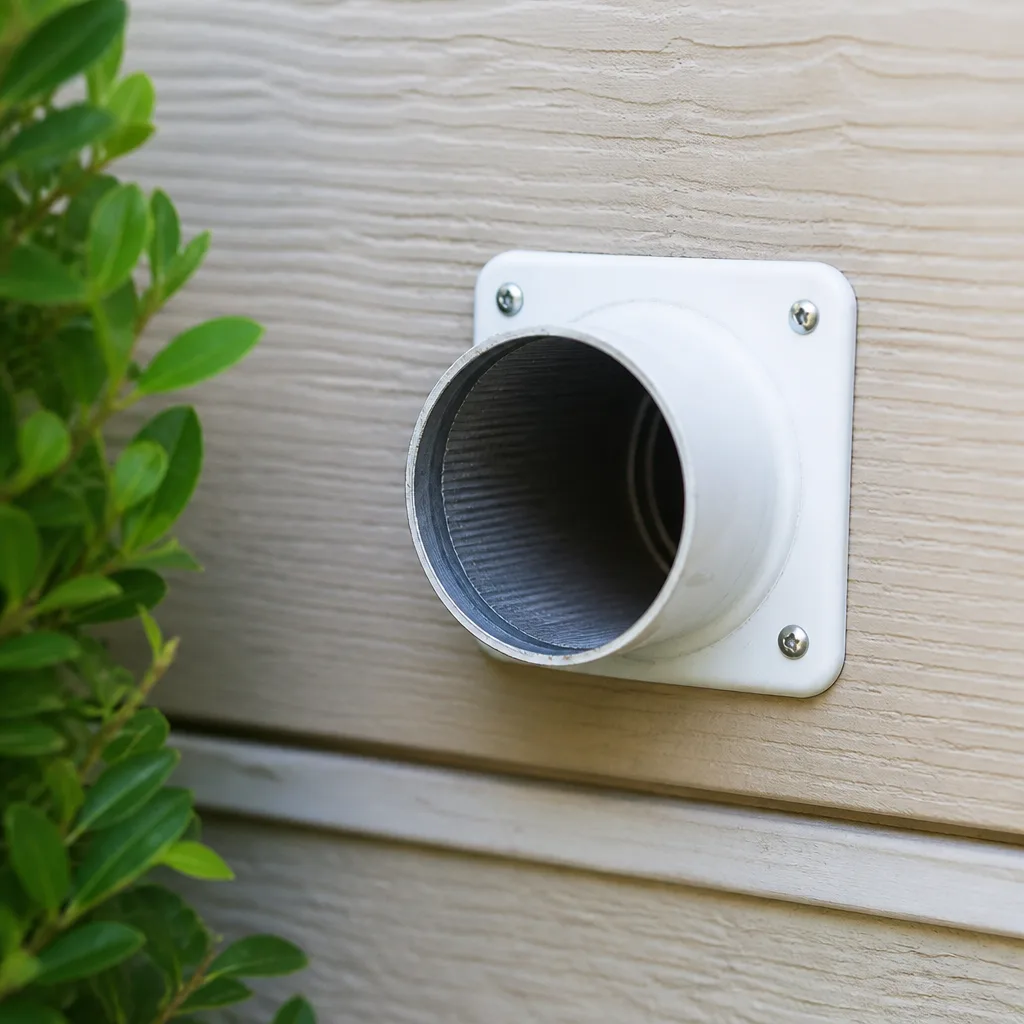 Dryer vent cleaning
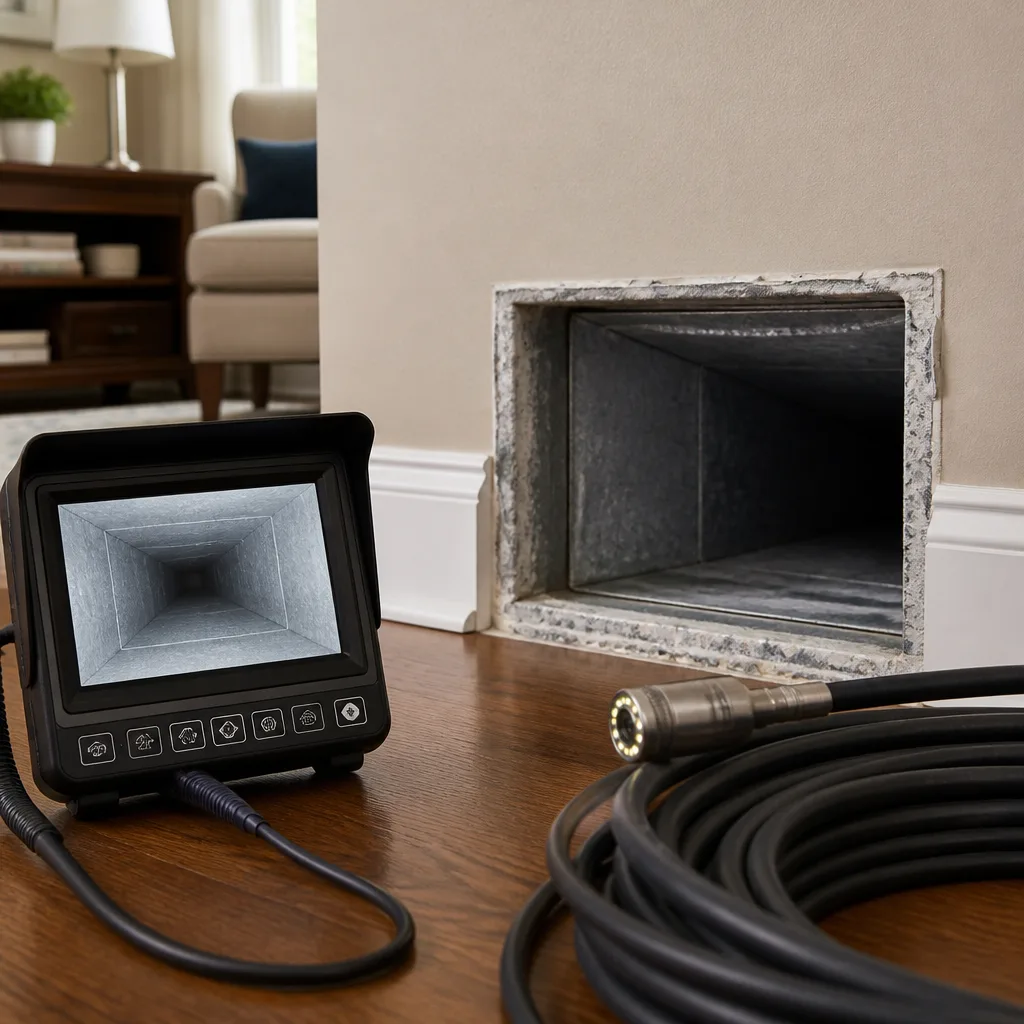 Camera inspection
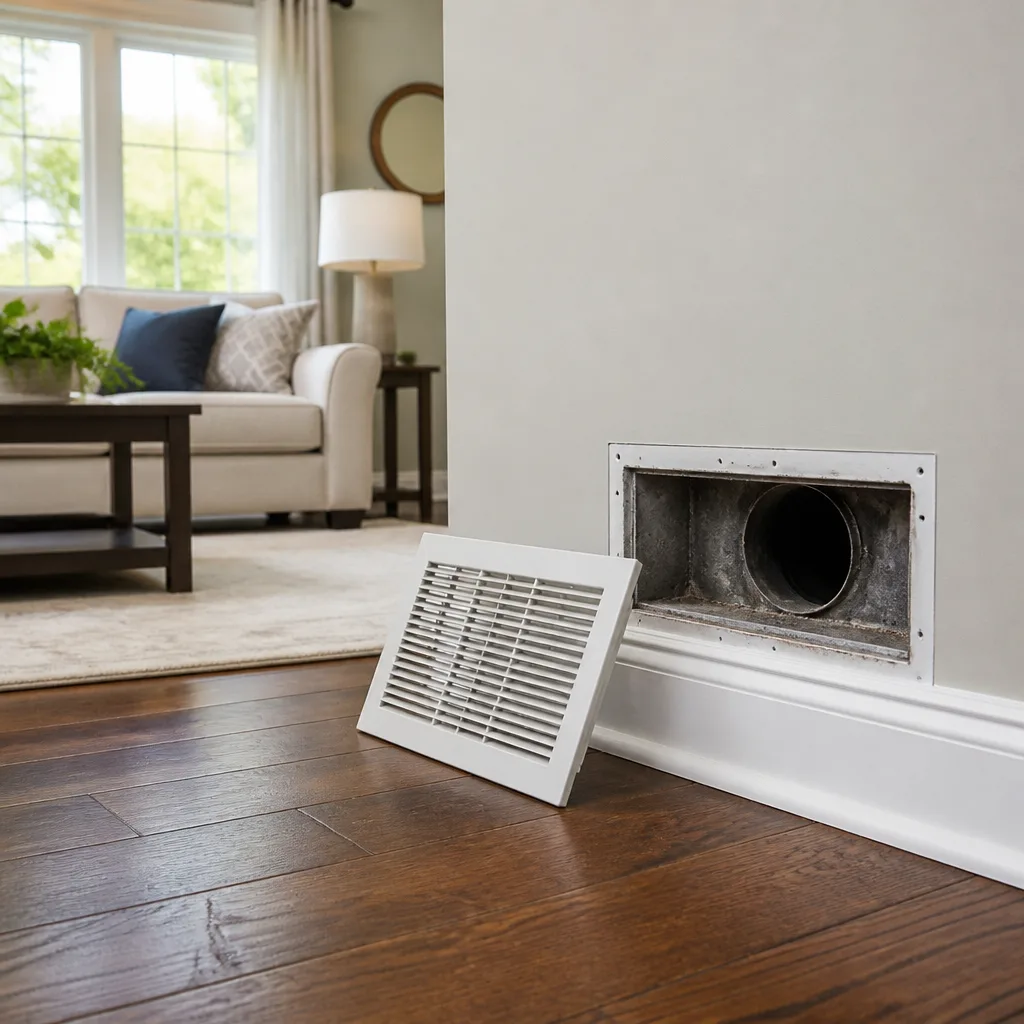 Sanitizing & deodorizing
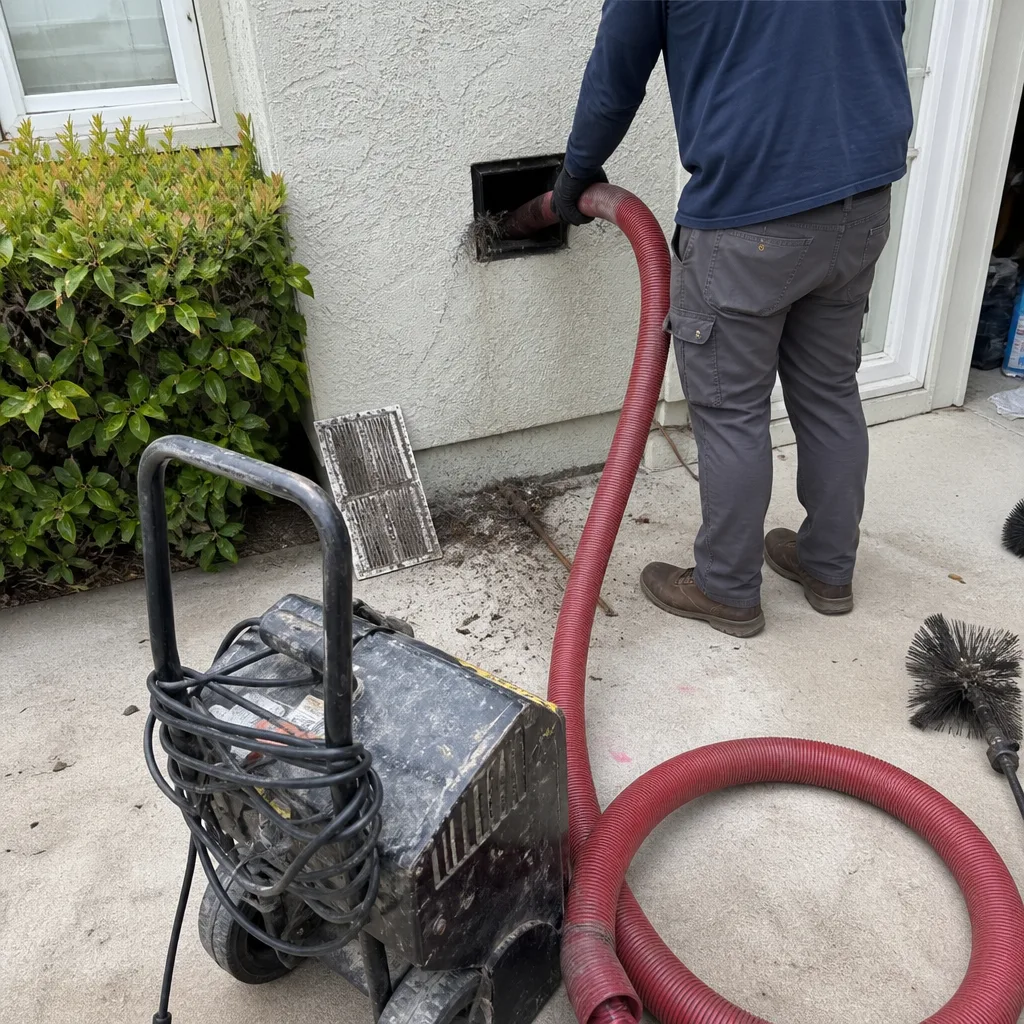
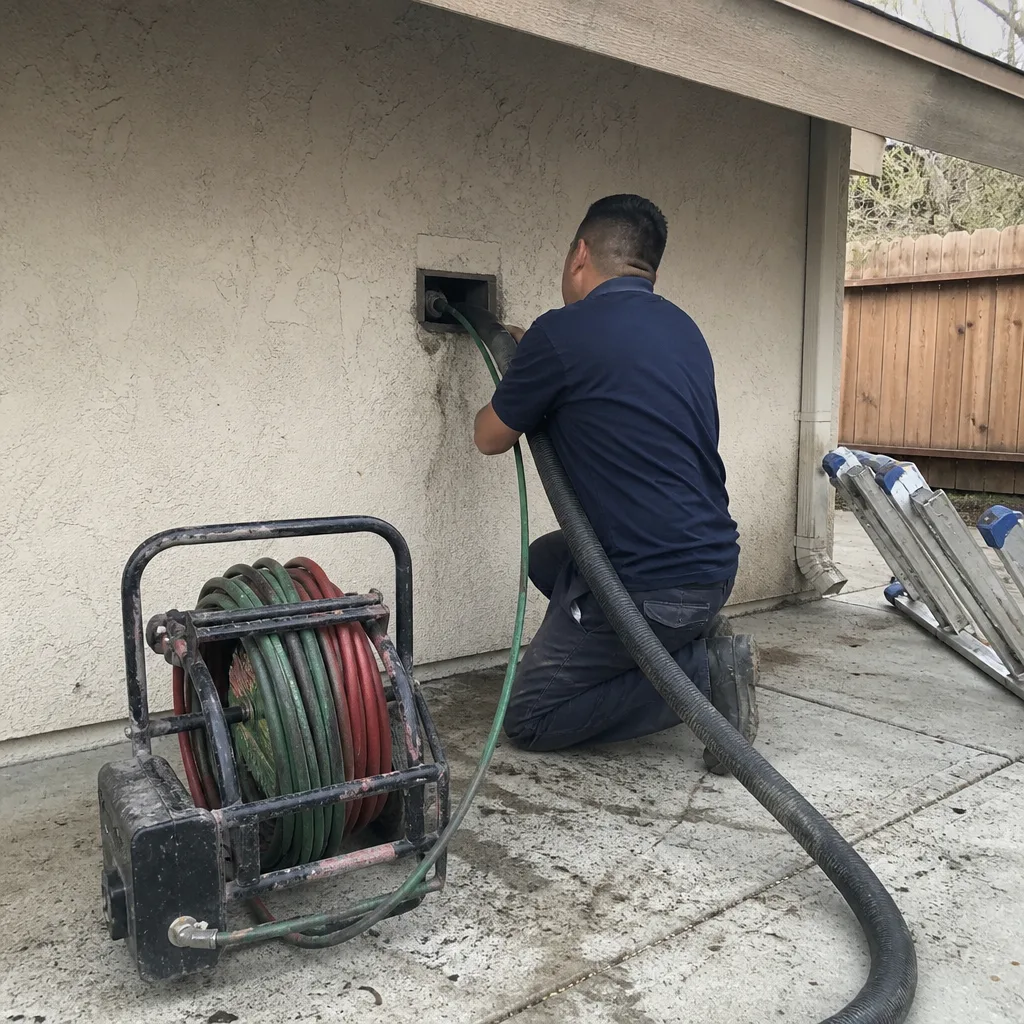
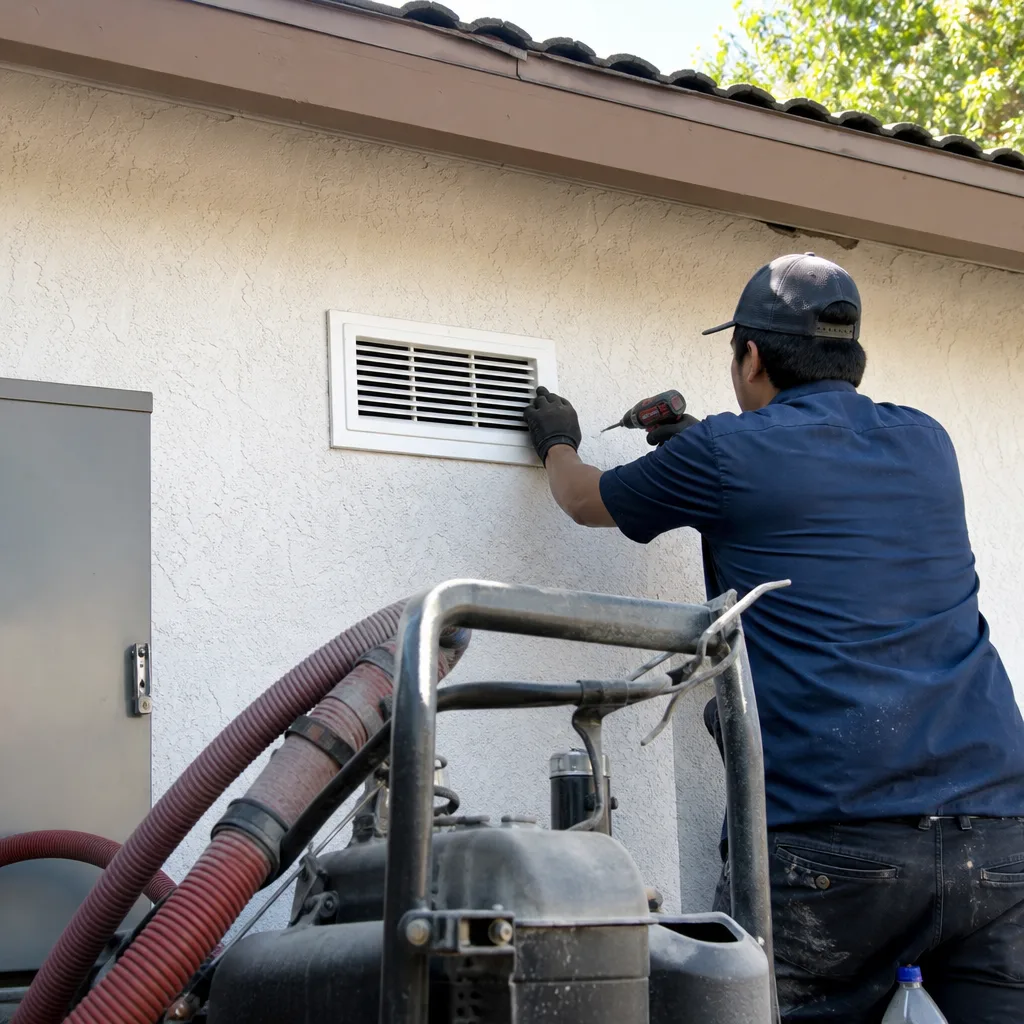
Whole-system duct and dryer vent check with before-and-after photos - you see exactly what came out of your vents
That "$99 whole-house special" is a bait ad - the real number appears once they are in your hallway, or the "clean" is a shop-vac at the register. We photograph the inside of your ducts before and after instead.
DIY vs Professional Air Duct Cleaning: The Lake Elsinore Homeowner’s Decision Guide
Here’s a number that surprises most Lake Elsinore homeowners: the average six-room house circulates roughly 40,000 cubic feet of air per hour through its ductwork when the HVAC system runs. That same air passes through every room your family occupies, and every particle it carries either settles somewhere in the ducts or ends up in your lungs. The question isn’t whether your ducts accumulate debris, it’s what you can realistically do about it yourself and what actually requires professional equipment. This guide maps that line honestly, without the scare tactics and without pretending a shop vac can do what a HEPA extraction system does.
Styles & brands we work with
- Whole-home duct cleaning
- Dryer vent cleaning
- Camera inspection
- Sanitizing & deodorizing
Quick Answer
DIY duct cleaning is legitimate for accessible components, specifically register covers, the first few feet of visible duct boot, and routine filter changes. What it cannot address is the trunk lines, return plenum, and air handler cabinet where most contamination accumulates, because consumer vacuums lack the negative pressure and agitation capability to dislodge and capture debris in those spaces. For Lake Elsinore homes dealing with clay dust, pollen, or pet dander, a realistic maintenance model combines quarterly DIY register cleaning with professional contact cleaning every 3 to 5 years.
Table of Contents
- What DIY Duct Cleaning Can Actually Do
- The Equipment Gap: Why Consumer Tools Fall Short
- The Hidden Cost of Ineffective DIY Cleaning
- When Professional Service Is Non-Negotiable
- What Lake Elsinore’s Climate Means for Your Ducts
- A Realistic Maintenance Model for Lake Elsinore Homes
- How to Choose a Duct Cleaning Contractor
- Common Mistakes to Avoid
- When to Call a Professional
- Frequently Asked Questions
- The Bottom Line
What DIY Duct Cleaning Can Actually Do
Let’s be direct about what a motivated homeowner with a wet/dry vacuum, a screwdriver, and an afternoon can accomplish. The accessible portions of your HVAC system, meaning the parts you can see and reach without cutting into drywall or disassembling equipment, can be maintained effectively at home. This is real work that reduces dust recirculation and extends the interval between professional cleanings. It is not a substitute for professional service, but dismissing it entirely would be as wrong as overselling it.
Our Duct Cleaning Lake Elsinore home service area includes homes from the lakefront communities up through Canyon Hills and the Tuscany Hills neighborhoods, and the DIY tasks below apply to every one of them.
Register and Grille Cleaning
Every supply register and return grille in your home can be removed with a screwdriver in under a minute. Soak them in warm water with a degreasing dish soap, scrub with a stiff brush, dry thoroughly, and reinstall. This removes the visible dust film that accumulates on the fins and restores proper airflow. Do this quarterly in Lake Elsinore, more often if you run your AC heavily during the summer months when the system cycles constantly.
Accessible Boot Vacuuming
Once a register is removed, you can see into the first 12 to 18 inches of the duct boot, which is the transition piece between the register and the main duct run. A crevice tool on a standard wet/dry vacuum can remove loose dust and debris from this visible section. What you cannot see, and cannot reach, is everything beyond that first bend. The boot connects to a trunk line that runs through walls, floors, or attic spaces, and that trunk line is where the majority of accumulated material sits.
Filter Replacement
The single highest-impact DIY task is also the simplest. Replace your HVAC filter every 30 to 60 days during heavy-use seasons. In Lake Elsinore, that means frequent changes from May through October when summer temperatures keep systems running, and again during Santa Ana wind events when airborne dust spikes. A clogged filter forces your blower motor to work harder, reduces airflow, and allows more particulate to bypass the filter entirely. Use a MERV 8 to MERV 13 filter for residential systems, but verify your system can handle the higher static pressure before jumping to MERV 13, especially on older equipment.
Basic Visual Inspection
With register covers off and a flashlight, you can check for visible mold growth on accessible surfaces, evidence of rodent activity like droppings or nesting material, and significant dust accumulation at the boot openings. You can also check the return side while the system runs by holding a tissue near a return grille to confirm it’s actually pulling air. None of this requires special tools, and all of it gives you useful information about your system’s condition.
The Equipment Gap: Why Consumer Tools Fall Short
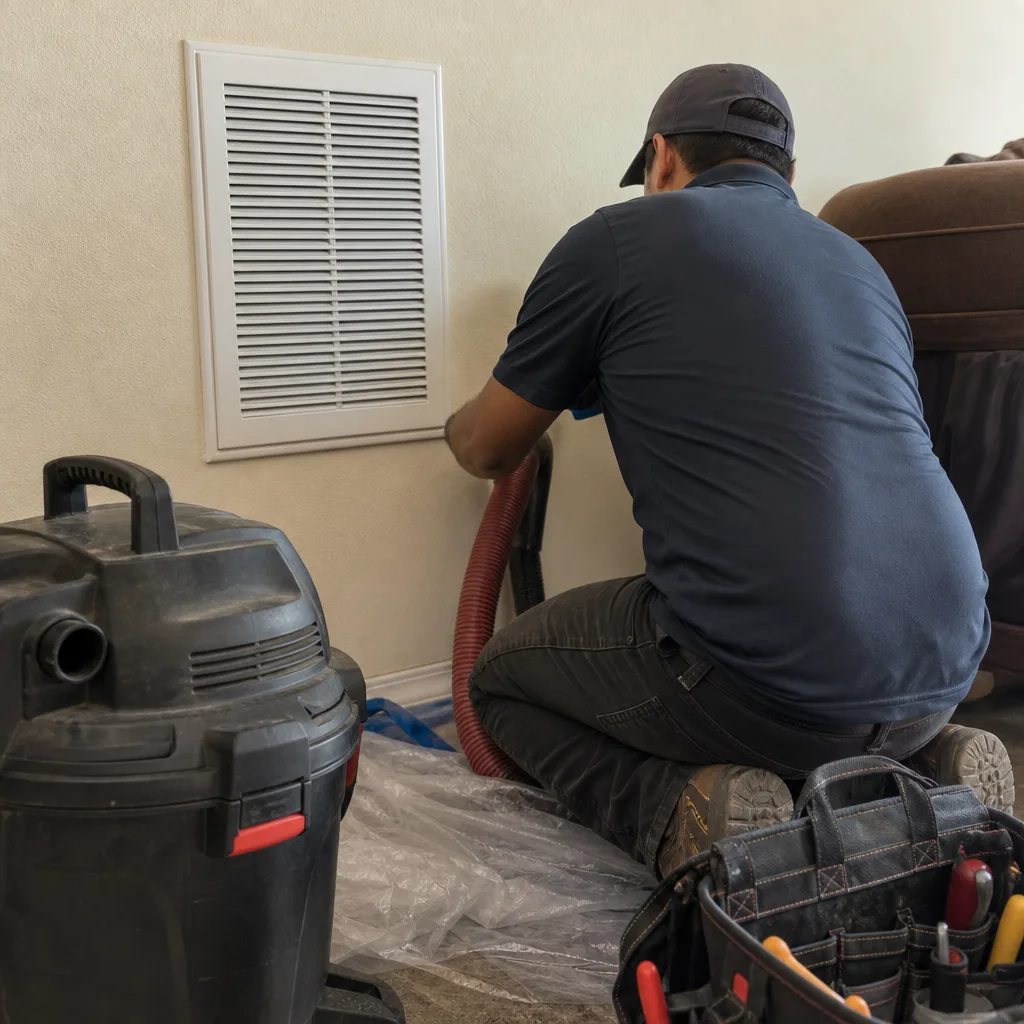
The honest explanation for why DIY cannot clean duct trunk lines comes down to physics. Professional Air Duct Cleaning in Lake Elsinore relies on two simultaneous functions: mechanical agitation that physically dislodges debris from duct walls, and negative-pressure extraction that captures that debris before it can escape into your living space. Consumer equipment delivers neither function adequately.
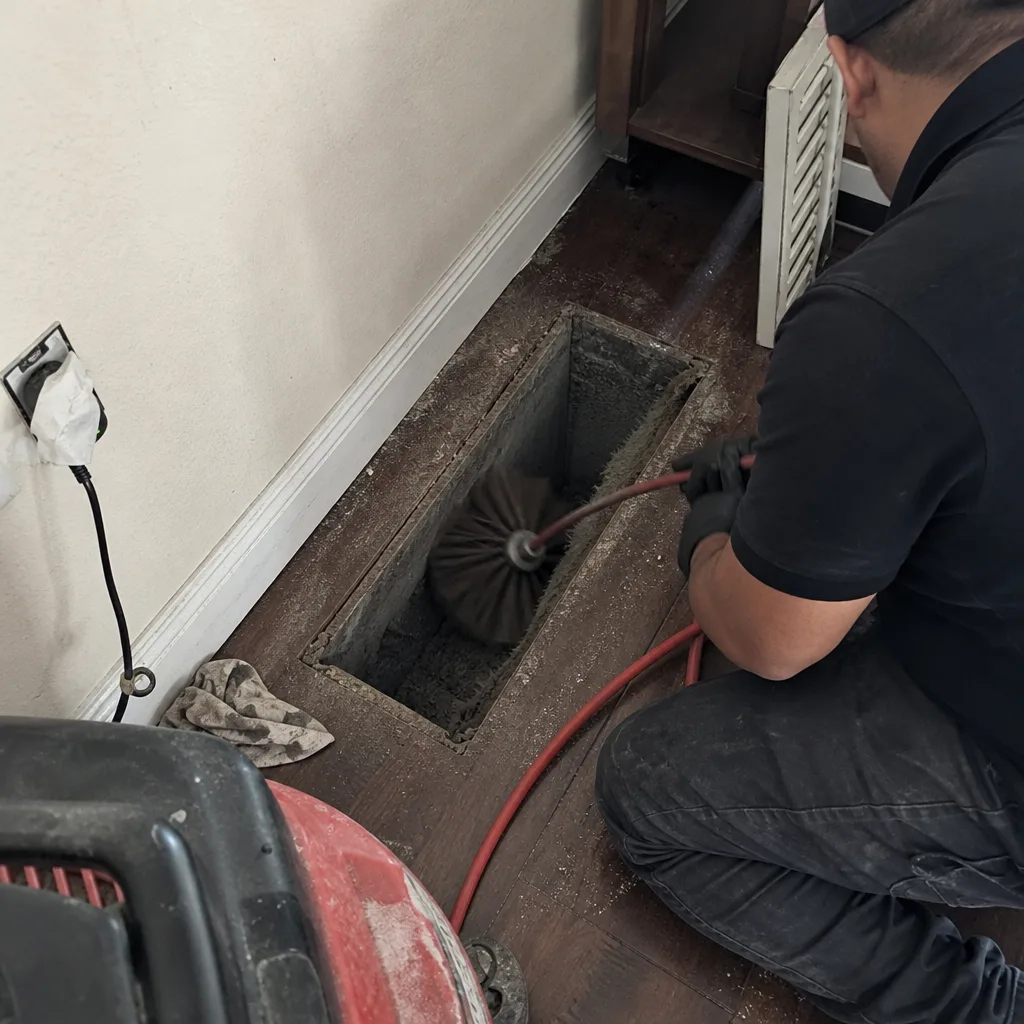
Rotobrush rotary contact-cleaning systems, the kind used by serious duct cleaning companies, spin nylon or synthetic bristles against the interior surface of the duct at high RPM. This is contact cleaning, physical removal of the dust film, pollen crust, and debris that adheres to duct surfaces over time. Air-only methods, and certainly a homeowner’s vacuum, cannot break that bond. We see this constantly in Lake Elsinore homes: a gray-brown film coating the duct interiors that looks like dust but behaves more like a baked-on deposit after years of warm air cycles. Removing it requires mechanical contact, not airflow.
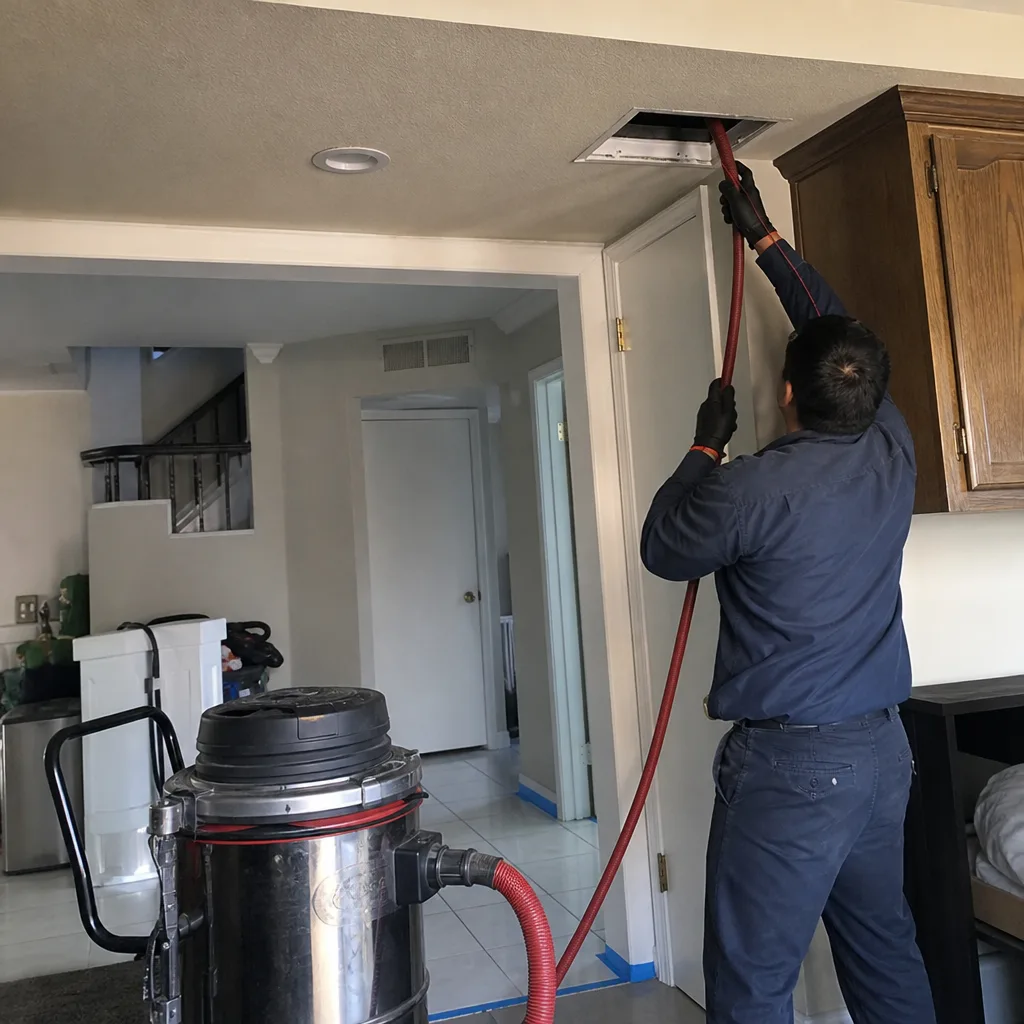
Extraction matters just as much. Professional systems like those from Nikro generate thousands of CFM of negative pressure through the duct system, typically 2,000 CFM or more at the trunk line, which is enough to pull dislodged debris backward through the system and into a HEPA-filtered collection unit. A consumer shop vac generates perhaps 100 to 180 CFM at the hose end, and it has no way to create a sealed negative-pressure environment throughout the duct run. The moment you agitate debris in a trunk line with a consumer vacuum running, most of that debris simply becomes airborne and redistributes through the living space.
There is also the matter of what happens after cleaning. Professional extraction equipment captures contaminants rather than recirculating them. A shop vac with a standard filter exhausts the fine particulate right back into the room through its exhaust port. Fine dust, which is precisely the material most relevant to respiratory irritation, passes through standard filters and back into your air.
The Hidden Cost of Ineffective DIY Cleaning
The most counterintuitive point in this entire guide is this: a bad DIY duct cleaning attempt can leave your indoor air quality worse than it was before you started. This is not a theoretical concern, it is a predictable outcome of disturbing settled debris without adequate extraction.
Here is the sequence. Your trunk lines hold years of accumulated dust, pollen, pet dander, and textile fibers. That material is settled, and settled means it is not circulating through your home. When you insert a vacuum hose or, worse, a consumer duct-cleaning attachment from a hardware store, into that space and begin agitating the surfaces, you break that settled state. The visible material becomes airborne particulate. Without the negative pressure to capture it at the source, it follows the path of least resistance, which is through the duct system and out into your rooms through every open register.
The practical result is a home that suddenly has elevated airborne dust levels, sometimes for days. Your HVAC filter loads faster as it captures the newly airborne particulate, which means reduced airflow and higher energy consumption. If you have household members with allergies or asthma, the symptom spike can be immediate. And because the debris is now distributed across living surfaces instead of concentrated in the ducts, it has effectively become more accessible to the people breathing it.
This is not an argument against DIY maintenance. It is an argument for knowing the boundary of what DIY can safely accomplish. Cleaning what you can see and reach is safe. Attempting to clean what you cannot see, without the extraction equipment to contain what you dislodge, is where homeowners in Lake Elsinore and everywhere else get into trouble.
When Professional Service Is Non-Negotiable
There are situations where no amount of homeowner diligence can substitute for professional service, and attempting DIY in these scenarios can make the problem worse or create a genuine health hazard. Here are the four conditions that should trigger a call to a qualified contractor without a second thought.
1. Post-Renovation Debris
If you have completed any remodeling work in Lake Elsinore, from a kitchen update to a full addition, construction dust has entered your duct system. Drywall dust is extremely fine, under 10 microns in size, and it settles throughout the trunk lines and air handler. It also clings electrostatically to duct surfaces, which means it will not simply blow through. A professional cleaning with contact agitation is the only way to remove it. Running your system after renovation without cleaning coats every surface in your home with a fine white film until the ducts are addressed.
2. Confirmed or Suspected Mold
If you see visible mold growth in any accessible duct area, or if there is a confirmed moisture problem in your ductwork from a leak, condensation issue, or flood event, this is a professional situation. Mold is not removed by vacuuming. It requires antimicrobial treatment, and in some cases duct replacement depending on the material and severity. The insulation inside flex ducts, once mold-contaminated, typically cannot be effectively cleaned and must be replaced.
3. Rodent Evidence
Droppings, nesting material, or a dead animal in ductwork constitutes a biohazard. Rodent droppings can carry hantavirus and salmonella, and disturbing them without proper containment and PPE is dangerous. Professional remediation handles this with appropriate protective protocols and sanitizing treatments after physical removal.
4. Fire or Smoke Damage
After a structure fire, smoke residue penetrates duct interiors and continues off-gassing for months if not addressed. This requires professional cleaning with appropriate cleaning agents, and in severe cases duct sealing or replacement. Homeowner equipment cannot address this.
What Lake Elsinore’s Climate Means for Your Ducts
Lake Elsinore presents a specific set of environmental conditions that affect how quickly ducts accumulate debris and what kind of debris dominates the load. Understanding these local factors helps you calibrate your maintenance schedule more accurately than any generic national guidance.
The first factor is clay dust. Much of the terrain around Lake Elsinore, particularly the hillsides and canyons surrounding the lake, is decomposed granite and clay-based soil. When dry, this material produces an exceptionally fine dust that becomes airborne with the slightest wind. Santa Ana wind events, which are a regular feature of the fall and winter months in the Inland Empire, push this dust across the entire region. Your HVAC system draws in outdoor air through its return path, and that means clay dust enters your ducts every time the system runs during windy conditions.
The second factor is the summer heat load. Lake Elsinore routinely sees summer temperatures in the high 90s and low 100s, which means your AC system runs for many hours each day from June through September. More runtime means more air changes, more particulate drawn through the system, and more opportunity for debris to accumulate. It also means warmer duct interiors, which increases the rate at which volatile organic compounds from cleaning products, cooking, and household materials off-gas inside the duct environment.
The third factor is the lake itself. Homes near the shoreline experience higher ambient humidity, particularly in the morning hours and during summer evenings. Humidity in ductwork creates the conditions for dust to adhere more firmly to surfaces and, in worst-case scenarios, for microbial growth. This is why shoreline-area homes in Lake Elsinore sometimes show heavier duct-wall buildup than homes in Canyon Hills or other elevated neighborhoods, despite having the same system age and filter habits.
Pollen load runs seasonally. Spring wildflower blooms across the hillsides, plus the ornamental landscaping common to Lake Elsinore subdivisions, generate significant pollen from March through May. If you have allergic household members, you will notice the correlation between spring blooms and symptom spikes, and a portion of that pollen is riding inside your duct system.
A Realistic Maintenance Model for Lake Elsinore Homes
Here is a working model that balances honest DIY effort with professional service intervals, calibrated for the conditions we just described. This is not a one-size-fits-all schedule, but it is a defensible baseline for a typical Lake Elsinore single-family home with central HVAC.
- Monthly: Replace or inspect your HVAC filter. During summer peak months and Santa Ana wind events, check it every two weeks. A filter that looks dirty at two weeks tells you something about your system’s particulate load.
- Quarterly: Remove and clean all register covers and return grilles. Vacuum the accessible duct boots behind each register. This takes about 45 minutes for a typical four-bedroom home and directly reduces dust recirculation.
- Annually: Schedule a professional Dryer Vent Cleaning in Lake Elsinore. Dryer lint accumulation is a fire hazard, and Lake Elsinore’s dry climate means lint dries quickly and becomes increasingly flammable. This is a separate service from duct cleaning and should not be treated as an add-on.
- Every 3 to 5 Years: Schedule professional air duct cleaning with contact agitation and HEPA extraction. Homes with pets, smokers, or residents with significant allergies should trend toward the 3-year mark. Homes with recent renovation work should schedule a cleaning immediately following project completion regardless of the calendar.
- Immediately: Schedule professional service if you observe mold, rodent evidence, persistent musty odors from registers, or visible dust discharging from supply registers when the system starts.
This model assumes you are doing the DIY tasks consistently. A homeowner who never cleans registers and changes filters sporadically will need professional cleaning more frequently, because the pre-filter and register-level defenses have been neglected and more debris reaches the trunk lines. The connection between DIY diligence and professional intervals is direct.
How to Choose a Duct Cleaning Contractor
When you do decide the time has come for professional service, the contractor you choose determines whether the money actually solves your problem. The duct cleaning industry has a well-earned reputation problem, driven by low-price bait-and-switch operators who quote a low whole-home price and then discover “extra” charges once they arrive. Here is how to separate the legitimate operators from the discounters.
First, ask what equipment they use. A contractor who cleans with contact agitation and HEPA extraction, meaning equipment from manufacturers like Rotobrush for agitation and Nikro for extraction, is operating at a fundamentally different level than one who runs a large vacuum hose into your registers and calls it cleaning. The first method physically removes the adhered debris from duct walls. The second disturbs it. The distinction matters exactly as much in the result as it sounds like it would.
Second, ask whether they repair what they find. A significant percentage of Lake Elsinore homes have duct leaks, disconnected sections, or damaged flex duct that gets exposed during cleaning. If your contractor can only clean and cannot repair, any damage discovered means a second appointment with a different company, and possibly a system that performs worse until that repair happens. Companies that offer Air Duct Repair in Lake Elsinore as a core service can address what cleaning exposes in the same visit. This matters practically, not just conveniently.
Third, ask about the brands they work with for whole-home air quality. A contractor familiar with Honeywell and Aprilaire IAQ systems understands how duct cleaning fits into a broader air quality picture, including filtration, humidity control, and ventilation. That systems-level knowledge tends to correlate with better diagnostic skills and more honest recommendations, because the contractor sees your ducts as one component of an integrated system rather than an isolated upsell opportunity.
Fourth, ask how they verify the work. Reputable companies can provide before-and-after photos of your actual ducts, taken with inspection cameras during the cleaning process. If a contractor cannot or will not show you what your ducts looked like before and after, you have no way to verify the cleaning actually happened. This is not an unreasonable request. It is the minimum standard for accountability.
Common Mistakes to Avoid
- Using a leaf blower in your ducts. This is a real thing people attempt, and it is catastrophically counterproductive. A leaf blower introduces high-velocity air into ductwork with zero extraction, which means it aerosolizes every particle of settled debris and distributes it through your entire home. If you do nothing, you are better off than doing this.
- Believing a $79 whole-home special is legitimate. There is no business model that supports professional-grade contact cleaning and HEPA extraction at that price point. These offers exist to get a technician in your door, at which point the “recommended” upsells begin. Legitimate duct cleaning for a typical Lake Elsinore home costs several hundred dollars, and honest companies tell you that upfront.
- Cleaning ducts without addressing the filter situation. If you invest in professional cleaning but keep running a cheap fiberglass filter and changing it quarterly, your clean ducts will re-contaminate quickly. Cleaning without adequate filtration is like washing your car and then driving immediately through mud.
- Ignoring the dryer vent while cleaning the ducts. The dryer vent is a separate system with a different failure mode, and it is the one most likely to create a genuine emergency. Lint accumulation ignites. Duct dust does not. If you are spending money on air quality, spend the additional amount on dryer vent cleaning and address the fire hazard.
- Assuming ducts need cleaning on a fixed schedule regardless of conditions. A home with no pets, attentive filter habits, and minimal outdoor dust exposure may not need professional cleaning at the same interval as a home with three dogs, a smoker, and windows open during Santa Ana events. Use the condition of your registers and filters as data, not just the calendar.
- Attempting to access trunk lines through small openings in drywall. Cutting access holes in drywall to reach duct runs creates air leaks and requires patching and repainting. Professional cleaning accesses the system through existing register and plenum openings, which is why the equipment matters so much. If your DIY plan requires cutting drywall, you have crossed the line from maintenance into construction.
When to Call a Professional
The decision framework is simple. If you can see it and reach it from an existing register opening, you can clean it yourself. If you cannot see it or cannot reach it without cutting into building materials, that is professional territory. Beyond that boundary, call a professional immediately if you see mold, find rodent evidence, smell persistent mustiness from your registers, or have completed renovation work that generated significant dust. Duct Cleaning Lake Elsinore offers free estimates in Lake Elsinore and the surrounding communities, and we answer the phone ourselves. Call (855) 341-9943 to schedule an assessment.
Frequently Asked Questions
Professional air duct cleaning for a typical single-family home in Lake Elsinore runs between $350 and $700, depending on system size, number of returns, accessibility, and the level of contamination present. Homes with evidence of mold, rodent activity, or heavy post-renovation dust may require additional remediation services that push costs higher. Any quote substantially below this range should be treated with skepticism, as it likely signals either inadequate equipment or a bait-and-switch sales model. Call (855) 341-9943 for a specific quote on your system.
Yes, eventually. Filter changes reduce the rate at which new particulate enters your system, but they do nothing to remove the material that has already adhered to duct surfaces over years of operation. Think of it like changing the oil in your car without ever cleaning the engine internals. The filter protects the downstream equipment, but the duct walls accumulate a dust film that only contact cleaning removes. Filter discipline extends the interval between professional cleanings; it does not eliminate the need for them.
The price difference is almost always the difference between contact cleaning with HEPA extraction and air-only agitation with a large vacuum. The first requires equipment investments in the tens of thousands of dollars, trained operators, and time per home measured in hours. The second requires a powerful vacuum and marketing budget. Air-only methods dislodge visible debris without capturing the fine particulate that matters most for respiratory health, and they often leave the adhered dust film in place entirely. The cheaper quote is not saving you money; it is buying you a different service.
Demand before-and-after visual documentation. Professional contractors use inspection cameras that can access duct interiors through the same openings used for cleaning. Before photos will show the dust film, debris accumulation, and any damage or contamination present. After photos will show clean duct surfaces with the film removed. If a contractor cannot provide this documentation, you have no way to verify the work occurred. This should be a standard deliverable, not an optional upgrade.
For most Lake Elsinore homes, professional cleaning every 3 to 5 years is appropriate, with the tighter interval applying to homes with pets, smokers, allergy-sensitive residents, or shoreline-area humidity. Homes with consistent DIY register maintenance and diligent filter changes can generally stretch to the 5-year mark. Homes that have recently undergone renovation should be cleaned immediately regardless of the last service date.
You can clean the accessible portion of your dryer vent, typically the first few feet from the dryer connection if the vent run is short and straight. What you cannot clean effectively is a long or multi-bend vent run, which is common in Lake Elsinore homes where dryers are located on interior walls and vents run through attics or crawl spaces. These runs require professional equipment to agitate and extract the entire length. Given that lint accumulation is a documented fire hazard, and the consequence of incomplete cleaning is a house fire rather than dusty air, professional dryer vent cleaning is the conservative choice for any run longer than a few feet.
The Bottom Line
DIY duct maintenance is real work that reduces dust recirculation and extends professional intervals. Clean your registers quarterly, change filters on schedule, and vacuum accessible boots. That is the honest scope of homeowner capability. The trunk lines, plenums, and air handler cabinet where contamination concentrates require equipment that creates mechanical contact and true negative-pressure extraction, which is why professional service exists. In Lake Elsinore, where clay dust, summer heat, and seasonal pollen load your ducts faster than the national average, a 3-to-5-year professional interval paired with consistent DIY maintenance is the defensible model. When you are ready to see what is actually in your ducts, call and ask. We will show you before-and-after photos of your own system, not stock images.
Written by the team at Duct Cleaning Lake Elsinore, serving Lake Elsinore since 2014.
See the difference
 Before
 After
 Before
 After
 Before
 After