
Last updated November 2, 2026
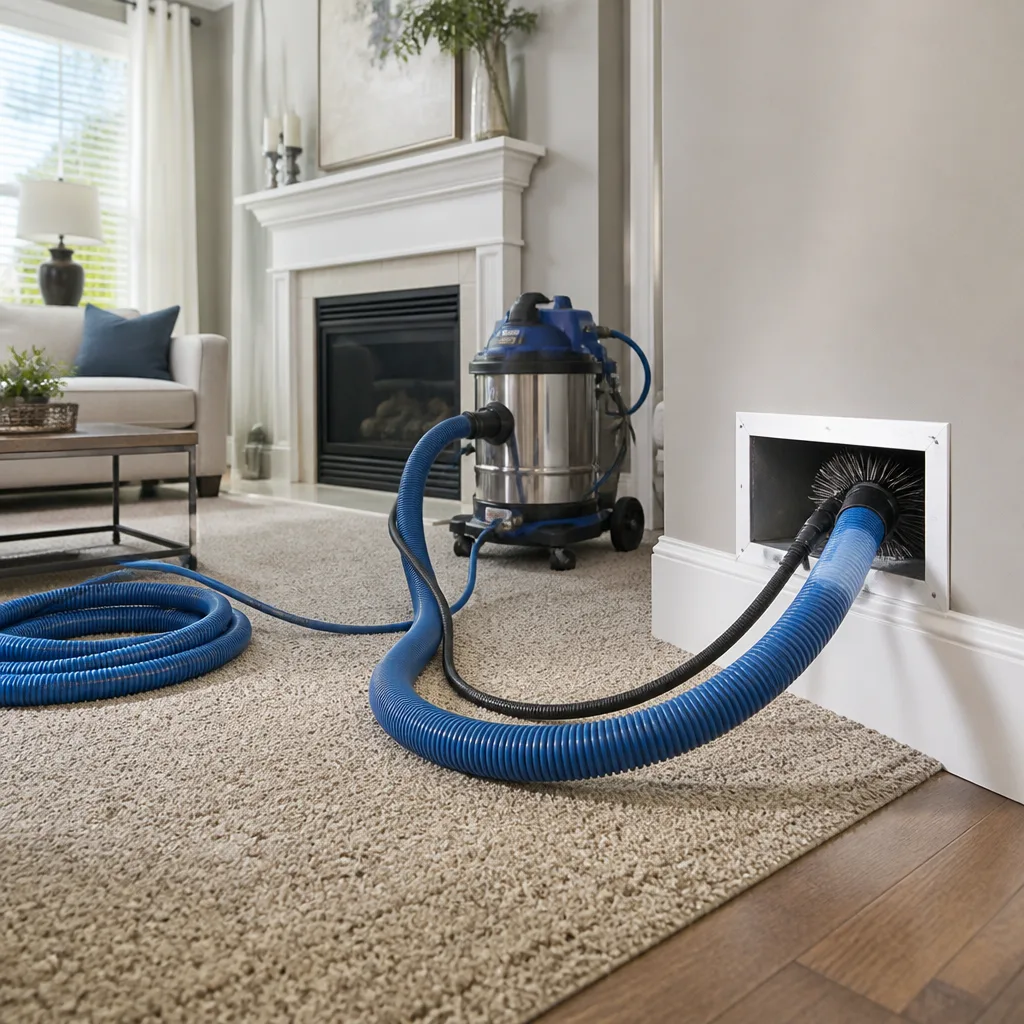 Whole-home duct cleaning
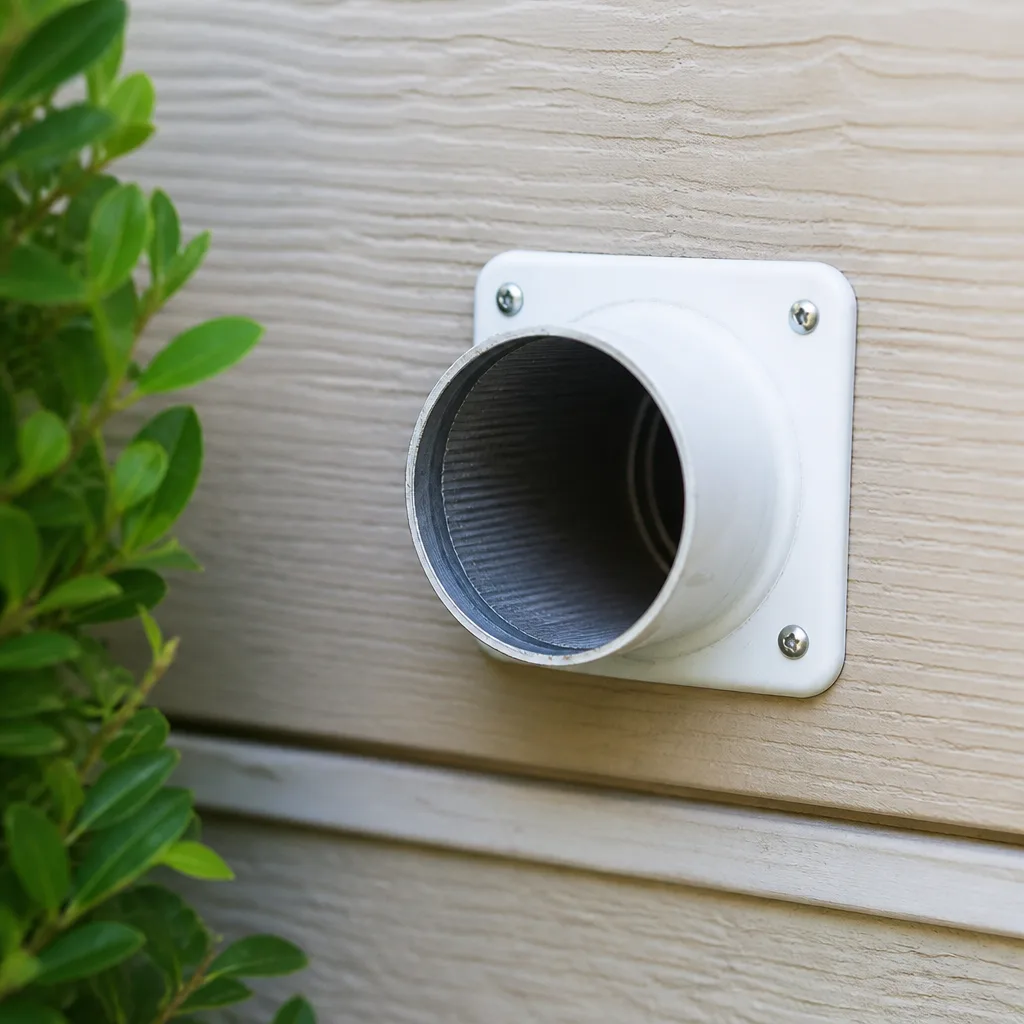 Dryer vent cleaning
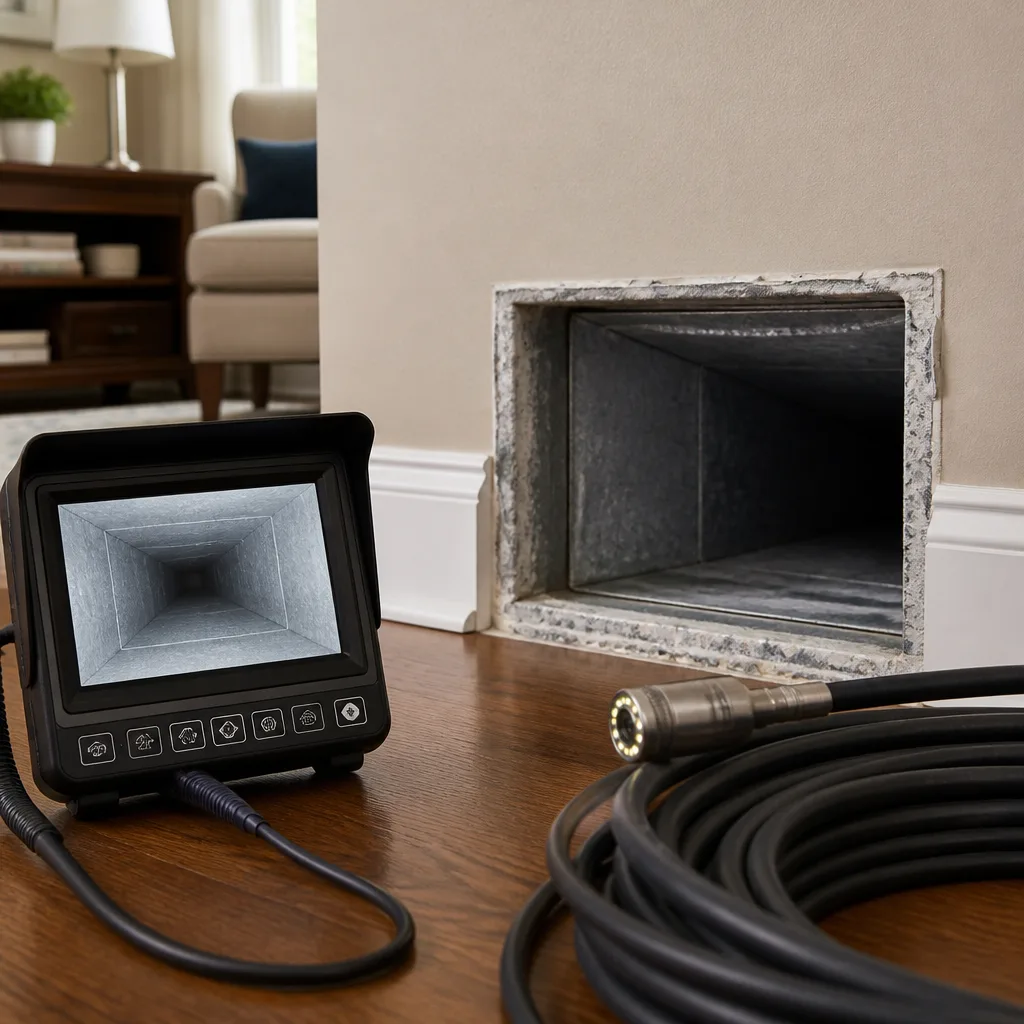 Camera inspection
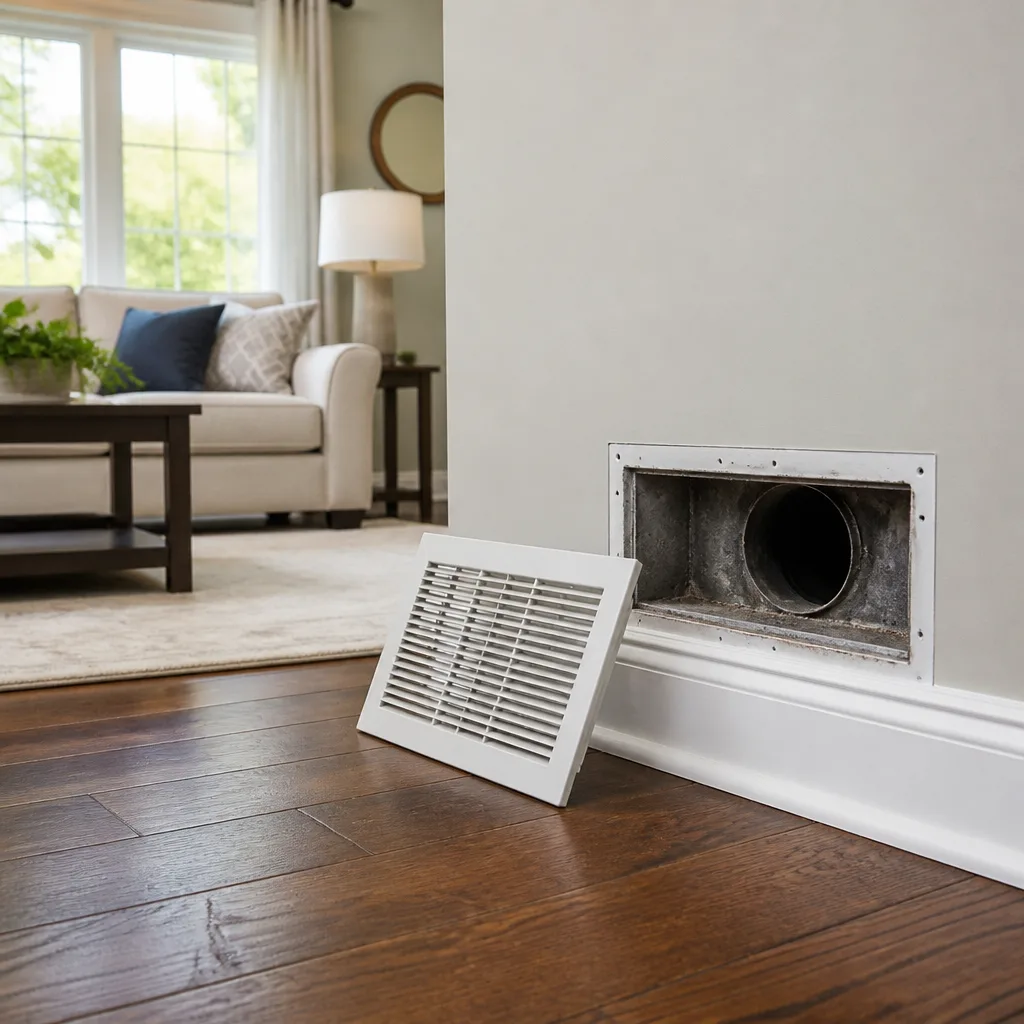 Sanitizing & deodorizing
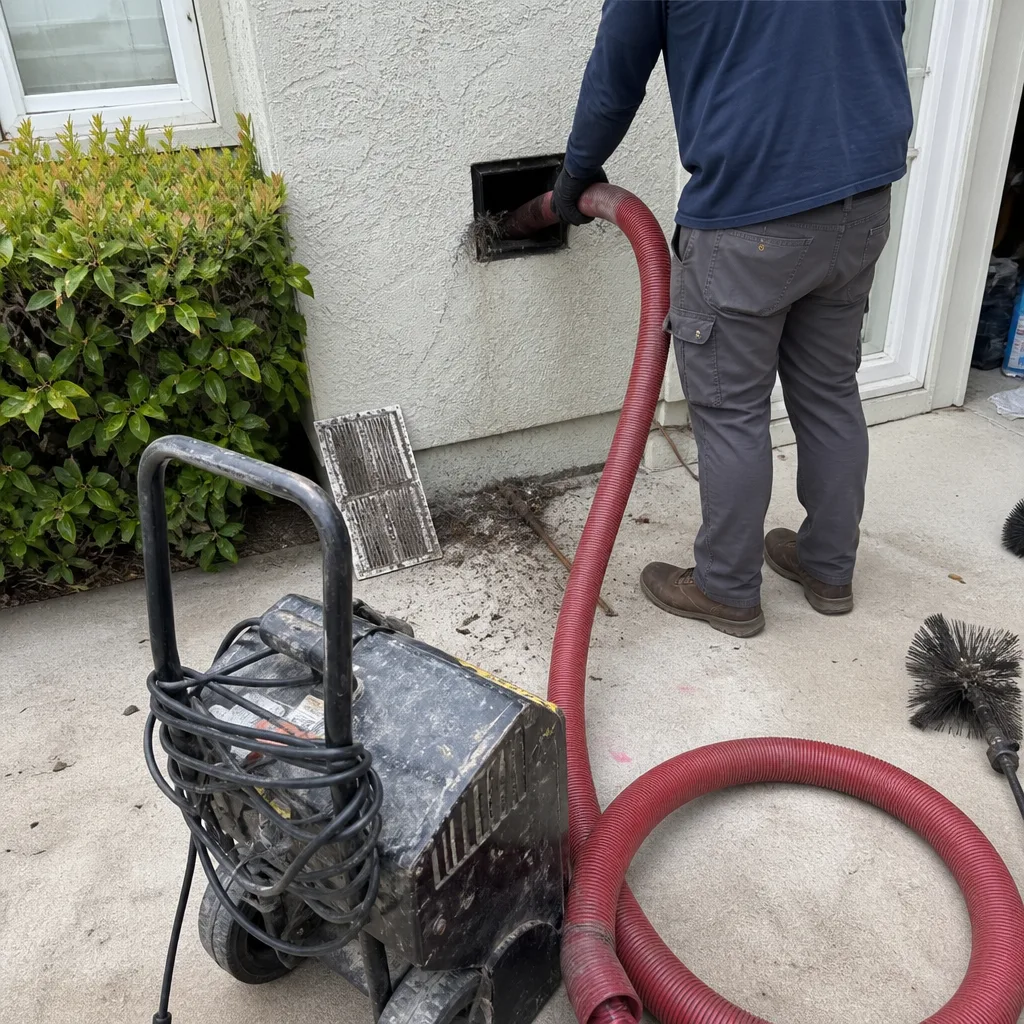
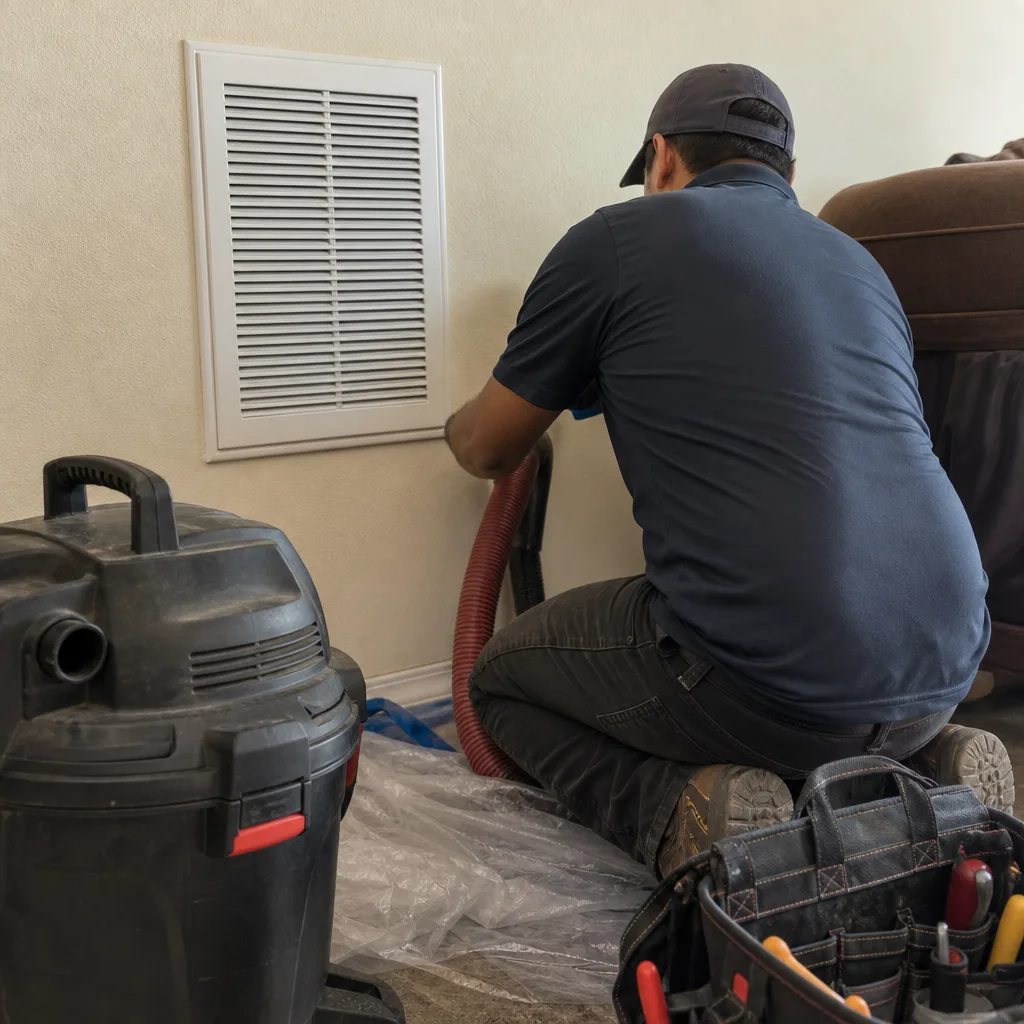
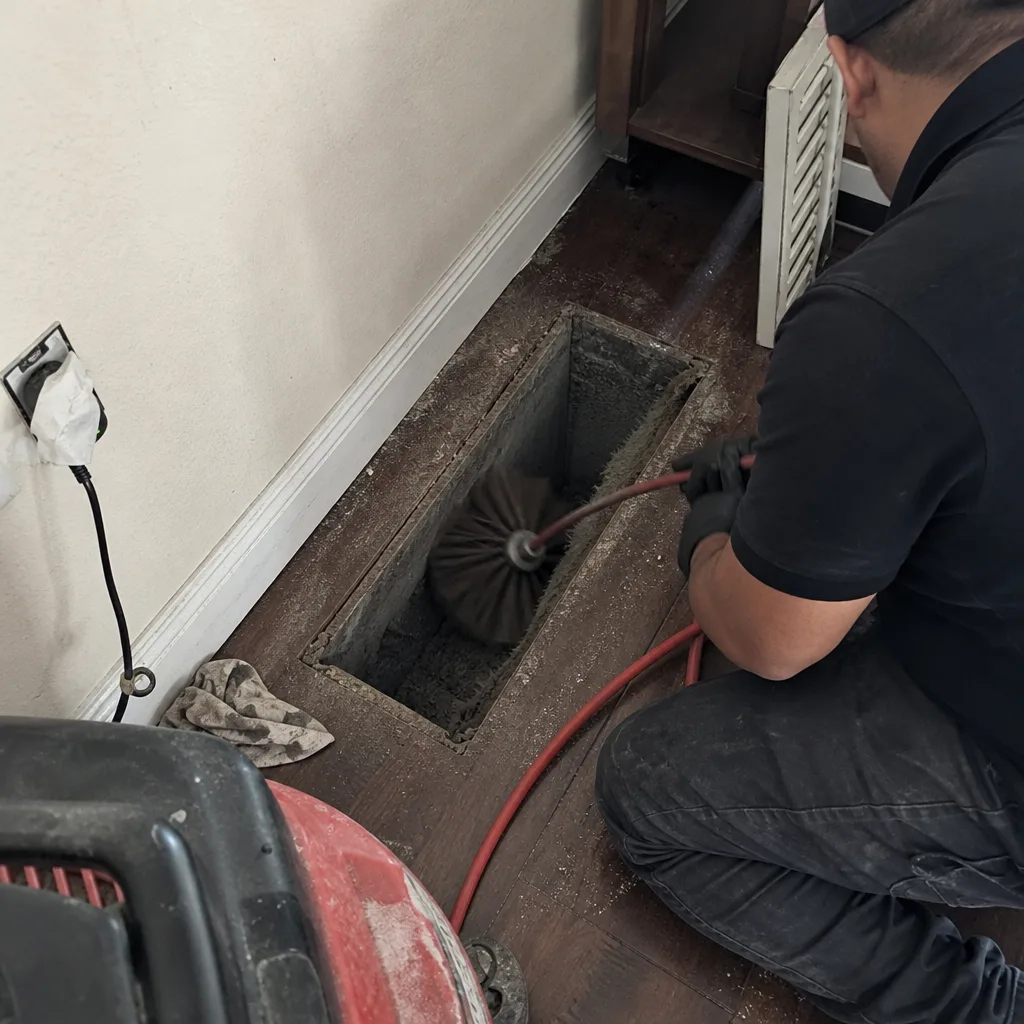
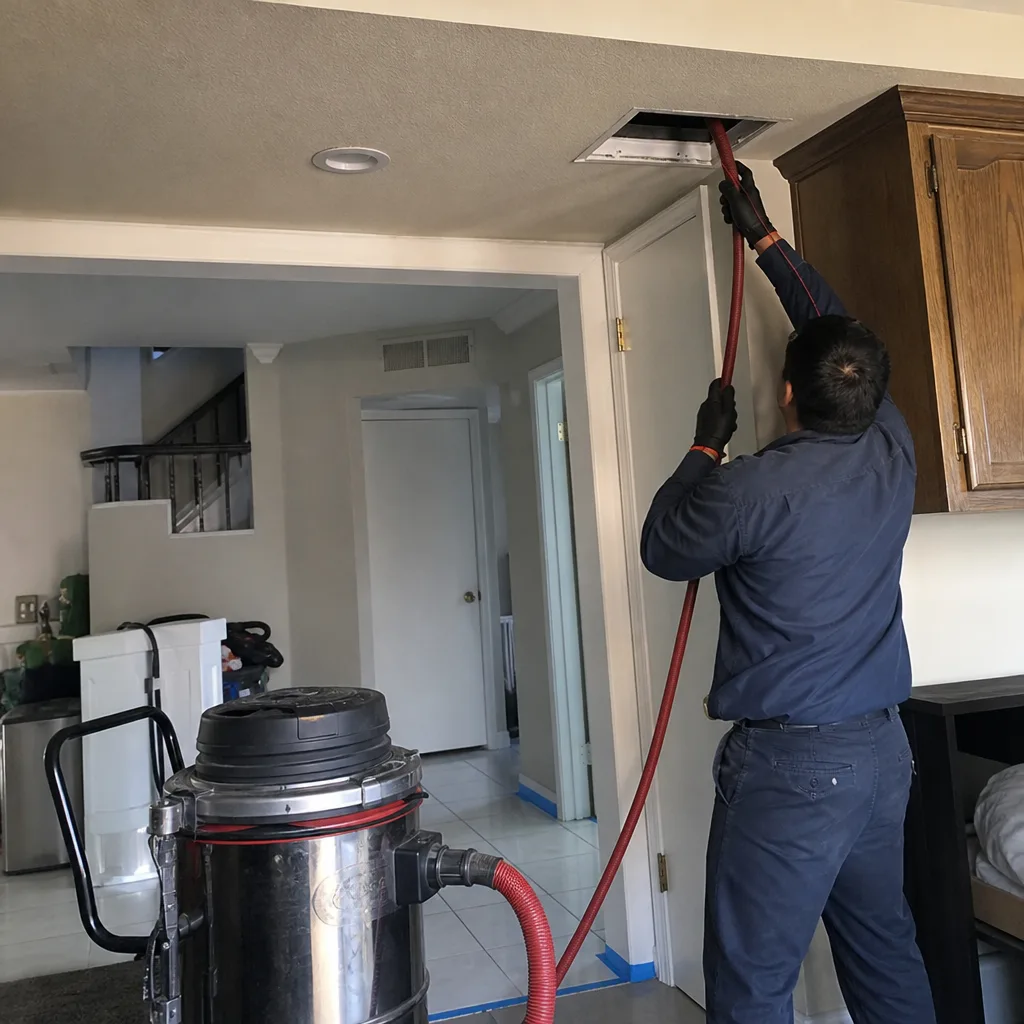
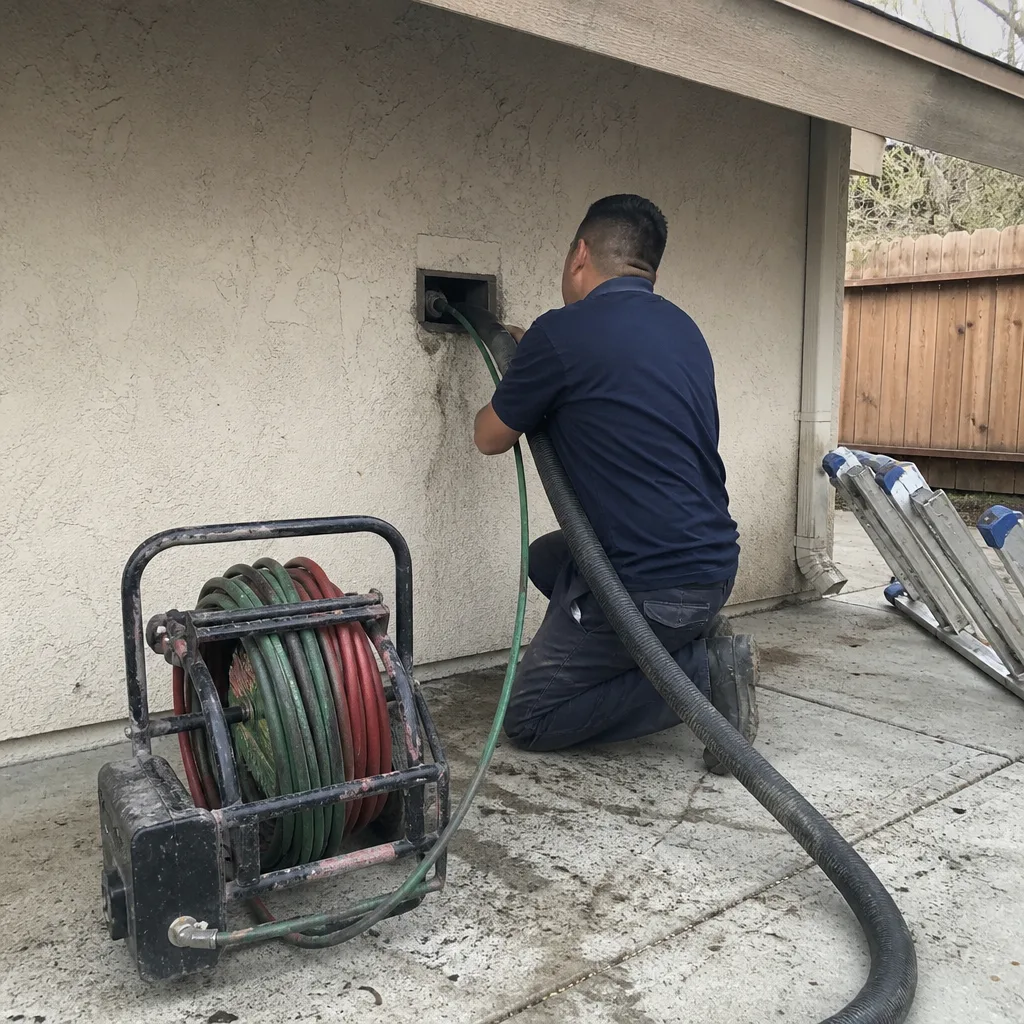
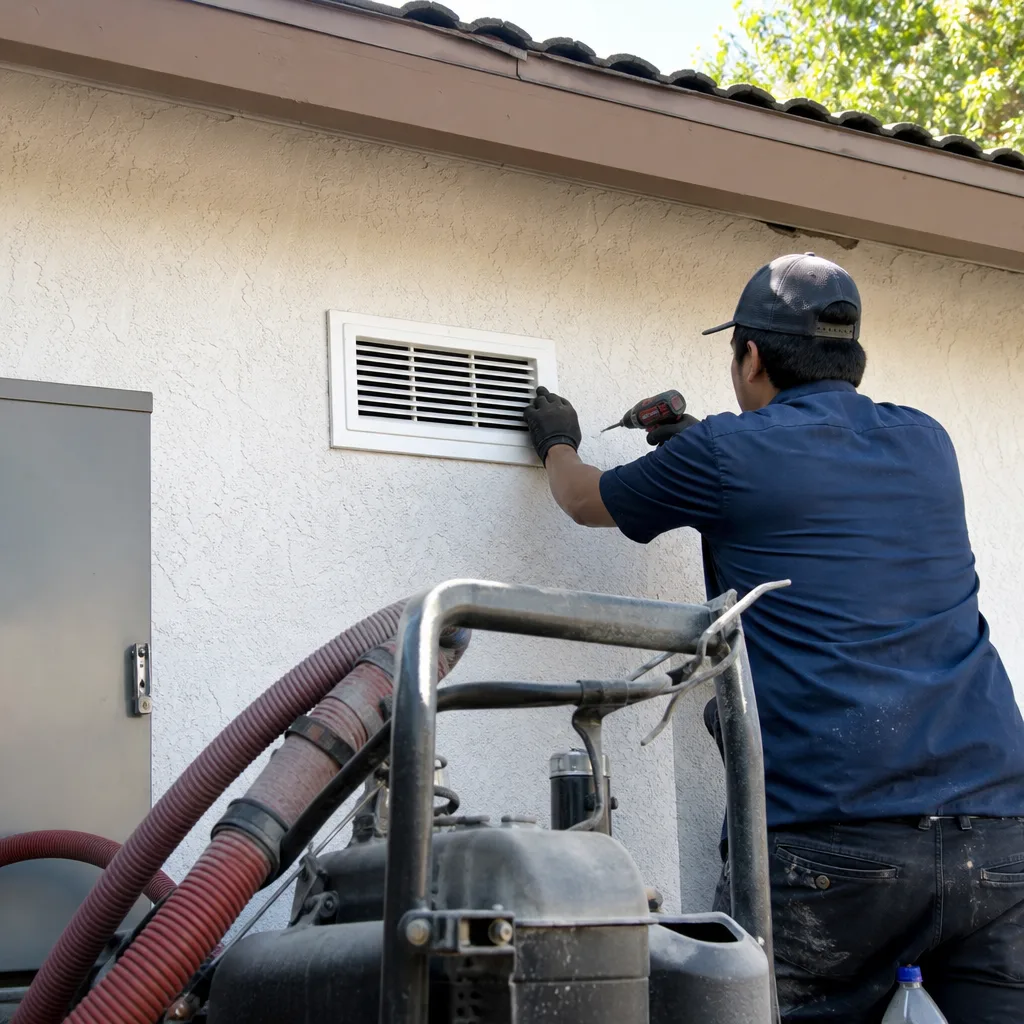
Whole-system duct and dryer vent check with before-and-after photos - you see exactly what came out of your vents
That "$99 whole-house special" is a bait ad - the real number appears once they are in your hallway, or the "clean" is a shop-vac at the register. We photograph the inside of your ducts before and after instead.
Seasonal Air Duct Cleaning Care for Lake Elsinore: Year-Round Homeowner’s Guide
Here’s a number that surprises most Lake Elsinore homeowners: the air inside your house can carry two to five times more particulate matter than the air outside, even on a clear day. That ratio widens during wildfire season, when outdoor ash settles into return registers and gets pulled deep into ductwork. But most seasonal maintenance advice still follows a four-season calendar written for the Northeast. It tells you to schedule duct work in spring and fall, as if your air conditioner hasn’t been running since April and your windows haven’t been open through every Santa Ana wind event since October. This guide maps duct care to the seasonal cycles Lake Elsinore actually experiences, and you can find more guides & resources on our blog. You’ll learn when each part of the year stresses your duct system differently, what you can handle yourself, and when a professional inspection makes sense.
Styles & brands we work with
- Whole-home duct cleaning
- Dryer vent cleaning
- Camera inspection
- Sanitizing & deodorizing
Quick Answer
Lake Elsinore’s climate creates four distinct stress periods for duct systems: a long cooling season from June through October that accelerates dust accumulation, a late-summer wildfire smoke window that forces fine particulates past filters, fall and winter Santa Ana wind events that spike outdoor particulate levels and push debris through return air pathways, and a brief shoulder period in late spring when a comprehensive duct inspection catches everything before the cooling cycle begins again. For most homes here, the single most effective annual service window is late spring, before the cooling season starts. Scheduling our Air Duct Cleaning services at that point, paired with filter changes every 30 to 45 days during peak cooling months, keeps duct contamination from compounding year over year.
Table of Contents
- Why Lake Elsinore’s Climate Doesn’t Follow the Standard Duct Care Calendar
- June Through October: The Long Cooling Season and Duct Dust Accumulation
- Wildfire Smoke Protocol: When Smoke Events Demand a Duct Inspection
- Santa Ana Wind Season: How Fall and Winter Wind Events Contaminate Ducts
- Post-Winter Furnace Startup: Duct Integrity and Combustion Safety
- The One Annual Service Window That Actually Makes Sense in Lake Elsinore
- Filter Strategy by Season: What Filtration Can and Cannot Do
- Common Mistakes to Avoid
- When to Call a Professional
- Frequently Asked Questions
- The Bottom Line
Why Lake Elsinore’s Climate Doesn’t Follow the Standard Duct Care Calendar
Most HVAC maintenance guides assume a climate with four distinct seasons: a cold winter that runs the furnace, a mild spring with open windows, a hot summer that runs the air conditioner, and a crisp fall that transitions between them. That model works in Ohio. It doesn’t work in Lake Elsinore.
Lake Elsinore sits in a valley basin where summer temperatures routinely reach the mid-90s to low 100s from June through early October. That means your air conditioner runs four to five months without a meaningful break. The blower pulls return air constantly, and every hour of runtime draws household dust, pet dander, and outdoor particulates across the filter and into the supply side of the system. A filter catches what it catches. What passes through deposits on duct walls, coil surfaces, and blower components.
Then comes wildfire season. Late summer and early fall bring smoke events that can last days or weeks, depending on fire activity in the foothills and mountains surrounding the valley. Smoke particles measure far smaller than the dust your filter is designed to capture. They penetrate deep into duct interiors and settle there, creating a fine layer of contamination that doesn’t blow out on its own.
Fall and winter bring Santa Ana winds. These high-pressure offshore wind events funnel dry air through the passes and canyons, kicking up fine dust and debris across the entire region. Outdoor particulate counts spike dramatically during these events. If your home’s return air pathways aren’t sealed well, that outdoor dust gets pulled into the system every time the blower runs.
That leaves a narrow window in late spring when temperatures are moderate, wildfire smoke hasn’t started yet, and Santa Ana winds have mostly passed. That window is the most logical time for a thorough duct cleaning in Lake Elsinore. It’s not the standard spring-and-fall advice, but it reflects what the local climate actually does.
Understanding this pattern matters because duct contamination compounds. A layer of dust from last summer’s cooling season becomes a thicker layer when wildfire smoke settles on top of it. The next Santa Ana season adds more. By the time you notice visible dust around supply registers, the buildup inside the ducts has been accumulating for years. Breaking that cycle requires timing maintenance to the local seasonal pattern, not a generic calendar.
June Through October: The Long Cooling Season and Duct Dust Accumulation
The cooling season in Lake Elsinore isn’t a few hot weeks. It’s a sustained four to five month period during which your central air system runs daily, often for eight to twelve hours at a stretch during peak heat. That runtime has a direct mathematical relationship with duct contamination: more blower hours means more air moving through the system, which means more particulate matter passing across the filter and depositing inside the ductwork.
What accumulates during this period isn’t just household dust. It’s a mix of dead skin cells, pet dander, fibers from carpet and upholstery, cooking residue, and outdoor particulates drawn in through windows, doors, and the natural leakage of the building envelope. In homes with pets, the dander component is significant. In homes where occupants smoke or use candles frequently, the residue is stickier and harder to remove with air-only methods.
Filter changes help, but they have limits. A standard one-inch fiberglass or pleated filter captures a percentage of particles in the 3 to 10 micron range. It does not capture sub-micron particles, and it cannot prevent buildup on duct walls that has already occurred. Even a MERV 11 or MERV 13 filter, which captures a higher percentage of fine particles, can’t clean inside the ducts. Filtration slows the rate of new accumulation. It doesn’t remove what’s already there.
We see this pattern in homes across Lake Elsinore every summer. A homeowner changes the filter monthly and still finds visible dust accumulation around supply registers by August. The filter is doing its job. The problem is that the ducts themselves have accumulated material from previous seasons, and the constant airflow keeps redistributing it through the living space.
One practical step for the cooling season: inspect your return air grilles monthly. If you see visible dust or pet hair caked on the grille face, that’s a signal the return side of the system is pulling in more than the filter can handle. Clean the grille, but also understand that what’s on the grille is a fraction of what has entered the duct system. When the grille is visibly dirty, the duct interior behind it is almost certainly worse.
Wildfire Smoke Protocol: When Smoke Events Demand a Duct Inspection
Wildfire smoke is the most insidious contaminant your duct system faces in Lake Elsinore. It doesn’t just add dust. It adds fine particulate matter, combustion byproducts, and odor-causing compounds that behave differently from ordinary household dust.
Smoke particles from wildfire events range from 0.1 to 2.5 microns in size. To put that in perspective, a human hair is about 70 microns wide. The standard furnace filter in most homes, even a pleated one, is designed to capture particles in the 3 to 10 micron range and larger. Sub-micron smoke particles pass through it almost without resistance. Once inside the duct system, they deposit on duct walls, coil surfaces, and blower motor components. They also carry the characteristic smoke odor, which can linger in the system long after the outdoor air has cleared.
How do you know when a smoke event warrants professional attention? Here’s a practical framework our team uses when advising homeowners:
See the difference
 Before
 After
 Before
 After
 Before
 After