Last updated November 2, 2026
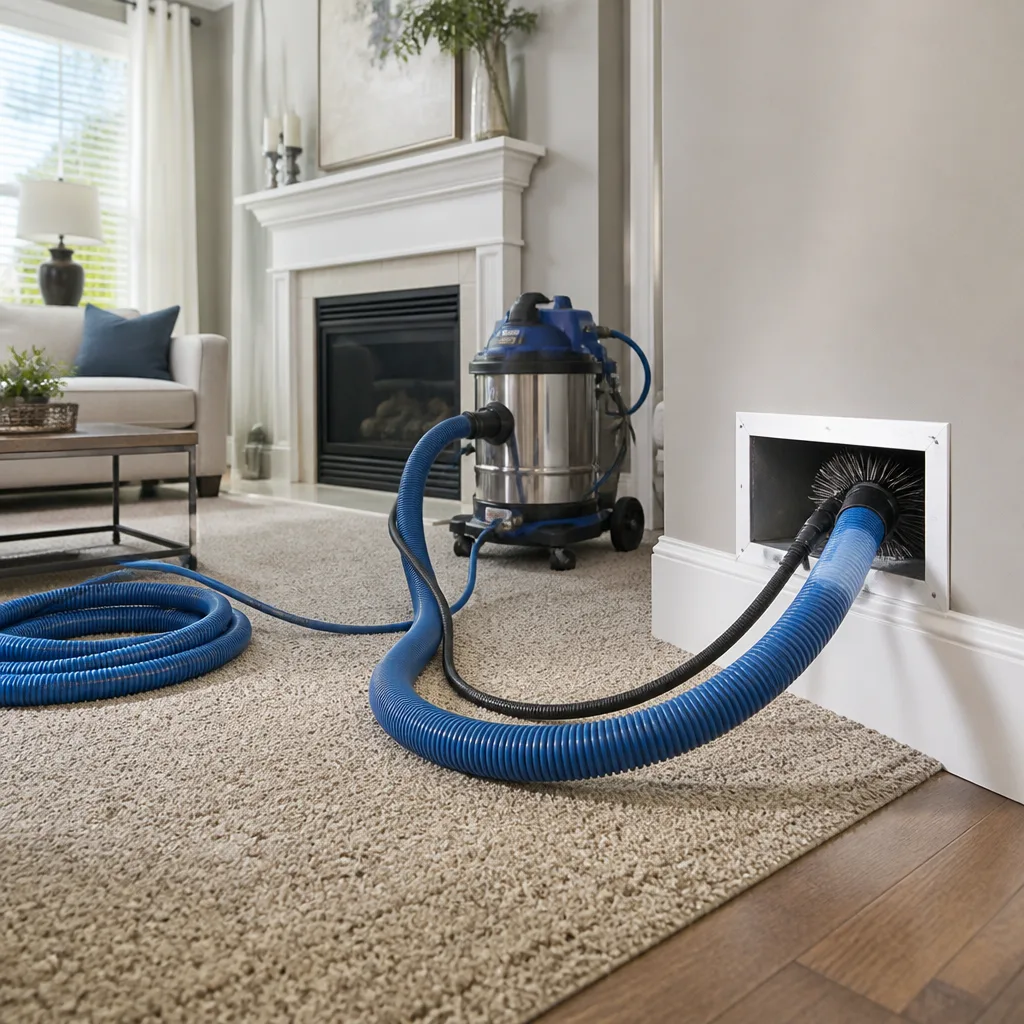 Whole-home duct cleaning
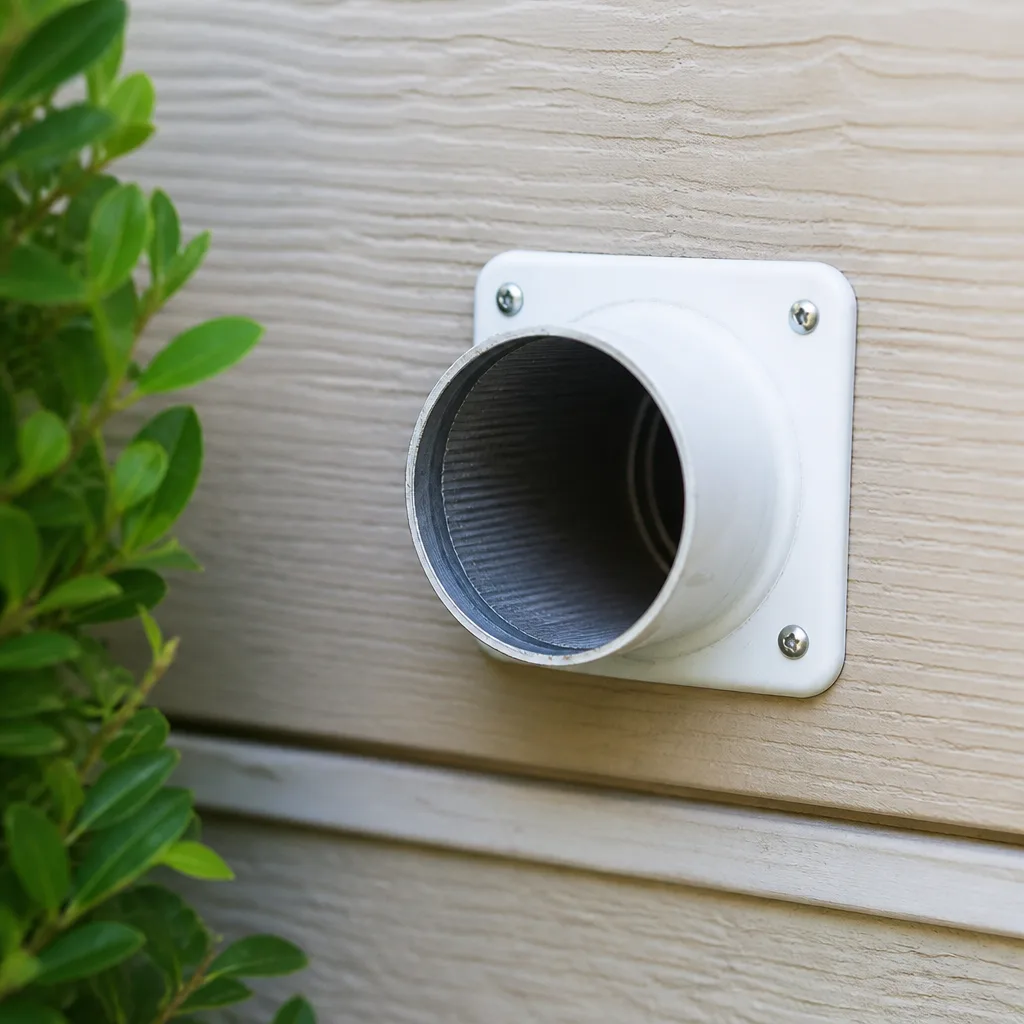 Dryer vent cleaning
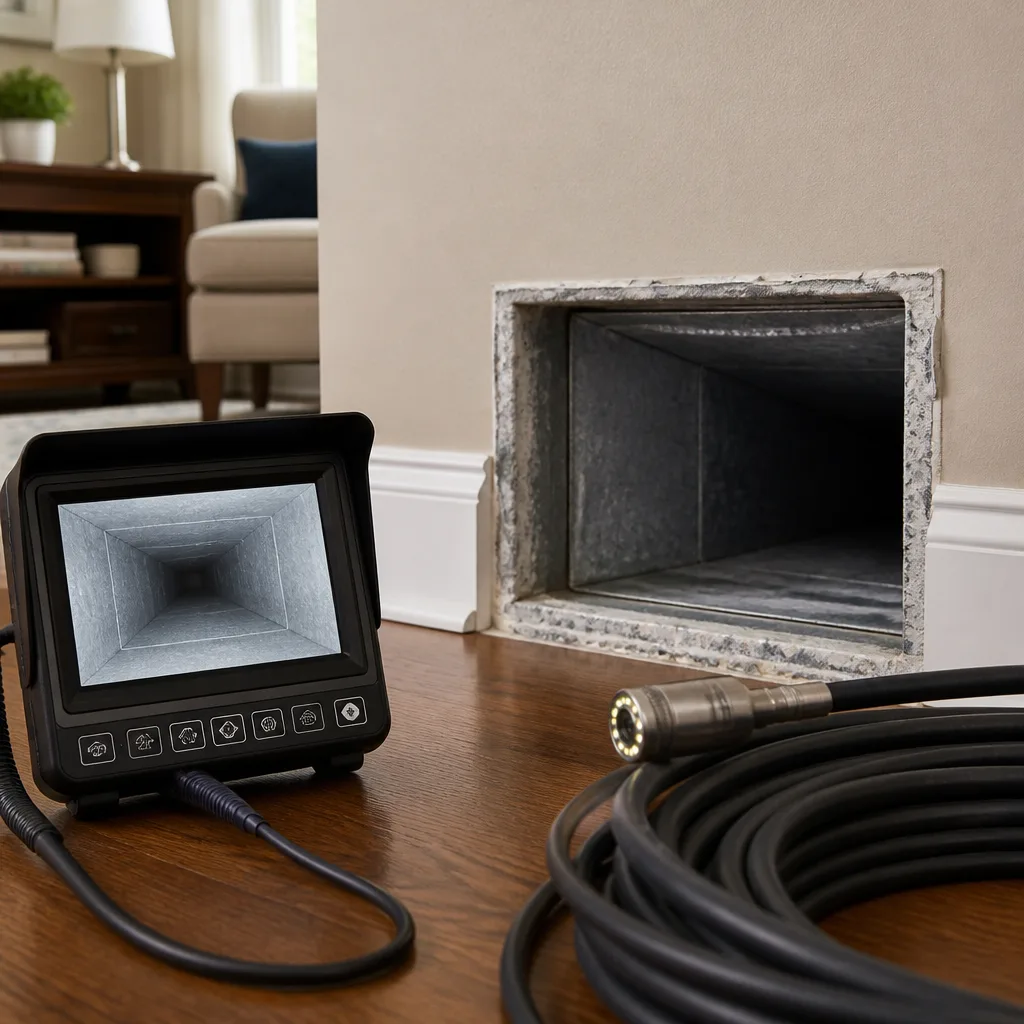 Camera inspection
 Sanitizing & deodorizing
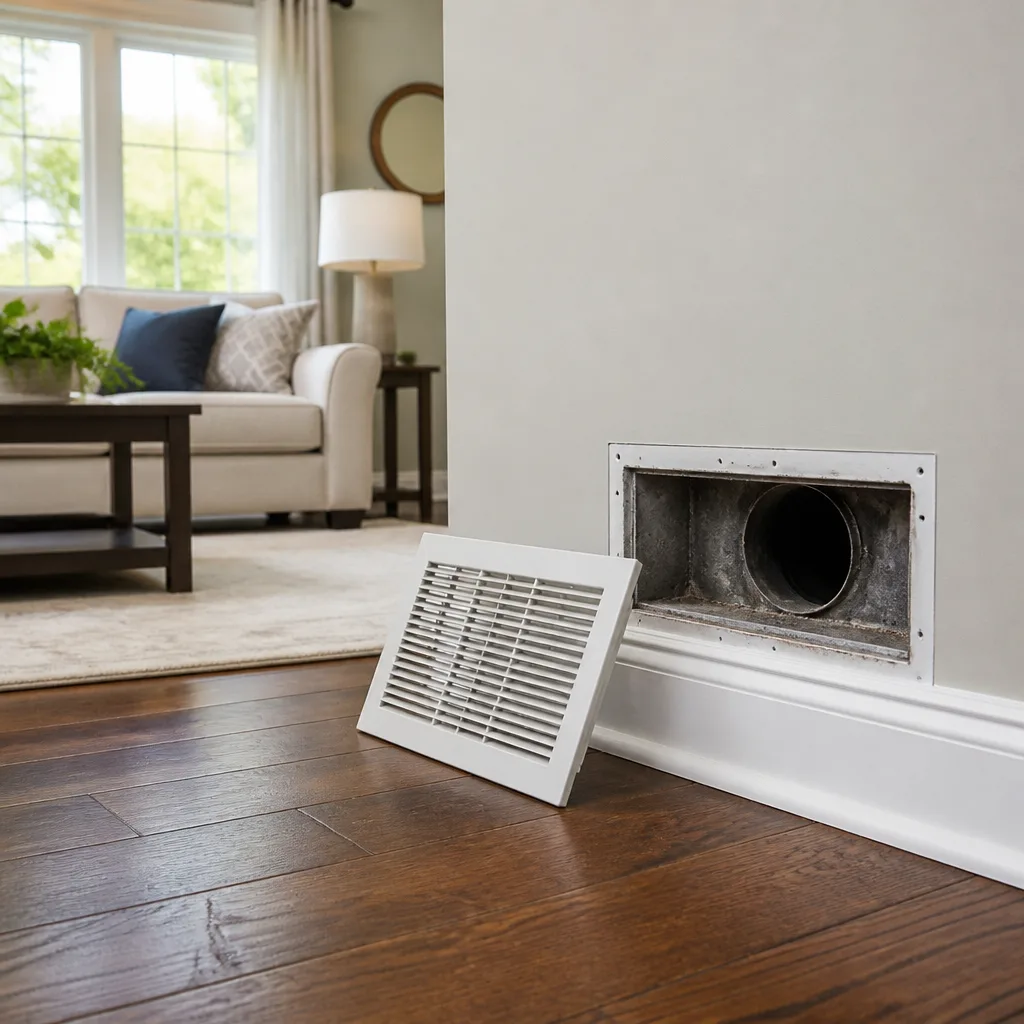
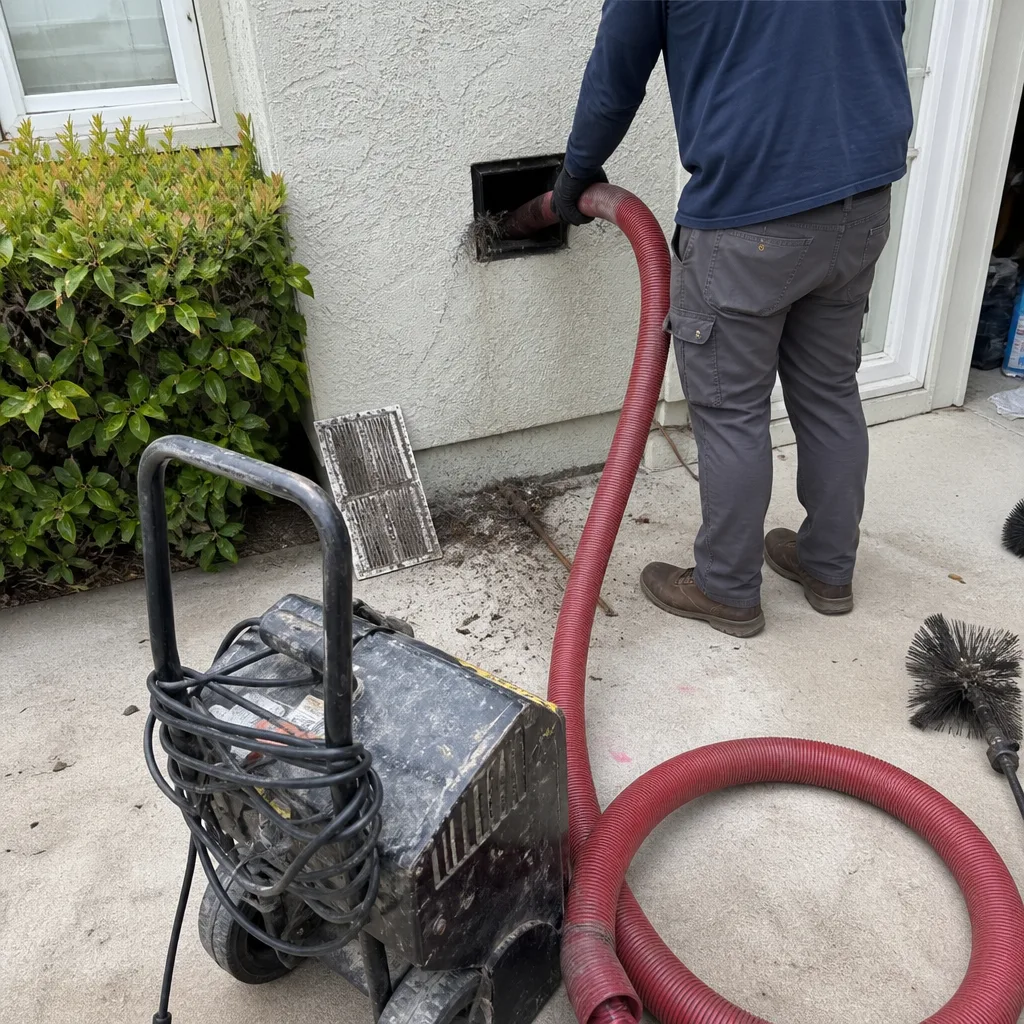
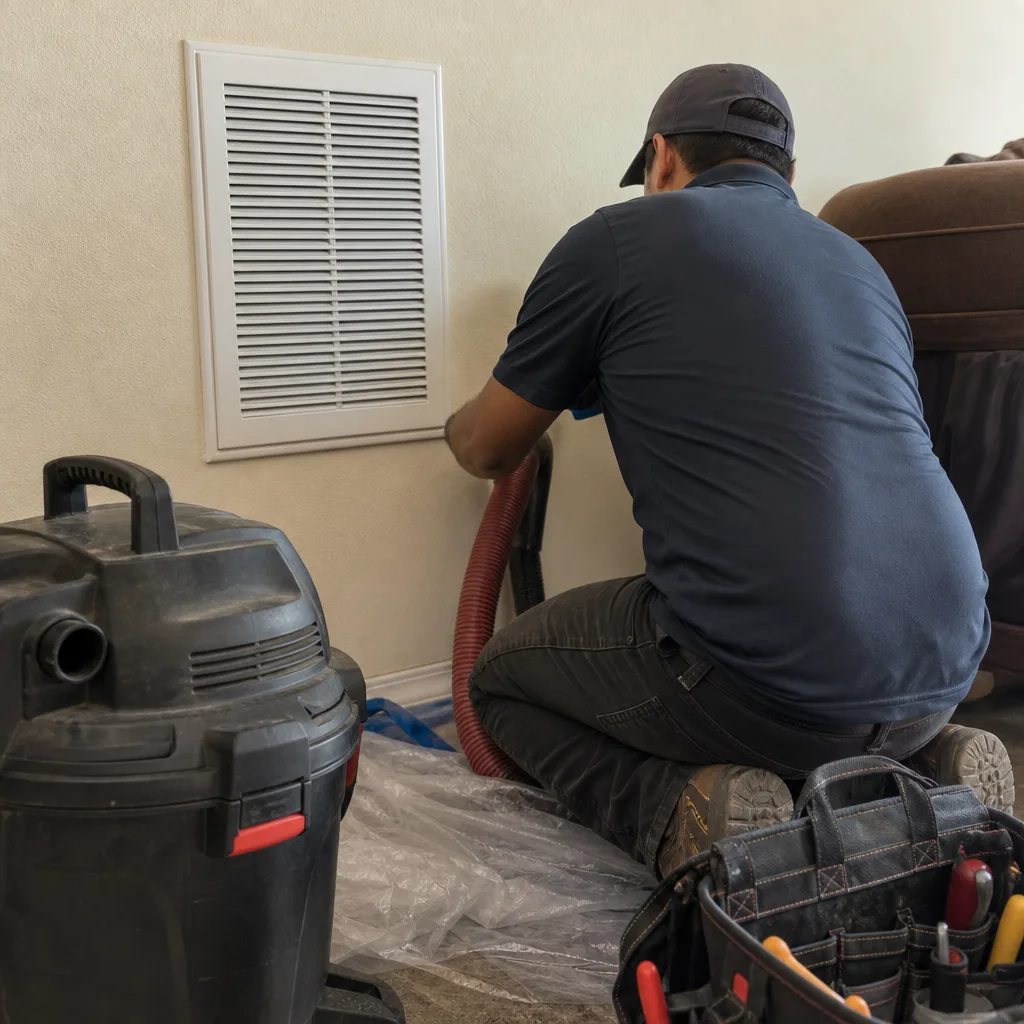
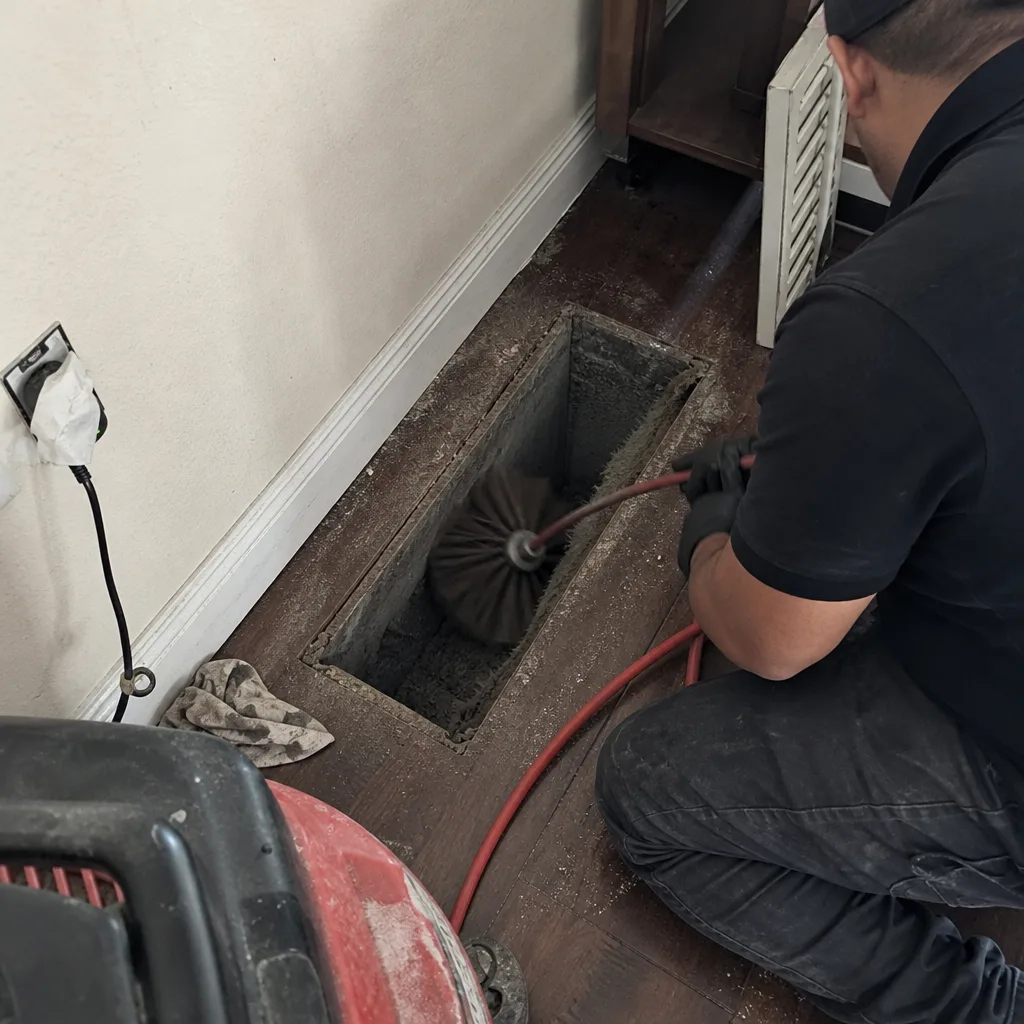
Whole-system duct and dryer vent check with before-and-after photos - you see exactly what came out of your vents
That "$99 whole-house special" is a bait ad - the real number appears once they are in your hallway, or the "clean" is a shop-vac at the register. We photograph the inside of your ducts before and after instead.
Choosing the Right Air Duct Cleaning Brand: A Buyer’s Guide for Lake Elsinore
A nationally recognized air duct cleaning brand name tells you the company met a franchise fee threshold. It tells you almost nothing about the equipment they run, the training depth their technicians received, or whether they’ll repair disconnected duct sections they find inside your Lake Elsinore home. What matters is the method: rotary contact cleaning versus air-only agitation, HEPA-rated extraction versus a standard shop vacuum, and repair capability versus a cleaning-only operator who hands you a report and walks away. Our Air Duct Cleaning service breaks down what brand affiliation actually signals, what it obscures, and how to evaluate any duct cleaning company on the technical merits that determine whether your air actually gets cleaner.
Styles & brands we work with
- Whole-home duct cleaning
- Dryer vent cleaning
- Camera inspection
- Sanitizing & deodorizing
Quick Answer
The right air duct cleaning brand in Lake Elsinore is one that combines rotary contact-cleaning equipment like Rotobrush with HEPA-rated extraction systems from manufacturers like Nikro or Abatement Technologies, and carries the technical capability to repair damaged ductwork found during the job. National franchise recognition signals standardized pricing and marketing, not necessarily standardized equipment quality or technician depth. Evaluate any brand by asking three questions: what equipment do they run, is their extraction HEPA-rated, and can they fix what cleaning exposes.
Table of Contents
- What a Brand Name Actually Signals
- The Equipment Standard That Separates Real Cleaning from Blow-and-Go
- Why Repair Capability Changes the Value Proposition
- Franchise Model vs. Local Specialist: What Lake Elsinore Homeowners Should Know
- How to Read Reviews Without Getting Fooled
- Seven Questions That Reveal Operational Quality Faster Than Any Brand Name
- Lake Elsinore-Specific Factors That Affect Duct Cleaning Decisions
- Common Mistakes to Avoid
- When to Call a Professional
- Frequently Asked Questions
- The Bottom Line
What a Brand Name Actually Signals
Franchise duct cleaning brands are built around a specific optimization target: scalable, repeatable service delivery across hundreds of territories. That means centralized marketing, standardized pricing templates, consistent uniforms, and a training curriculum designed to get technicians into the field quickly. What it does not mean is uniform equipment quality across every franchise location, uniform technician retention, or uniform willingness to address structural duct problems discovered mid-job.
Here’s the reality in the duct cleaning industry: the franchise model standardizes the parts of the business that affect customer acquisition far more than the parts that affect cleaning thoroughness. A franchise agreement typically specifies pricing structure, service bundles, and upsell scripts. But individual franchise owners make independent decisions about equipment purchases, technician hiring standards, and whether to invest in repair training. One franchise location in Riverside might run Rotobrush equipment with HEPA extraction, while another location twenty miles away under the same national name runs a portable vacuum and air-whip setup. Same logo on the van, materially different result in your ducts.
When you’re comparing brands in Lake Elsinore, treat the brand name as a starting point for investigation, not a conclusion. A recognized name means the company cleared a franchise fee threshold and operates within a corporate system. It does not tell you whether the technician who shows up at your door can identify a disconnected supply run, whether their extraction unit captures particles at 0.3 microns, or whether they’ll document the job with before-and-after photos.
In our experience working on air duct cleaning in Lake Elsinore, we’ve walked into homes where a prior national-brand cleaning left visible debris in the supply registers because the technician was incentivized to finish quickly and move to the next appointment. The brand name got them the call. The equipment and process determined whether the job actually got done.
The Equipment Standard That Separates Real Cleaning from Blow-and-Go
Duct cleaning methods fall into roughly three tiers, and they produce dramatically different results. Understanding these tiers gives you the evaluation framework that matters more than any brand recognition – see our The Complete Air Duct Cleaning Guide for Lake Elsinore Homeowners for deeper detail:
- Vacuum-only extraction: A high-powered vacuum hose is inserted into the duct system and run without agitating the walls. This removes loose dust near the hose entry point. It leaves behind the adhered debris layer, which is where mold spores, bacteria, and allergens actually reside. This is the cheapest tier and produces the least durable result.
- Air-whip or brush-only agitation with standard extraction: Compressed air or a mechanical brush knocks debris off duct walls, but the extraction side isn’t HEPA-rated. Fine particulate gets stirred up and a significant portion recirculates into the living space during the job. This is the “blow-and-go” tier common among discount operators.
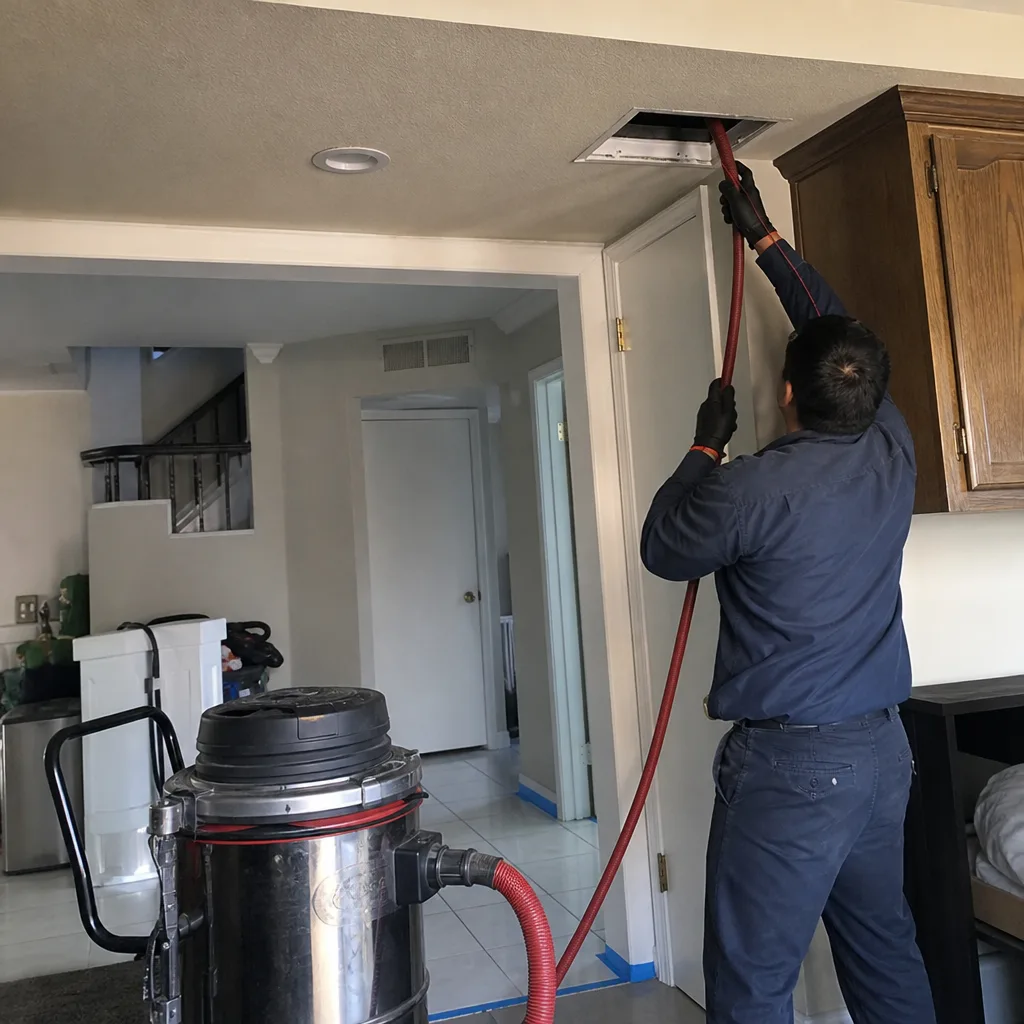
- Rotary contact cleaning with HEPA-rated negative-pressure extraction: A rotary brush system like Rotobrush physically contacts the duct walls and dislodges the adhered layer mechanically. Then a HEPA-rated extraction unit, such as equipment from Nikro or Abatement Technologies, captures the dislodged contaminants. Negative pressure is maintained in the duct during service, so what’s disturbed is contained and removed, not redistributed.
That third tier is the standard you should hold any brand to, national or local. Here’s why the HEPA extraction piece matters specifically: a HEPA filter captures 99.97% of particles at 0.3 microns. That’s the size range where mold spores, bacteria, and fine respiratory irritants live. A standard shop vacuum or a non-rated extraction unit lets those particles pass through and back into your home’s air. If you have family members with asthma or allergies in Lake Elsinore, the difference between HEPA-rated and standard extraction is the difference between a meaningful air quality improvement and a cosmetic dust removal.
Ask any company you’re evaluating one direct question: “Is your extraction unit HEPA-rated?” If the answer is vague, hesitant, or deflects to a discussion of their Green Seal certification or their five-star review average, that’s information. Contractors who run professional-grade equipment answer that question immediately and specifically.
Why Repair Capability Changes the Value Proposition
Here’s a scenario we encounter regularly in Lake Elsinore homes: during a routine duct cleaning, we find a disconnected supply run in the attic. It’s not uncommon. Duct sections separate over time due to thermal expansion, poor original installation, or physical disturbance from pests or storage. That disconnected section means conditioned air is dumping into the attic instead of your living room, and unfiltered attic air is being drawn into the system. Cleaning around it does nothing.
A cleaning-only operator discovers this problem and hands you a report. You now need to schedule a second appointment with a separate HVAC contractor, pay a second diagnostic fee, and coordinate two companies. A specialist with repair capability like air duct repair in Lake Elsinore fixes the section on the spot. One appointment, one bill, real airflow improvement.
This distinction matters because it reveals the company’s actual business model. Cleaning-only operators optimize for volume: get in, clean, get out, move to the next job. Repair capability requires trained technicians who understand duct system mechanics, stock common repair components on the truck, and are authorized to make structural corrections during service. That’s a different operational investment, and it’s one a brand name won’t tell you about.
When should this difference matter to you? If your Lake Elsinore home is older than roughly fifteen years, if you’ve noticed uneven heating or cooling between rooms, if your energy bills have crept upward without explanation, or if you’ve had rodents in the attic at any point, there’s a meaningful chance your duct system has integrity issues. In those cases, hiring a cleaning-only operator means you’re likely paying for a partial fix.
Franchise Model vs. Local Specialist: What Lake Elsinore Homeowners Should Know
The franchise versus local-specialist decision isn’t inherently about quality. It’s about where the incentives point. Here’s the framework we use when homeowners ask us to compare:
What franchise brands typically standardize well:
- Pricing transparency and service menus
- Basic technician training and background checks
- Booking and scheduling systems
- Brand consistency and presentation
What franchise brands typically leave variable:
- Equipment quality at individual locations
- Technician depth and retention
- Repair and remediation capability
- Knowledge of local building stock and climate factors
A local specialist in Lake Elsinore has no centralized marketing machine to fall back on. Their entire business depends on doing technically competent work that generates referrals from homeowners and property managers, and on building a reputation that survives scrutiny. That pressure-cooker creates a different optimization target: technical thoroughness over marketing reach. The local operator who’s been serving Wildomar, Canyon Lake, and Menifee referrals for years has encountered the specific duct problems common to this area: dust intrusion from the Santa Ana winds, dryer vent clogs in two-story homes with long vent runs, and disconnected ducts in attic spaces that bake at 130 degrees in August.
This guide is published by a local specialist, so we won’t pretend to be neutral on this question. But the reason local specialists exist as a category is because national franchises leave a technical gap that price-focused and volume-focused models don’t fill. When you call a local specialist, the person you talk to about the job is likely the person who does the job, or works directly alongside the person who does.
How to Read Reviews Without Getting Fooled
Third-party reviews are useful, but only if you read them the way a hiring manager reads references: looking for specific, verifiable details rather than star averages. Here’s the method that actually works:
- Filter for one-star and three-star reviews. Five-star reviews tell you about the easy jobs and the happy situations. One-star and three-star reviews tell you how the company behaves when something goes wrong, which is what you actually need to know. A company that responds professionally to a complaint and attempts to resolve it is showing you more about their operational quality than twenty five-star reviews.
- Search review text for equipment mentions. Type “HEPA” or “Rotobrush” or “brush” into the review search. Reviews that mention specific equipment signal that the homeowner understood what was done, which usually correlates with a technician who explained their process. Generic reviews like “great service, professional team” tell you nothing about the work.
- Look for documentation mentions. Reviews that reference before-and-after photos, the ability to see the work, or a written report signal a company that makes the process verifiable. Reviews that skip straight to “friendly and fast” without any specificity about what was cleaned signal a surface-level job that was pleasant but unverified.
- Look for problem-handling narratives. Reviews that say things like “they found a disconnected duct in the attic and fixed it on the spot” or “they showed me a hole in the return plenum before they cleaned it” are the highest-value reviews you can find. They demonstrate that the company was technically capable and honest about what they found.
In Lake Elsinore, review patterns also reveal local factors. Reviews from homes in the hillside communities along Ortega Highway often mention dust from the surrounding terrain. Reviews from the lake-adjacent neighborhoods sometimes mention humidity effects and mold concerns. Reading reviews with your specific neighborhood context in mind helps you weight them correctly.
Seven Questions That Reveal Operational Quality Faster Than Any Brand Name
When you call a duct cleaning company in Lake Elsinore, the following questions will tell you more about their technical quality in three minutes than an hour of reading their website. Any contractor who can answer these comfortably is operating at a professional level:
- “Is your extraction equipment HEPA-rated?” A professional answer is immediate and specific: “We run Nikro HEPA extraction units,” or “Our extraction runs through Abatement Technologies HEPA filters.” A vague answer like “we use industry-standard equipment” or “our vacuums are very powerful” signals non-rated equipment. HEPA extraction is the single most important differentiator in duct cleaning, and any competent contractor knows their rating.
- “What type of agitation do you use on the duct walls?” The right answer involves mechanical contact: a rotary brush system like Rotobrush, or a pneumatic whip that physically strikes the duct surface. If the answer is “a vacuum hose with high suction” or “air pressure,” you’re looking at a method that leaves adhered debris in place.
- “What happens if you find disconnected or damaged duct sections during cleaning?” A cleaning-only operator will tell you they’ll note it in the report and recommend a separate contractor. A specialist with repair capability will tell you they can address it on the spot. This single question reveals whether you’re hiring a cleaner or a duct care provider.
- “Do you provide before-and-after photos of my actual ducts?” A professional answer is yes, without qualification. The photos should be of your ducts, not stock imagery. This is the primary verification method that the work was done thoroughly, and any company that operates with integrity wants you to see the difference.
- “How do you handle containment during the job?” The right answer involves maintaining negative pressure in the duct system so dislodged particulate is drawn toward the extraction unit rather than leaking into the living space. If the answer doesn’t include some reference to air pressure control or containment, the company is likely just vacuuming without controlling where the disturbed dust goes.
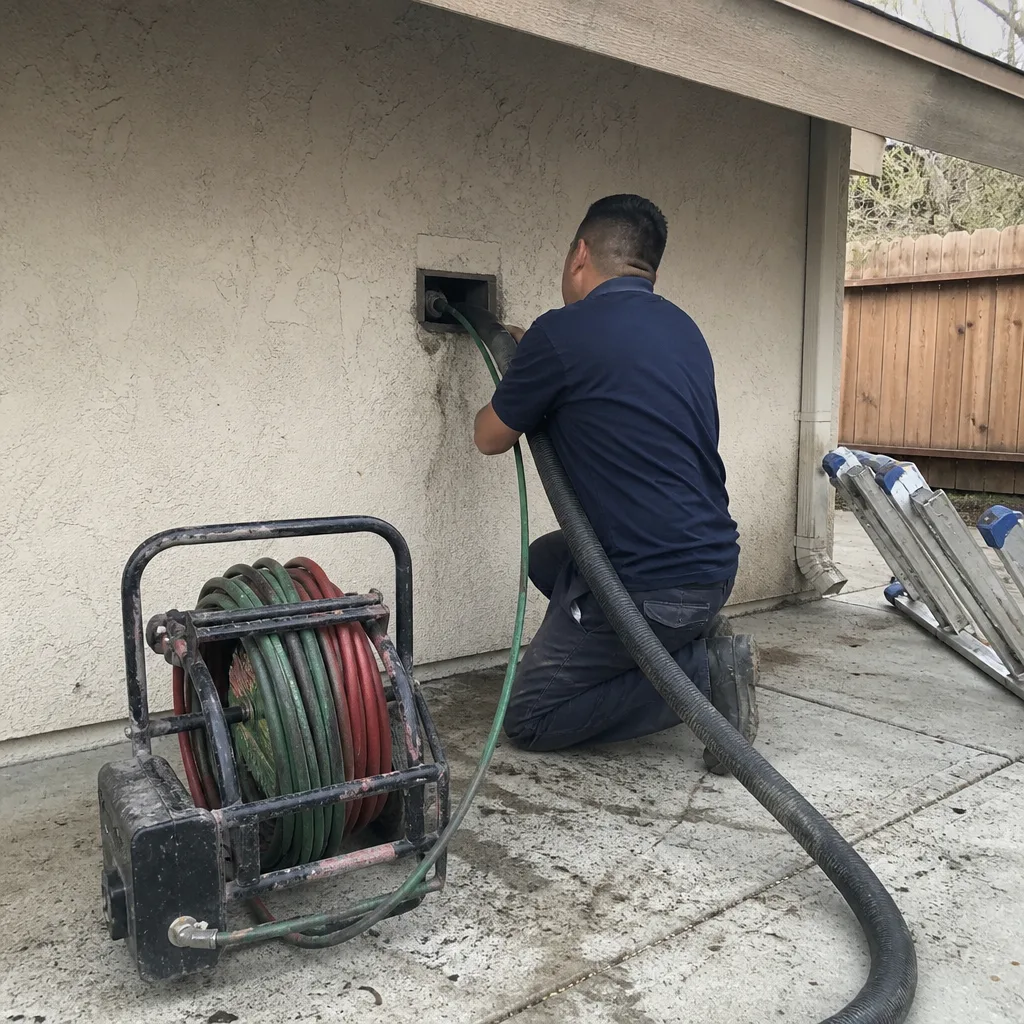
- “Do you repair dryer vents or just clean them?” This ties back to repair capability. A dryer vent cleaning that reveals a crushed transition or a disconnected section needs a technician who can fix it. If the company’s dryer vent cleaning doesn’t include repair capability, you may be back on the phone with someone else next week.
- “What HEPA or IAQ equipment do you use, and who manufactures it?” Generic “high-powered truck-mounted” language without a manufacturer name is a red flag. Professional equipment manufacturers include Nikro, Abatement Technologies, and Rotobrush. If the contractor can’t name the equipment they run, they may not actually run professional-grade equipment.
Lake Elsinore-Specific Factors That Affect Duct Cleaning Decisions
Lake Elsinore presents specific duct contamination pressures that homeowners in coastal cities don’t face. Understanding them helps you make a smarter decision about your cleaning frequency and the standard you hold any brand to:
Santa Ana wind dust loading. The Santa Ana events that roll through the Temescal Valley and down through the Elsinore basin carry fine particulate that infiltrates homes through every gap and crack. What enters your living space gets drawn into the return air stream and deposited in the duct system. Homes in the hillside developments along the Ortega Highway corridor and the communities near the I-15 face particularly heavy dust loading during fall and early winter wind events. Duct systems in these areas accumulate visible dust layers faster than comparable homes in, say, Carlsbad.
Lake humidity and microbial growth. Proximity to Lake Elsinore itself means elevated humidity relative to the surrounding dry terrain. That humidity, combined with the temperature differential inside air-conditioned ductwork during the hot months, creates conditions that encourage microbial growth inside ducts. Homes within a mile or so of the lake shore experience this pressure more acutely than homes on the northern hillsides. If you live near the lake, HEPA extraction becomes even more important, because the fine organic material being extracted is the medium where mold and bacteria grow.
Attic heat and duct integrity. Summer attic temperatures in Lake Elsinore climb past 130 degrees. Duct systems in those attics experience thermal expansion cycles that gradually loosen connections, especially in homes where the original install used tape or low-grade mastic. A cleaning visit on a home with hot-attic duct installations finds disconnected or sagging sections more often than not. This is why repair capability matters for this market specifically: the conditions that stress duct connections are more intense here than in temperate coastal communities.
Older housing stock in certain neighborhoods. The core neighborhoods around downtown Lake Elsinore, and the homes along Grand Avenue and Lakeshore Drive, include many structures built before modern energy codes tightened duct sealing requirements. These older systems are more likely to have leakage, separation, and accumulated debris from years of operation. If you’re in a pre-1990 home in this area, you should expect a duct cleaning to double as a duct integrity inspection, and you should choose a company that can act on what’s found.
These local pressures mean the bar for duct cleaning in Lake Elsinore is higher than the national average. A thorough cleaning here isn’t a luxury upgrade; it’s the appropriate standard for the conditions your system actually operates in. For a deeper look at what a proper cleaning involves in this market, start with our overview of duct cleaning in Lake Elsinore.
Common Mistakes to Avoid
- Choosing a brand based on a coupon price. The duct cleaning industry’s bait-and-switch reputation exists because low teaser prices pull in calls, and then the “discoveries” begin: additional per-vent charges, mold treatment upsells, sanitizer add-ons. A professional job is priced like a professional job. If a whole-home cleaning is quoted at $49 or $79, the economics don’t work for real equipment and real labor. You’re the product.
- Treating a franchise name as an equipment guarantee. As discussed above, franchise locations vary widely on the equipment they run. Verify the specific franchise location’s equipment, not the brand’s corporate marketing.
- Skipping the HEPA extraction question. Non-rated extraction is the single biggest shortcut in the industry. It lets a company claim”cleaning”while actually redistributing fine particulate through your home.
- Accepting “friendly and fast” as a substitute for documentation. A fast, polite job with no before-and-after photos and no written report is unverifiable. You have no way to know whether anything was actually cleaned. Insist on documentation.
- Hiring a cleaning-only operator when your home has known duct integrity concerns. If you’ve had uneven room temperatures, high energy bills, or attic pest activity, you need someone who can repair what they find. Otherwise you’re paying for a cleaning that sidesteps the actual problem.
- Ignoring the dryer vent. Clothes dryer lint is a documented leading cause of residential fires, and Lake Elsinore’s dry climate creates conditions where lint builds quickly. If the company you’re considering treats dryer vent cleaning as an afterthought add-on rather than a dedicated service, they’re not taking fire prevention seriously.
- Skipping the containment question. Asking how the company maintains negative pressure during cleaning takes five seconds. It’s the difference between a job that removes contaminants and a job that moves them from your ducts onto your furniture.
When to Call a Professional
Call a professional duct cleaning company rather than attempting DIY solutions when you see visible dust accumulation around supply registers despite regular filter changes, when family members experience unexplained allergy or asthma symptoms that worsen indoors, when you’ve recently completed renovation work that generated drywall or flooring dust, when you’ve had rodents or insects in the attic or crawlspace, or when you’ve lived in the home for more than five years without a professional cleaning. These are the situations where professional contact-cleaning equipment with HEPA extraction produces results that consumer-grade tools simply cannot. Duct Cleaning Lake Elsinore offers free estimates in Lake Elsinore. Call (855) 341-9943 to schedule an evaluation.
Frequently Asked Questions
Professional air duct cleaning in Lake Elsinore typically runs between $350 and $700 for a standard single-family home, depending on the number of supply and return runs, system accessibility, and the level of contamination present. Homes with extensive duct runs, multiple HVAC systems, or significant debris buildup may fall outside that range. Any quote dramatically below that band should be treated as a teaser price designed to generate upsells. Call (855) 341-9943 for a free estimate based on your specific home.
Cheaper quotes typically come from operators using non-HEPA extraction equipment, skipping containment measures, limiting service time per vent, or using the low price as a loss-leader for aggressive upsell tactics. The equipment, insurance, and trained labor that produce a thorough cleaning have real costs, and a company quoting $99 for a whole-home cleaning is not covering those costs at that price. The gap gets made up either in shortcuts or in add-on charges.
You should receive before-and-after photos of your actual ducts showing the cleaning results, and a written service summary describing what was performed and what was found. Photos of your ducts, not stock imagery, are the primary verification method. A company that photographs your system before and after is demonstrating that they have nothing to hide about the thoroughness of their work.
No. A recognized brand name guarantees standardized marketing, pricing structure, and basic franchising requirements. It does not guarantee that the specific franchise location serving Lake Elsinore runs HEPA-rated extraction, rotary contact cleaning equipment, or employs technicians with repair capability. Evaluate the equipment and process of the specific location, not the corporate brand.
For most Lake Elsinore homes, professional duct cleaning every three to five years is appropriate, though homes in Santa Ana wind corridors, homes near the lake with ongoing humidity exposure, and homes with shedding pets may benefit from more frequent service. The right interval depends on the dust loading your specific home experiences. After a professional cleaning with documentation, you’ll have a baseline to judge future accumulation against.
Professional duct cleaning with HEPA-rated extraction can meaningfully reduce the concentration of allergens in circulated indoor air, including dust mite matter, pollen, pet dander, and mold spores adhering to duct surfaces. The key qualifier is HEPA-rated extraction: without it, cleaning can actually worsen short-term air quality by disturbing and redistributing allergens. If indoor air quality is a health concern in your household, the extraction rating is the most important question you can ask.
The Bottom Line
Brand names in duct cleaning are marketing signals, not method guarantees. What matters is the equipment the company runs, the training their technicians hold, and whether they can repair what cleaning exposes. For Lake Elsinore homeowners, the right choice combines rotary contact-cleaning capability, HEPA-rated extraction from manufacturers like Nikro or Abatement Technologies, and repair capability that turns a cleaning visit into a true duct integrity inspection. Ask the seven questions, demand documentation, and choose based on method and capability rather than logo recognition. For additional help, explore our more guides & resources. Your air quality is the result of the work performed, not the name on the invoice.
Written by the team at Duct Cleaning Lake Elsinore, serving Lake Elsinore since 2014.
See the difference
 Before
 After
 Before
 After
 Before
 After