
Last updated November 2, 2026
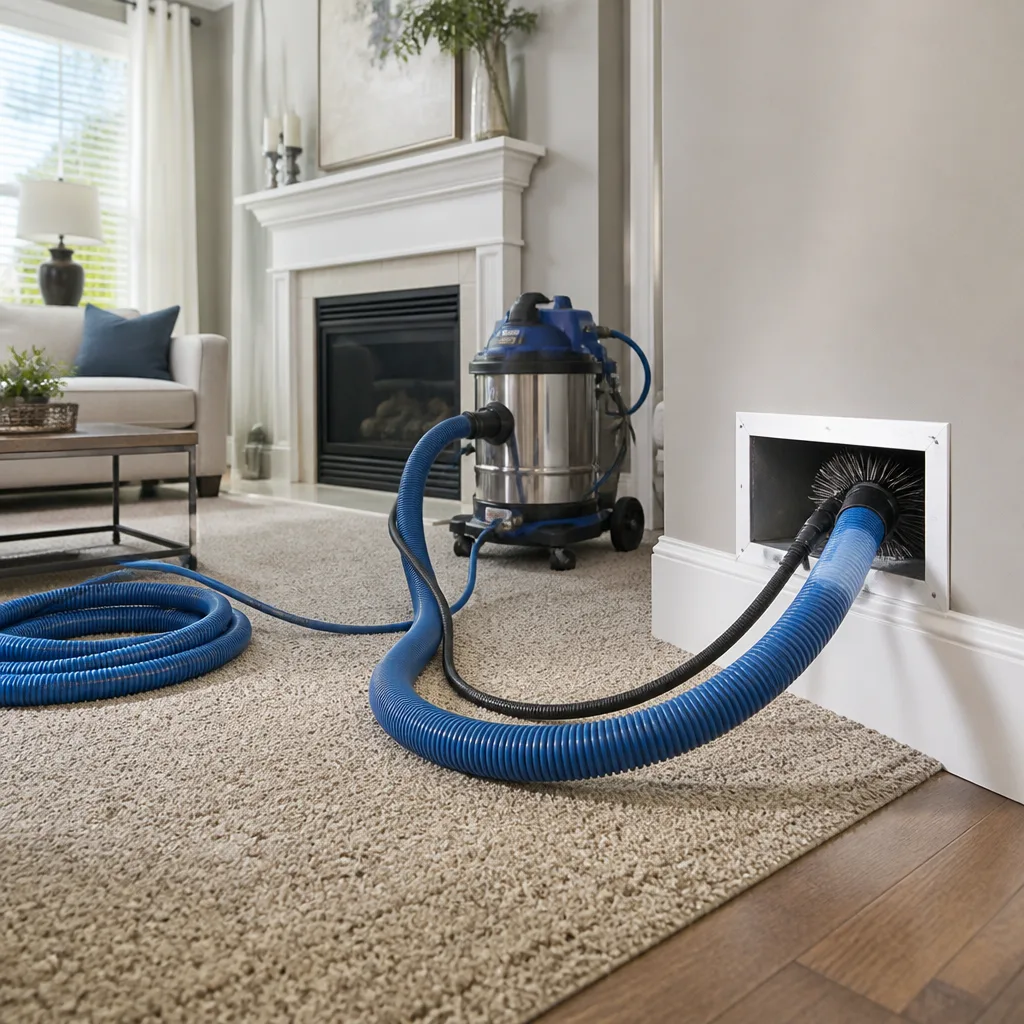 Whole-home duct cleaning
 Dryer vent cleaning
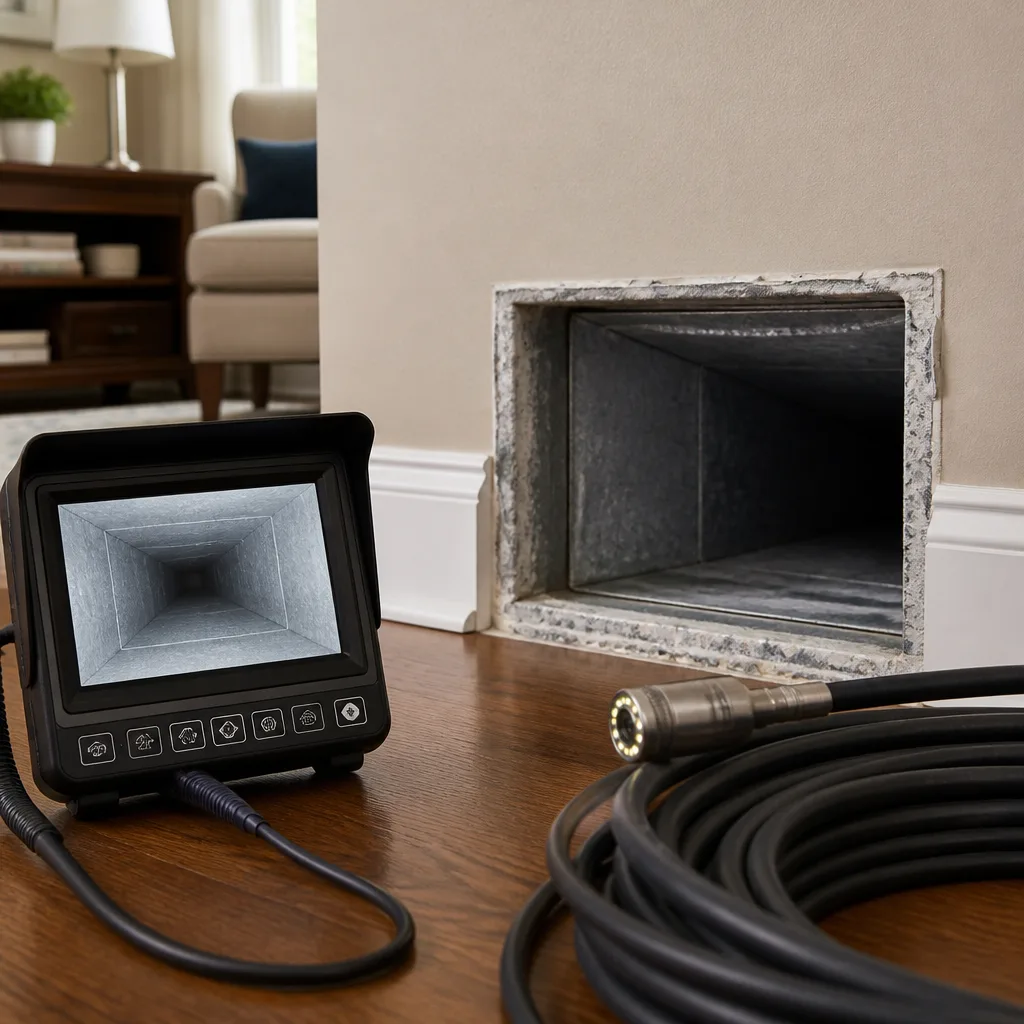 Camera inspection
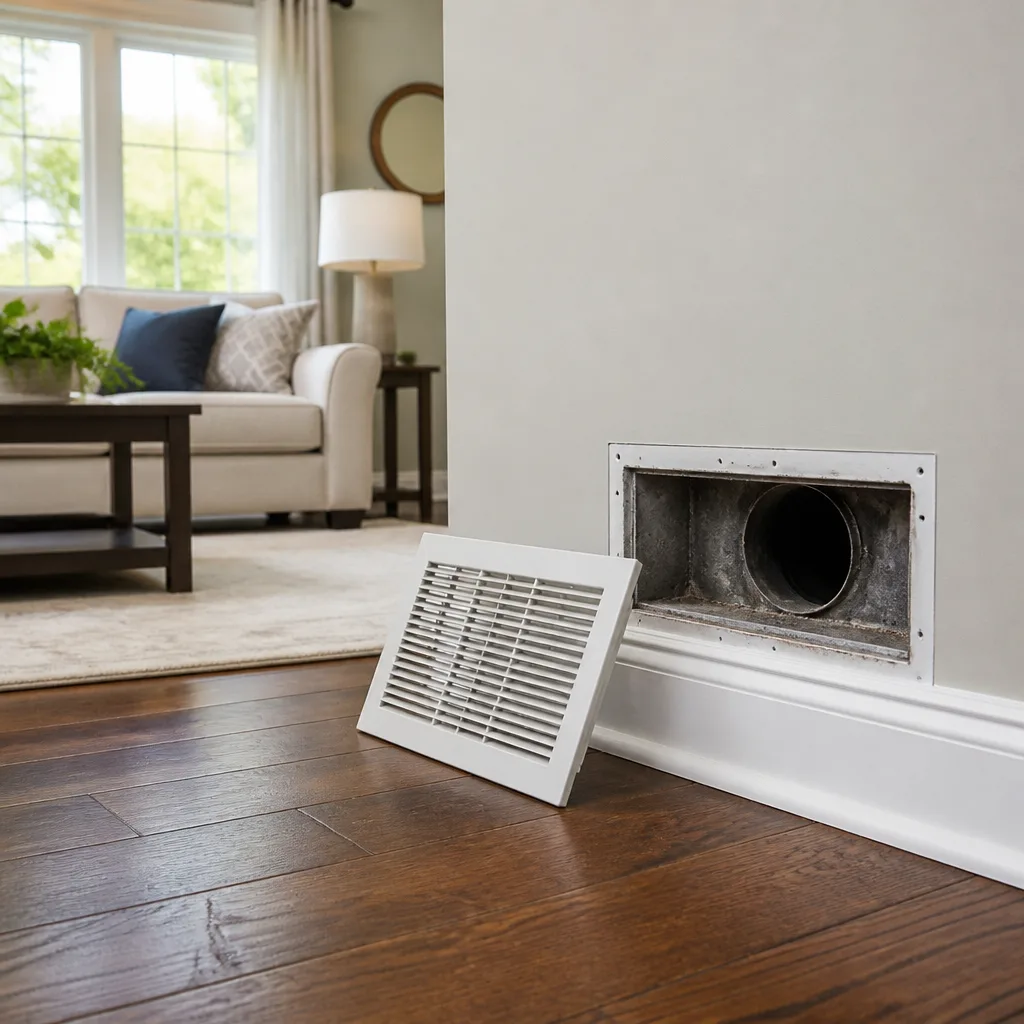 Sanitizing & deodorizing
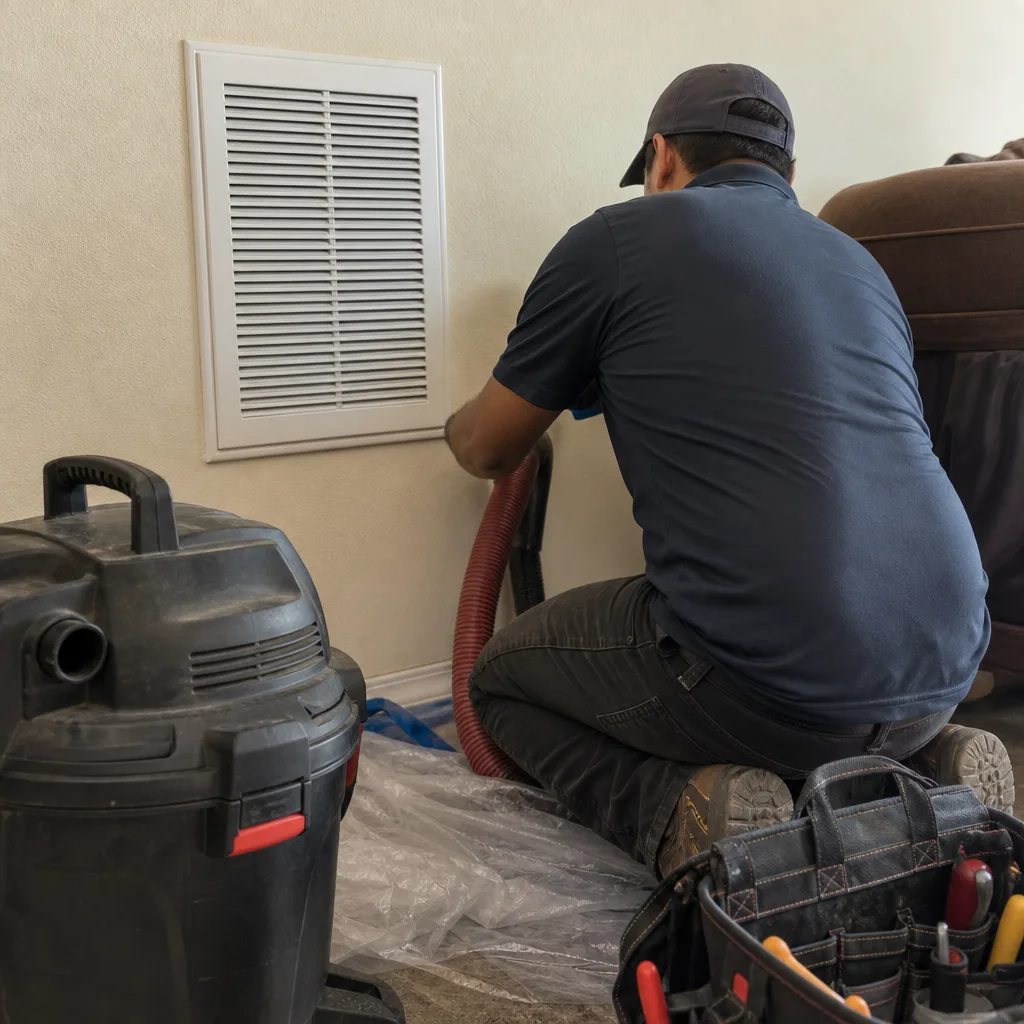
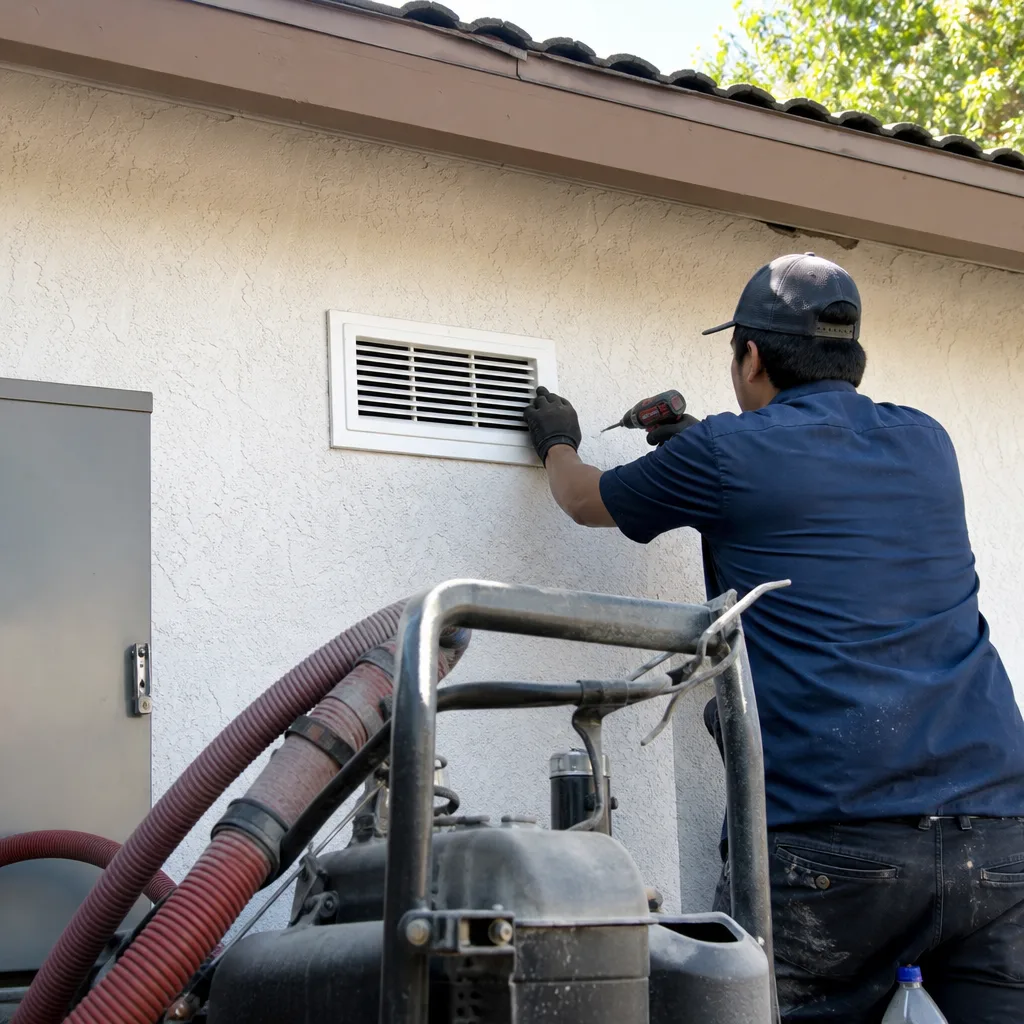
Whole-system duct and dryer vent check with before-and-after photos - you see exactly what came out of your vents
That "$99 whole-house special" is a bait ad - the real number appears once they are in your hallway, or the "clean" is a shop-vac at the register. We photograph the inside of your ducts before and after instead.
Air Duct Cleaning Troubleshooting: Common Problems and How to Fix Them
Here’s a counterintuitive fact we’ve learned from years of duct work in Lake Elsinore: most of the “duct problems” homeowners call about aren’t actually duct problems. They’re symptoms. A musty smell when the AC kicks on, a bedroom that never cools down, dust accumulating on furniture two days after cleaning. Each of these points toward something, but what that something is depends on details most troubleshooting guides skip right past. This guide walks through the real diagnostic process, so you can tell the difference between a contamination problem, a mechanical problem, or both before you spend a dollar on service.
Quick Answer
Air duct troubleshooting starts with identifying whether you’re dealing with a contamination issue (dust, mold, odors), a mechanical issue (leaks, disconnects, poor airflow), or both at once. The fix depends on the root cause: cleaning for contamination, sealing or repair for mechanical problems, and often a combination. Before calling anyone, do a basic register inspection and note exactly when and where symptoms appear, because that information determines whether you actually need cleaning or something else entirely.
Styles & brands we work with
- Whole-home duct cleaning
- Dryer vent cleaning
- Camera inspection
- Sanitizing & deodorizing
Table of Contents
- Symptom-to-Cause Mapping: What Specific Smells Actually Mean
- How to Do a Basic Register-Level Inspection Before Scheduling Anything
- Why Uneven Room Temperatures Are Usually a Sealing Problem, Not a Cleaning Problem
- What You Can Safely Do Yourself vs. What Needs Professional Equipment
- Post-Cleaning Red Flags: Signs the Job Wasn’t Done Right
- What to Do When Cleaning Reveals Damage: Disconnects, Collapsed Flex, Insulation Intrusion
- Lake Elsinore-Specific Factors That Affect Duct Condition
Symptom-to-Cause Mapping: What Specific Smells Actually Mean
Odors are the most common reason homeowners in Lake Elsinore start investigating their ductwork, and they’re also the most commonly misdiagnosed. The key is separating what you’re smelling into distinct categories, because each points to a different source and a different fix.
Musty or earthy odors typically indicate moisture-related biological growth somewhere in the system. But here’s the critical distinction: that growth might be in the ducts, or it might be on the evaporator coil, in the drain pan, or inside the condensate line. If the smell appears only when the AC runs and disappears when the system is off, the problem is more likely at the coil or drain pan than inside the ductwork itself. Cleaning ducts when the coil is moldy solves nothing, and you’ll be out the cost of the cleaning. In our experience serving homes across Lake Elsinore, this exact scenario happens more often than people realize, especially in homes where the AC runs hard through summer and the drain line hasn’t been flushed.
Burning or electrical smells are almost never a duct issue. A burning smell when the heat first fires up in fall often means dust has settled on the heat exchanger over the summer and is burning off. That’s normal and usually resolves within an hour or two. A persistent electrical smell, however, could mean a failing blower motor, a wiring issue, or an overheating component. That requires an HVAC technician, not a duct cleaner. If you smell something acrid and it doesn’t fade quickly, shut the system off and get it inspected.
Chemical or solvent smells after a renovation or painting project are often just off-gassing being circulated through the system. New carpet, paint, cabinets, and adhesives release volatile organic compounds, and your HVAC system does an excellent job of spreading them through the house. This isn’t a duct cleaning problem. It’s a ventilation problem. Running the fan continuously with windows cracked for several days usually dissipates the odor. If the chemical smell persists for weeks with no recent renovation, that’s a different conversation, possibly involving a refrigerant leak, which again is a mechanical issue, not a cleaning one.
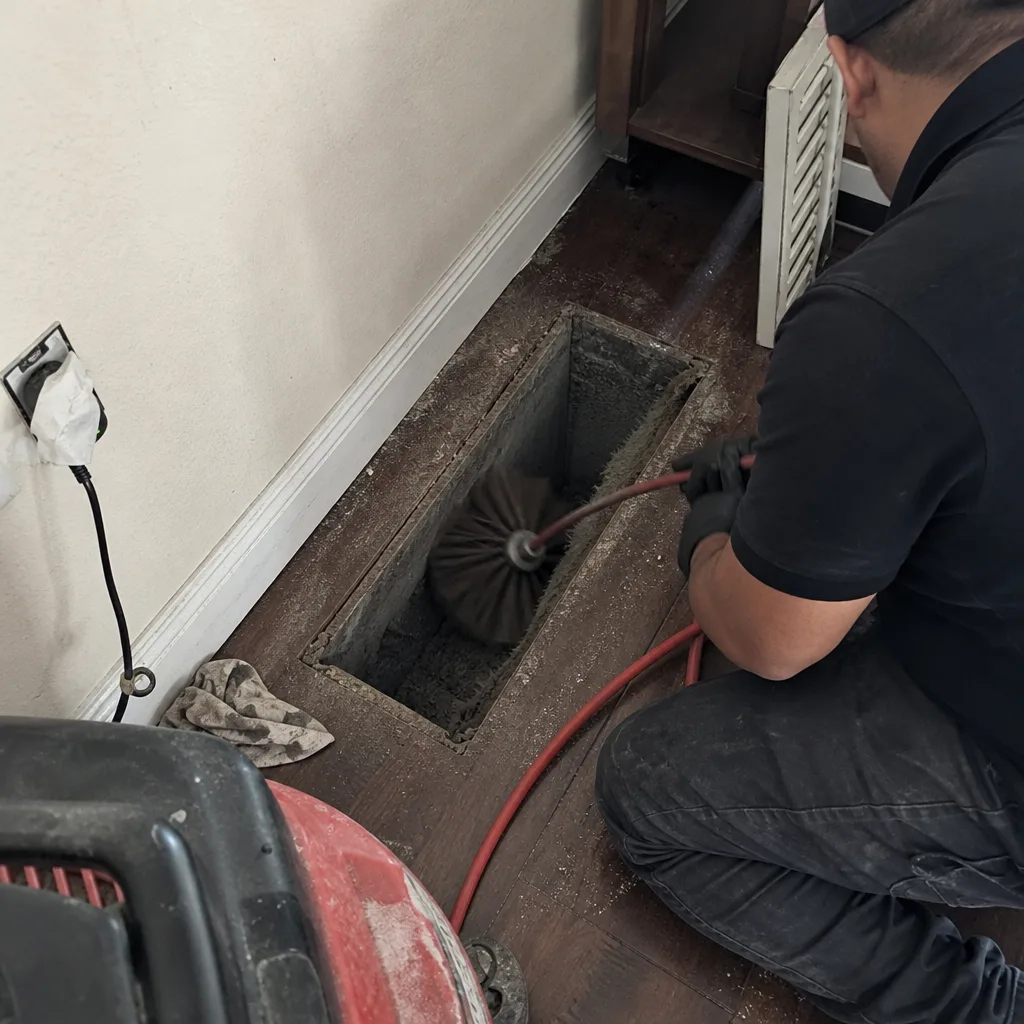
Lingering cooking or pet odors that resurface when the system runs usually mean odor particles have become embedded in the dust film on duct surfaces. The dust absorbs odors like a sponge and releases them when airflow passes over. This is a legitimate case where contact cleaning makes a real difference, because the odor source is physically attached to the duct walls, and air-only cleaning won’t remove it. The Rotobrush rotary contact-cleaning method we use physically dislodges that odor-laden buildup rather than just blowing air past it.
How to Do a Basic Register-Level Inspection Before Scheduling Anything
You don’t need any special tools to gather useful diagnostic information. You need a flashlight, a phone camera, and about fifteen minutes. What you find at the register level won’t show you the entire duct system, but it tells you a lot about what’s happening inside and can help you avoid paying for a service that isn’t right for the actual problem.
- Turn the system off. You want still air so settled debris doesn’t blow around and other rooms’ dust doesn’t interfere with what you’re seeing. Give it ten minutes to settle.
- Remove a register cover in a high-use room. Start with the room where you notice the most dust accumulation or the strongest odor. If the register cover is screwed in, a standard screwdriver does the job.
- Shine the flashlight into the duct opening. Angle the beam along the duct walls, not straight down. You’re looking for three things: visible dust accumulation on the walls, dark staining that could indicate moisture exposure, and any visible gaps, tears, or disconnects in the duct material.
- Take photos with your phone camera. Hold the phone just inside the opening and take a few shots. The camera sees what your eye misses, especially in tight angles. These photos also become useful comparison points if you do schedule a cleaning and want before-and-after confirmation.
- Repeat at two or three more registers. Compare what you see. If every register shows similar light dusting, that’s relatively normal. If one room shows heavy buildup while others are clean, that points to a localized problem, possibly a disconnected duct, a crushed flex run, or a return imbalance.
- Check the return side too. The return registers are where air enters the system, and they often show more buildup than supply registers because they pull unfiltered air. Look for dust caking on the louvers and inside the return cavity.
What you’re looking for is a pattern. Consistent light dusting across all registers typically indicates normal accumulation and suggests the system simply hasn’t been cleaned in years, or the filter isn’t doing its job. Heavy buildup in one area suggests a mechanical problem letting debris in or a localized leak. Dark staining near any register suggests moisture has been present at some point, which changes the conversation from cleaning to investigation, because cleaning won’t fix the source of the moisture.
In Lake Elsinore specifically, we regularly see heavier accumulation in homes near the lake or in the canyons where dust and pollen loads are higher through spring and early summer. The dry heat also means ducts stay bone-dry most of the year, which paradoxically makes dust easier to dislodge with rotary contact cleaning, since it hasn’t formed a caked-on layer with humidity.
Why Uneven Room Temperatures Are Usually a Sealing Problem, Not a Cleaning Problem
If one bedroom is always five degrees warmer than the rest of the house, or the upstairs never cools as well as the downstairs, most people’s first instinct is to assume the ducts are clogged and need cleaning. Sometimes that’s true. More often in our experience working through Lake Elsinore homes, the real culprit is leakage, imbalance, or poor duct design, and cleaning won’t change the temperature differential one degree.
Here’s how to tell the difference before you pay for anything. Start by holding a tissue or a lighter near the register in the problem room while the system is running. Compare the airflow strength to a register in a room that cools properly. If the airflow in the problem room is noticeably weaker, you might have a blockage, a collapsed flex duct, a damper that’s partially closed, or a significant leak somewhere along that branch run. If the airflow feels roughly the same but the temperature of the air is different, the issue is likely insulation, window load, or the length of the duct run itself, and cleaning won’t change any of those.
Leaky ducts are a bigger deal than most homeowners realize. The U.S. Department of Energy estimates that typical duct systems lose 20 to 30 percent of conditioned air through leaks, gaps, and poorly sealed connections. That air isn’t going into your rooms. It’s going into your attic, your crawlspace, or the wall cavities. In Lake Elsinore’s summer heat, that lost air is expensive. Your system works harder to compensate, and the rooms at the end of the longest duct runs get starved for airflow while the rooms closest to the air handler get more than their share.
The diagnostic distinction matters because there are three separate services here. Air Duct Cleaning in Lake Elsinore removes contamination. Air Duct Repair in Lake Elsinore fixes leaks, disconnects, and damaged sections. The two services address different problems, and paying for the wrong one wastes money. A good diagnostic approach is to have the system inspected and find out whether the airflow problem is contamination-driven or mechanically-driven before deciding. Being able to handle both under one roof saves you from the frustrating loop of cleaning the ducts, still having a hot bedroom, and then scheduling a second company to find the actual leak.
What You Can Safely Do Yourself vs. What Needs Professional Equipment
There’s a meaningful difference between maintenance you can handle with household tools and work that requires professional-grade equipment. Knowing where that line is protects both your health and your wallet.
What you can do yourself:
- Replace your air filter regularly. A clogged filter restricts airflow and lets more debris bypass the filtering media. In a dusty climate like Lake Elsinore, check monthly during high-use seasons and replace when visibly dirty, which often means every 30 to 60 days through summer.
- Vacuum the register covers. Remove them, wash with warm soapy water, dry thoroughly, and vacuum the visible opening with a standard household vacuum and a crevice tool. This is surface-level work, but it improves airflow and reduces the dust that gets blown into living spaces.
- Keep return registers clear. Furniture, rugs, or storage bins blocking a return register starve the system of air and throw off the balance of the whole house. This is an easy fix that costs nothing.
- Inspect the condensate drain line. If you can access it, pour a cup of white vinegar down the line quarterly to discourage growth. A clogged drain line is a common source of the musty smell people blame on ducts.
What needs professional equipment:
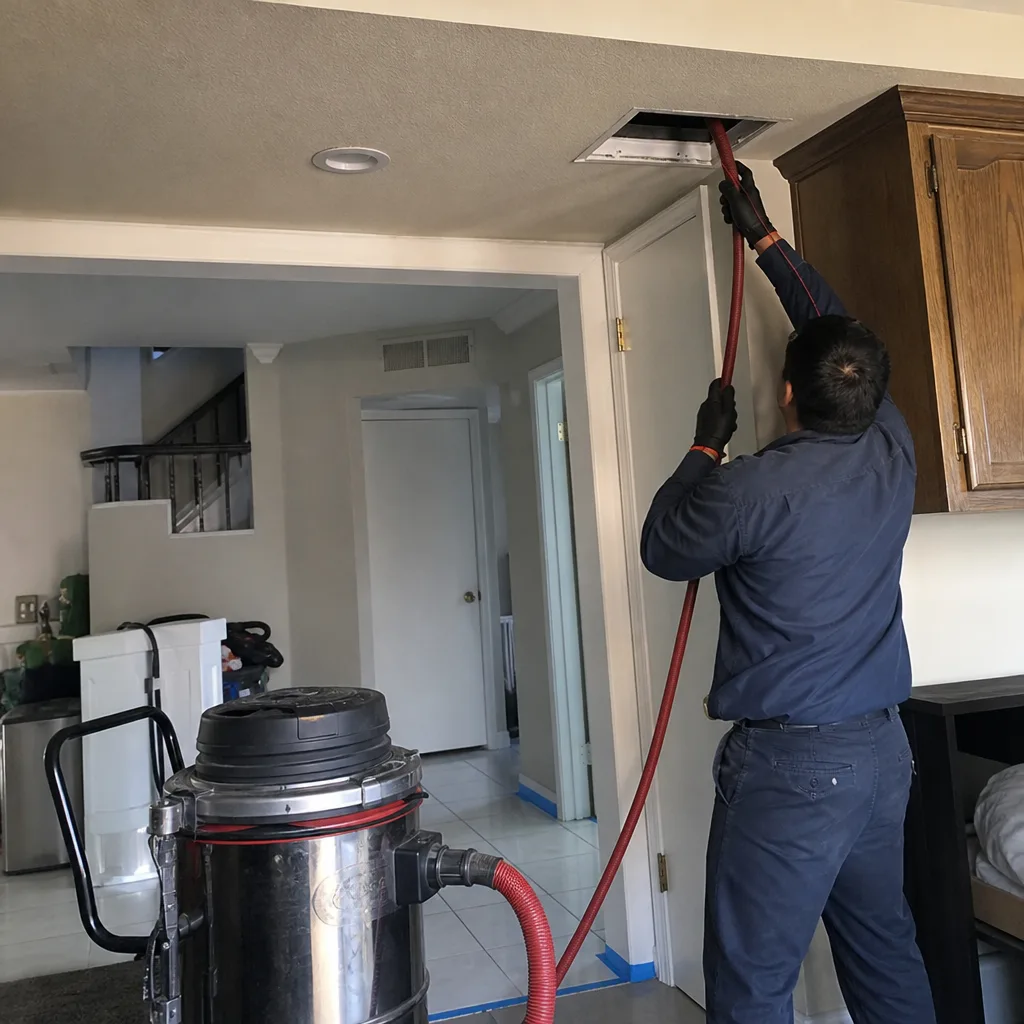
- Contact cleaning of the full duct system. Household vacuums lack the suction power and the reach to clean anything beyond the first few inches of a register opening. Professional contact cleaning uses rotating brush systems like Rotobrush to physically scrub duct walls while HEPA-grade extraction equipment from brands like Abatement Technologies and Nikro captures what’s dislodged. The difference is between removing what’s actually on the walls versus knocking a little dust loose and leaving the rest.
- Any inspection that requires opening duct sections. If you suspect a disconnect or collapsed section, that requires accessing the ductwork in the attic or crawlspace and potentially cutting an access point. This is not a DIY job, and doing it wrong creates a new leak where none existed.
- Mold or biological growth remediation. If you see what appears to be mold on duct surfaces or inside the register cavity, stop and get professional assessment. Improper cleaning can spread spores through the system and make the problem worse. The extraction method matters here, and HEPA-level filtration is not optional.
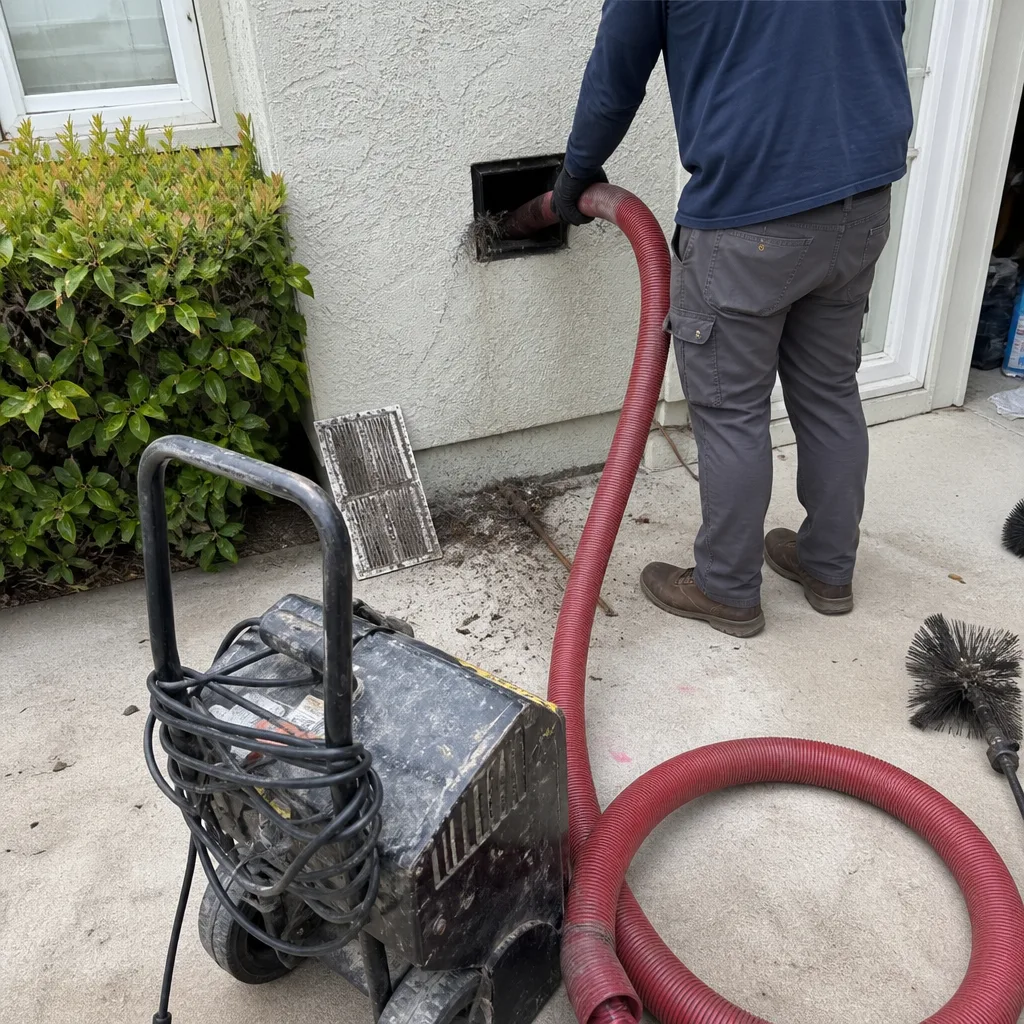
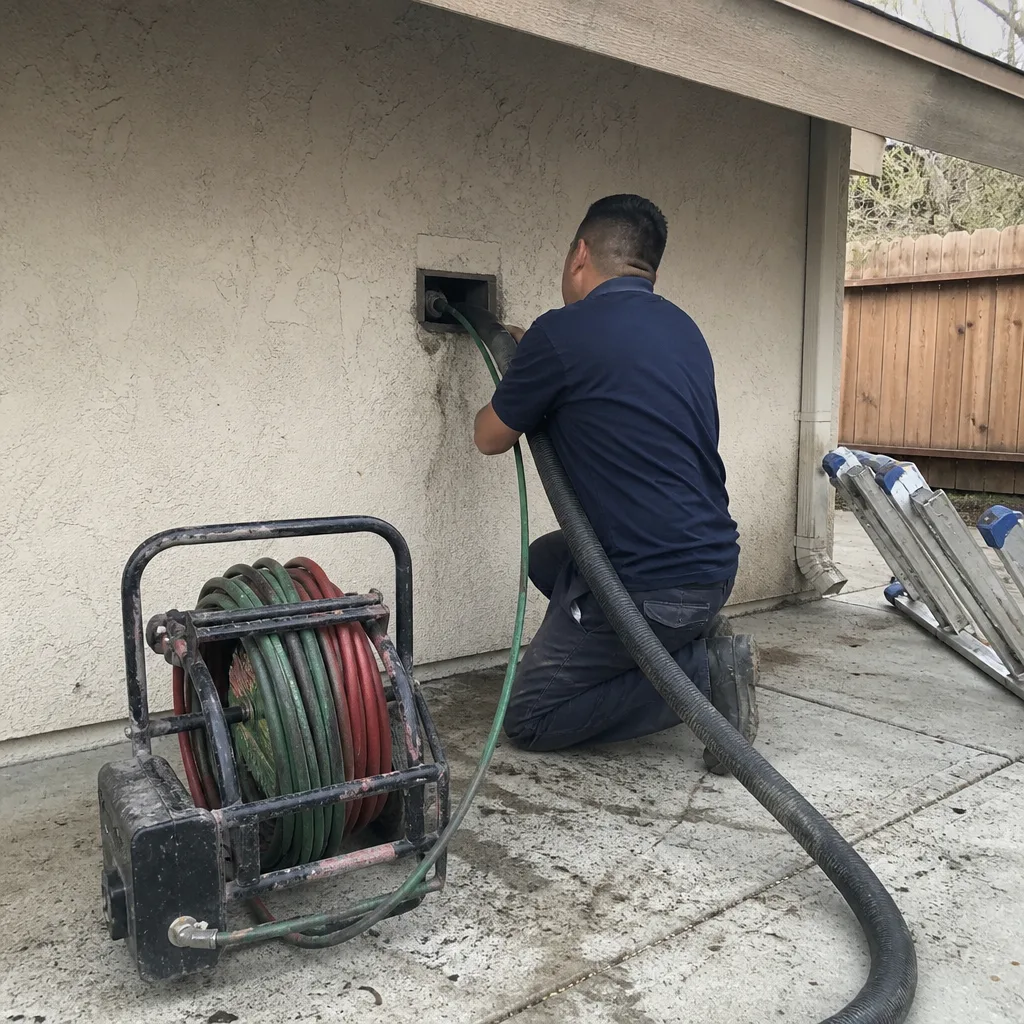
- Dryer vent cleaning. This one deserves its own category. Dryer vent cleaning removes lint accumulation from the exhaust run, and lint buildup is a documented leading cause of residential fires. The vent run is long, often inaccessible from either end, and requires specialized brushes and collection equipment. It’s also a different system from your HVAC ducts, which confuses people. Your heating and cooling ducts move conditioned air. Your dryer vent moves hot, lint-laden exhaust. Both need attention, but they’re separate jobs requiring separate tools.
Post-Cleaning Red Flags: Signs the Job Wasn’t Done Right
Duct cleaning is an industry with a reputation problem, and not without reason. Low-price operators run specials that get a van to your driveway, then the price balloons once the work begins, or the work is superficial and the real contamination never gets touched. Here are the red flags that tell you the job you paid for wasn’t the job that got done.
No before-and-after documentation. Any professional duct cleaning should include photographic evidence. You should see the condition of your ducts before cleaning and the same locations after. If the company can’t or won’t show you what changed, there’s no way to verify the work happened. In our process, we show customers exactly what we found and exactly what it looks like after contact cleaning and HEPA extraction.
Continued debris at registers within days. After a proper cleaning, you shouldn’t see significant new dust streaming from supply registers when the system runs. A small amount of residual dust in the first hour or two is expected, as particles dislodged during the process clear the system. Heavy dust fall within days means the extraction step was inadequate, or the cleaning never reached the full system.
No mention of the extraction method. This is the technical detail that separates real cleaning from air movement. Contact cleaning dislodges debris from duct walls. Extraction captures that dislodged debris before it can re-settle or recirculate through your living space. If the company can’t explain how they capture what they knock loose, and what equipment they use to do it, they’re probably not capturing it at all. HEPA-grade extraction equipment, like the Nikro and Abatement Technologies systems we run, is the difference between removing contaminants and just redistributing them.
The job took less than an hour. A thorough cleaning of a typical residential duct system takes time, usually several hours depending on home size and system complexity. If two technicians finish a full-house duct cleaning in 45 minutes, they didn’t clean the duct system. They might have cleaned the registers and the first foot of each run, but the main trunk line and branch runs never got touched.
No inspection findings shared. Professional duct cleaning starts with an inspection, and that inspection should produce findings, even if the finding is just normal accumulation. If the technicians arrived and immediately started setting up equipment without inspecting, or if they leave without telling you what they found and what condition the ducts are in, that’s a process problem. A legitimately thorough company will report what was found, including any damage or leaks discovered during cleaning.
What to Do When Cleaning Reveals Damage: Disconnects, Collapsed Flex, Insulation Intrusion
One of the most frustrating scenarios in duct work is paying for a cleaning, then being told the system has damage that requires a separate contractor, a separate appointment, and another bill. This happens constantly in the industry. The cleaning company is equipped to clean, not to repair, so when they find a disconnected branch line or a collapsed flex run, they note it on the report and move on. You now have a half-finished project and a house that still isn’t working right.
Here’s what these terms actually mean and why they matter.
Disconnected ducts occur when a section of ductwork separates at a joint, often in the attic or crawlspace. Air leaves the system at the break and goes into the unconditioned space instead of your room. In Lake Elsinore, where attics can hit 140 degrees in summer, a disconnected duct means your AC is literally cooling your attic while a bedroom stays warm. This is a mechanical failure that cleaning won’t fix.
Collapsed flex duct happens when flexible ductwork gets crushed, typically by storage boxes in an attic, animal activity, or poor initial installation. The airway is physically restricted, so airflow to that room drops dramatically. Again, no amount of cleaning restores the shape of a crushed duct.
Insulation intrusion is when duct insulation separates from the outer liner and falls into the airway, or when vermin pull insulation into the duct from outside. The insulation now acts as a filter, trapping dust, destroying airflow, and potentially releasing fiberglass particles into your air supply. This is both a contamination issue and a mechanical issue simultaneously.
The critical question to ask before hiring: can the company that finds damage fix it on the same visit? This is exactly why our air duct repair service in Lake Elsinore exists as an integrated part of what we do. We repair what we find, no second appointment, no separate contractor. When our cleaning process exposes a disconnected section or a collapsed run, our technicians can make the repair on the spot. That integration changes the economics of the service. You’re not paying for a cleaning that serves as an inspection, then paying again for repairs. You’re paying for a resolution.
If you find yourself dealing with a company that found damage but can’t fix it, get the specifics in writing: what the damage is, where it is, and what’s needed to repair it. Then source a duct repair specialist directly rather than going through a generic handyman who doesn’t understand airflow dynamics.
Lake Elsinore-Specific Factors That Affect Duct Condition
Duct systems don’t exist in a vacuum, and the environment around Lake Elsinore creates specific conditions that change how ducts perform and what problems develop.
The dust load is real. Lake Elsinore sits in a semi-arid valley surrounded by hills that channel wind through the area. Homes near the Ortega Highway corridor, up in the canyon neighborhoods, or anywhere with open terrain nearby get measurable dust accumulation faster than homes in denser subdivisions. This matters for two reasons: filters load up faster, and ducts accumulate debris faster. A home in Lake Elsinore with a standard one-inch filter may need filter changes every 30 days through summer, and duct cleaning intervals may be shorter than the national average recommendation.
The dry climate is a double-edged sword. On one hand, Lake Elsinore’s low humidity means ducts stay dry most of the year, which reduces the risk of mold growth compared to coastal communities. Dry dust is also easier to dislodge mechanically, which makes contact cleaning more effective. On the other hand, that same dryness means dust particles are finer and lighter, so they suspend in air more easily, and they move through the system more readily. The dust that accumulates in Lake Elsinore ductwork tends to be a fine, abrasive grit rather than a dense, caked layer.
The summer heat load drives system runtime. Lake Elsinore routinely hits triple-digit temperatures through July, August, and September. That means your AC runs continuously, which means air is moving through the ducts constantly, which means any contamination in the ductwork is being actively circulated through your living space at a high rate. The system that runs nine hours a day distributes more airborne particles than the same system running three hours a day in a milder climate. The practical implication is that duct condition has a proportionally bigger impact on indoor air quality here than it would in many other climates.
Attic conditions accelerate material degradation. Ducts installed in unconditioned attics in Lake Elsinore are exposed to extreme heat for months at a time. Flex duct outer liners become brittle, tape adhesive fails, and previously sealed connections open up. We regularly see homes where the duct system was reasonably sealed at installation but has developed leaks purely from thermal cycling over multiple summers. This is why the inspection component of any duct service matters so much in this area. A cleaning that doesn’t surface these leaks leaves the system underperforming even after the contamination is removed.
Understanding these local conditions means you can make smarter decisions about what your Lake Elsinore home actually needs. A home near the lake may genuinely need cleaning on a different schedule than a home in the foothills. A home with an attic-installed system in Canyon Hills may have different leakage patterns than a home with a crawlspace system near the historic downtown. The environment shapes the problem, and the problem shapes the right solution.
Common Mistakes to Avoid
- Calling a cleaner when you have a mechanical problem. Uneven room temperatures, weak airflow, and rooms that never reach the set temperature are usually sealing or balancing issues. Cleaning the ducts won’t fix a disconnected branch line or a crushed flex run, and you’ll pay for a service that doesn’t address your actual complaint.
- Ignoring a musty smell because “it’s probably the ducts.” If the smell only appears when the AC runs, the source may be the evaporator coil, the drain pan, or the condensate line, none of which get cleaned by a duct cleaning service. Have the source identified before paying for any cleaning.
- Trusting a per-vent price. Whole-system pricing based on a low per-vent number is a common bait-and-switch structure in the duct cleaning industry. The real numbers come from the full system scope, and honest providers give you one flat price per system agreed before work starts.
- Skipping the filter question entirely. If you run a one-inch fiberglass filter and it hasn’t been changed in six months, your ducts are accumulating debris faster because the filter is doing nothing. Before spending money on cleaning, fix the filtration gap. A Goodman or Honeywell media filter cabinet that takes a four-inch filter can dramatically reduce what reaches the ductwork in the first place.
- Hiring based on price and nothing else. Duct cleaning is an unregulated field with no licensing requirement in most areas, which means anyone with a truck and a shop vac can call themselves a duct cleaner. The low bid is often low because the work is superficial. Ask about equipment, process, and documentation before asking about price.
- Assuming a cleaning fixed everything. A proper cleaning removes contamination, but it doesn’t restore a duct system that has leaks, disconnects, or damaged sections. If your home has airflow problems or temperature imbalances, those need to be addressed separately. A good cleaning surfaces them. A good company can then fix them.
- Forgetting the dryer vent. People conflate dryer vents with HVAC ducts, but they’re separate systems with separate problems. Lint buildup in a dryer vent is a fire hazard and a drying efficiency issue. Dryer vent cleaning is fire prevention, not optional maintenance, and it deserves its own assessment independent of your HVAC system.
See the difference
 Before
 After
 Before
 After
 Before
 After
When to Call a Professional
Call a professional when you’ve done the basic register inspection and found significant accumulation, when odors persist after basic maintenance like filter replacement and drain line clearing, when airflow problems suggest leaks or disconnects, or when you have any suspicion of mold or biological growth. Call if your home has never had its ducts cleaned since you’ve owned it and you’re noticing persistent dust despite a clean filter. Call if you see visible dust streaming from registers when the system starts. And call if a recent renovation filled the system with construction dust, drywall dust, or insulation particulates that your household vacuum can’t safely reach or remove.
Duct Cleaning Lake Elsinore offers free estimates for Lake Elsinore homeowners. Call (855) 341-9943 to talk through what you’re seeing, and we’ll help you determine whether cleaning, repair, or a different service is the right next step.
Frequently Asked Questions
You’ll typically see one or more of these signs: visible dust accumulation on register covers and inside the opening, dust blooming into rooms when the system starts, musty or stale odors when the system runs, or a home with a history of recent renovation dust. A definitive answer requires an inspection, but if your register inspection shows heavy buildup at multiple locations, cleaning is likely warranted. Call (855) 341-9943 for an honest assessment from our team in Lake Elsinore.
In Lake Elsinore, residential air duct cleaning typically falls in the range of $375 to $725 for a complete system, depending on home size, number of systems, and the level of contamination. Homes with multiple HVAC systems or significant buildup fall higher. Honest providers quote one flat price per system agreed before work starts, not a per-vent teaser that inflates on arrival. Call (855) 341-9943 for an exact quote, estimates are free.
Cheaper quotes usually reflect a narrower scope of work and lighter equipment. Air-only or vacuum-only methods can’t dislodge debris adhered to duct walls, and they often skip the extraction step entirely, leaving contaminants recirculating through the home. Contact cleaning with HEPA-grade extraction costs more because the method actually removes what’s in the ducts rather than disturbing it. The price difference is the difference between cleaning the registers and cleaning the system.
Ask for before-and-after photos of the duct interior before the technician leaves. A legitimate cleaning includes photographic documentation of the same locations before and after treatment. You should also see a visible difference at registers within a day, and the technician should provide a report of what was found, including any damage or abnormalities. If none of these are offered, you have reason to question what was actually done.
Usually not. Uneven temperatures are more often caused by duct leakage, disconnected sections, crushed flex runs, or insufficient return airflow than by contamination. Cleaning removes debris, but it doesn’t seal leaks or restore airflow to a room that’s been starved by a mechanical problem. The right approach is an inspection that identifies whether the imbalance is contamination-driven, mechanically-driven, or both, then addresses the actual cause. Our air duct repair service in Lake Elsinore handles the mechanical side when that’s what’s needed.
Every home is different, but in the Lake Elsinore climate, most homes benefit from cleaning every three to five years. Homes near open terrain, canyon areas, or anywhere with elevated dust exposure may need service more often. Homes with shedding pets, smokers, or a recent renovation may also need cleaning sooner. The best signal is what you actually see: if register inspections show visible accumulation and you’re noticing dust despite a clean filter, it’s time. Call (855) 341-9943 and we’ll help you assess whether your system is ready for service.
The Bottom Line
Troubleshooting air duct problems means correctly identifying the category of problem before spending money on a fix. Musty smells can come from the coil, not the ducts. Uneven temperatures usually come from leaks, not dirt. Dust at registers can mean the ducts are dirty, or it can mean the filter is inadequate and the system is simply circulating whatever gets past it. In Lake Elsinore’s dry, dusty climate, the distinction between contamination and mechanical failure matters more than in many other markets because both are common and the wrong fix wastes real money. Do your register inspection, note the pattern, and when you call for help, describe the symptoms precisely. The right diagnosis leads to the right service, whether that’s air duct cleaning, dryer vent cleaning, or air duct repair, and the right service actually solves the problem.
Written by the team at Duct Cleaning Lake Elsinore, serving Lake Elsinore since 2014.